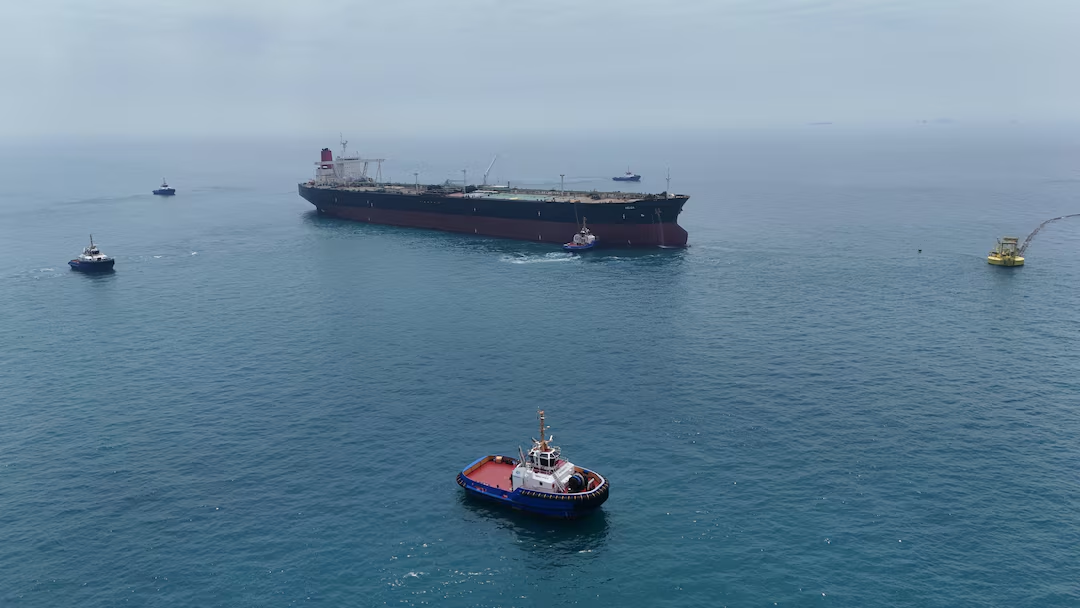
Traffic in the Strait of Hormuz has significantly declined, with only five vessels making the passage in a 24-hour period, attributed to escalating regional tensions and security issues.
In the last 24 hours, only five vessels, among them an Iranian oil products tanker, have transited the Strait of Hormuz, as reported by Friday shipping data. This represents a significant decrease in activity at one of the globe’s most crucial energy chokepoints amid escalating geopolitical tensions in the Gulf.
The abrupt decline in maritime activity comes in the wake of a series of security incidents in the area, notably Iran’s capture of two container ships earlier this week, which has sparked fresh concerns about retaliation and additional disruptions.
The United States has continued to impose sanctions and restrictions that impact Iranian port access, further intensifying the challenges faced by shipping operations and complicating logistics for international carriers.
Prior to the recent escalation, the Strait of Hormuz generally managed approximately 140 vessel transits daily, indicating that the latest statistics reflect a significant decrease, underscoring the increasing hesitance of global shipping companies to conduct operations in the region.
The strait is responsible for approximately one-fifth of global oil shipments, making any disruption a significant concern for energy markets around the world.
Shipping companies are increasingly adjusting their routes or postponing voyages, with many pointing to heightened risks of interception, inspection, or detention. Insurers have reportedly raised war-risk premiums for ships entering the region, leading to increased operational costs and discouraging transit through the waterway.
Market analysts caution that a sustained decrease in traffic may start to affect global energy supply chains, especially concerning crude oil and liquefied natural gas exports from Gulf producers. They observe that even brief disruptions can result in fluctuations in oil prices and shipping freight rates.
Even with efforts from certain regional players to instill confidence in maritime operators, trust in the corridor continues to be tenuous. Shipping companies indicate that they are awaiting clear diplomatic advancements and reliable security assurances prior to returning to standard transit levels.
Alternative routes are constrained and less effective, as detours around the Arabian Peninsula considerably increase both time and expenses for shipments. Smaller passages close to Iran and Oman are deemed inappropriate for managing large-scale commercial traffic, especially fully loaded supertankers.
Diplomatic observers indicate that the situation highlights the ongoing vulnerability of the Strait of Hormuz as a crucial pressure point in global trade, where even slight increases in regional tensions can swiftly lead to significant drops in shipping activity.