Iran states it will not agree to ‘maximalist demands’ while Islamabad facilitates peace efforts
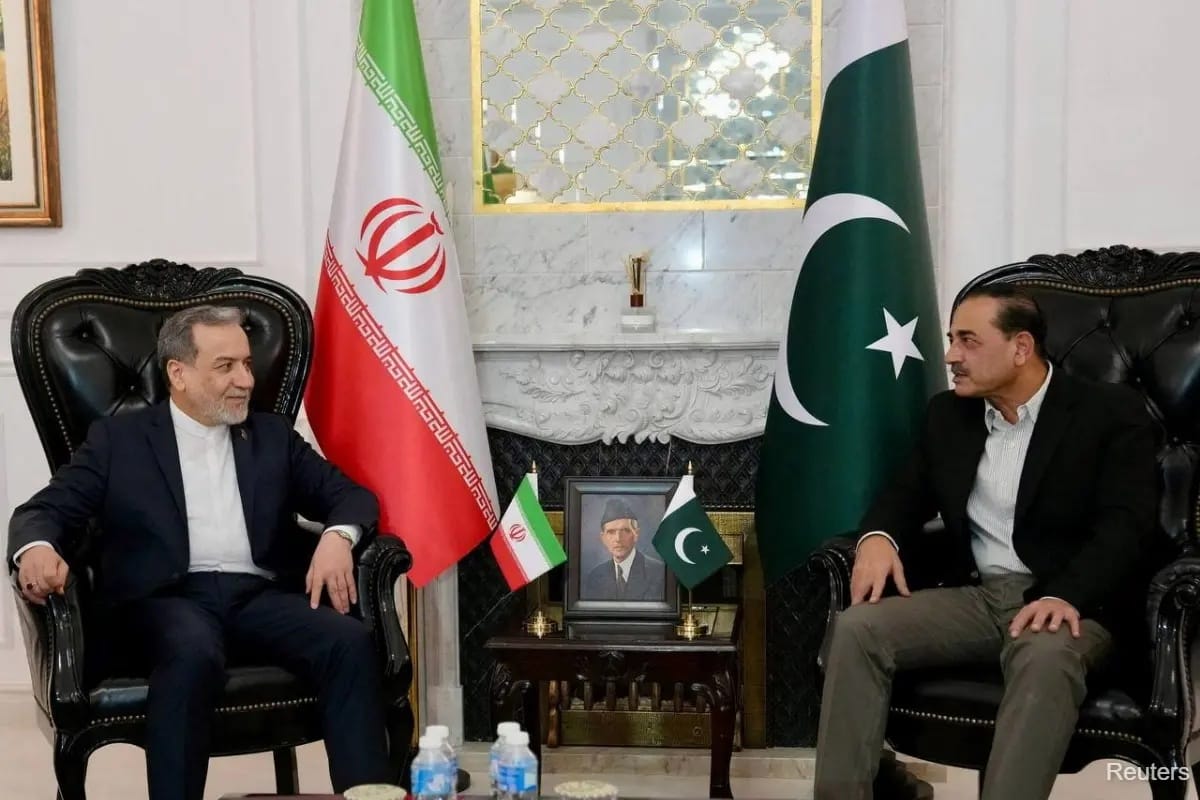
Iranian Foreign Minister Abbas Araqchi articulated Iran’s demands and expressed its concerns regarding U.S. positions on Saturday during a new initiative hosted by Islamabad aimed at concluding a war that has resulted in thousands of deaths and disrupted global markets.
Araqchi engaged in discussions with Pakistani Prime Minister Shehbaz Sharif and other senior officials, although specifics of the talks remained limited. The White House previously announced that President Donald Trump’s special envoy, Steve Witkoff, along with son-in-law Jared Kushner, would be traveling to the Pakistani capital on Saturday. However, Iran has thus far dismissed the possibility of a new round of direct talks.
Washington and Tehran find themselves at a stalemate, as Iran has effectively shut down the Strait of Hormuz, a crucial passage that typically facilitates one-fifth of the world’s oil shipments, while the U.S. continues to obstruct Iran’s oil exports.
Iran articulates its ‘principled positions.’
Trump has extended the ceasefire, which began on June 24, into its ninth week. The conflict has driven energy prices to their highest levels in years, fueling inflation and casting a shadow over global growth outlooks.
Araqchi articulated our nation’s steadfast positions concerning the recent developments associated with the ceasefire and the total cessation of the imposed war against Iran, as stated in a message on the minister’s official Telegram account.
When questioned regarding Tehran’s concerns about U.S. positions in the negotiations, an Iranian diplomatic source in Islamabad informed Reuters: “In principle, the Iranian side will not accept maximalist demands.”
U.S. Defense Secretary Pete Hegseth previously informed reporters that Iran had an opportunity to secure a “good deal.”
“Iran is aware that they still have an opportunity to make a prudent choice,” he stated. “They simply need to relinquish a nuclear weapon in significant and verifiable manners.”
Araqchi reached Islamabad on Friday. An Iranian foreign ministry spokesperson announced on X that Iranian officials have no intention of meeting with U.S. representatives, stating that Tehran’s concerns will be communicated to mediator Pakistan.
On Friday, Trump informed Reuters that Iran intended to present an offer designed to meet U.S. demands, although he was uncertain about the specifics of the offer. He chose not to disclose who Washington was in negotiations with, stating, “But we’re engaging with the individuals currently in charge.”
White House press secretary Karoline Leavitt noted that the U.S. had observed some progress from Iran in recent days and expressed hope for further developments this weekend, while Vice President JD Vance prepared to travel to Pakistan as well.
Ceasefires are currently in effect, with limited ship traffic through the Strait of Hormuz.
Following Trump’s extension of the ceasefire, international flights from Tehran’s Imam Khomeini International Airport resumed on Saturday, according to Iranian media reports. The initial passengers have left for Medina in Saudi Arabia, as well as Muscat and Istanbul, with operations anticipated to ramp up in the upcoming days. “Well, it’s a good feeling.” Once flights resume, trade will be conducted, and individuals will be able to perform their duties. “It’s a good feeling,” remarked a passenger at the airport, where travelers were lined up at the check-in counters.
The airspace over Iran has been predominantly closed since the onset of the conflict.
Tens of thousands of flights have faced cancellations, rerouting, and rescheduling across the globe, resulting in the closure of a significant portion of the Middle East’s airspace due to missile and drone threats.
On Tuesday, Trump extended a two-week ceasefire on his initiative to provide additional time for the negotiators to reconvene.
This week, oil prices experienced a significant increase, with Brent crude futures rising by 16%, driven by uncertainty surrounding the peace talks and escalating violence in the region.
Shipping data on Friday indicated that five ships had traversed the Strait of Hormuz in the preceding 24 hours, in contrast to approximately 130 a day prior to the conflict initiated by the U.S. and Israel on February 28. The fleet comprised an Iranian oil-products tanker; however, it lacked the large crude-carrying supertankers that typically supply global energy markets.
This week, data analytics firm Vortexa reported a total of 35 transits through the U.S. blockade from April 13 to 22, involving vessels linked to or sanctioned by Iran for both inbound and outbound journeys.
“The enemy, whose aim to undermine Iran’s missile and military capabilities has not succeeded, is now looking for a dignified way out of the entanglement of war,” Iranian media cited a defense ministry spokesperson as stating. “Iran currently maintains strong control over the Strait of Hormuz.”
On Thursday, Israel and Lebanon agreed to extend their ceasefire for three weeks during a White House meeting facilitated by Trump, yet there were few indications of a resolution to the ongoing conflict in southern Lebanon.
Last month, Israel launched an invasion of its northern neighbor to eliminate the threat posed by Iran’s Hezbollah allies following cross-border fire from the militant group. Tehran states that a ceasefire is a prerequisite for negotiations.
On Saturday, four individuals lost their lives due to Israeli strikes in southern Lebanon, as reported by Lebanon’s state news agency. This follows Israel’s military announcement of having killed six armed Hezbollah members in southern Lebanon the previous day.
The Israeli military issued a renewed warning on Saturday to Lebanese residents, advising them to stay away from the Litani River area in southern Lebanon, as it continued its operations against the militant group Hezbollah. The military reported that it had targeted loaded rocket launchers belonging to Hezbollah in three separate locations overnight.