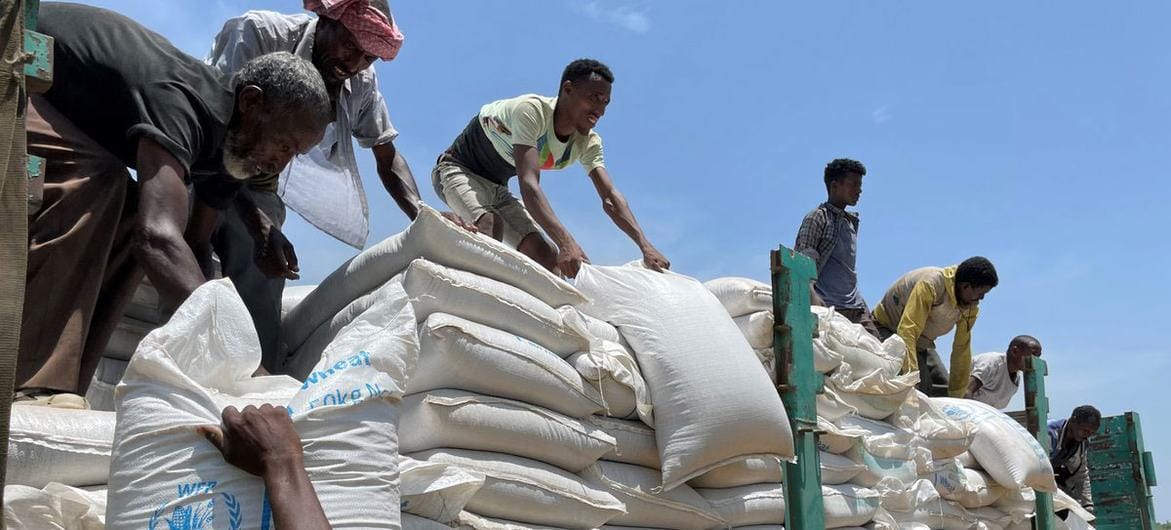
IMF Cautions That Gulf War Could Lead to Increased Food Insecurity in Africa
“An increase of 20 percent in international food prices may result in over 20 million individuals facing food insecurity, with 2 million children under the age of 5 suffering from acute malnutrition.” Climate shocks amplify the pressure; the recent floods in Mozambique and Madagascar highlight the region’s significant susceptibility to weather disturbances.
The IMF official emphasized that, in addition to immediate policy responses, structural reforms are essential for mitigating the shock and enhancing resilience in the medium term. At the heart of this, it emphasized, was the necessity to enhance intra-African trade and expedite regional integration.
He stated: “Even as policymakers contend with the immediate shock, the medium-term reform agenda must not be delayed.” The importance of expediting structural reforms—to enhance growth and resilience—is now greater than ever. Enhancing the business environment, bolstering governance, and reforming state-owned enterprises, particularly in the sectors of energy, transport, and telecommunications, can contribute to attracting investment and increasing productivity.
“Enhancing regional integration via the African Continental Free Trade Area has the potential to strengthen supply-chain resilience and broaden markets for local producers.”
The Fund cautioned that the reduction in foreign aid was removing an essential safeguard for numerous at-risk economies. The year 2025 was highlighted as a significant turning point in aid flows, with reductions impacting fragile states the hardest and jeopardizing vital services, especially healthcare, in nations with few alternative financing avenues.
Regarding debt in the region, he remarked: “Debt vulnerabilities are also increasing.” Over one-third of nations face a significant risk of, or are currently experiencing, debt distress. In 21 countries, fiscal deficits surpass the necessary levels required to stabilize debt.
“Increasing interest payments and decreasing concessional finance are elevating debt-service burdens and limiting crucial development expenditures.”
“In certain instances, an increasing dependence on domestic borrowing has strengthened the connection between government debt and bank balance sheets, heightening concerns about financial instability.”
Meanwhile, the 10th edition of the Global Report on Food Crises, published by a coalition of development and humanitarian organisations, has indicated that acute hunger has doubled over the past decade, with two famines declared last year for the first time in the report’s history – in Gaza and Sudan.
According to a report cited by Reuters, a total of 266 million individuals across 47 countries and territories experienced severe acute food insecurity in 2025. Additionally, 1.4 million people were reported to be living under catastrophic conditions in regions including Haiti, Mali, Gaza, South Sudan, Sudan, and Yemen.
In 2025, a staggering 35.5 million children around the globe faced acute malnutrition, with nearly 10 million enduring severe acute malnutrition.
This year’s report indicated that severity levels continued to be critical, with only Haiti anticipated to avoid the most severe “catastrophic” category due to a minor enhancement in security and a rise in humanitarian assistance.
“We are witnessing not only temporary shocks but also ongoing shocks that persist over time,” stated Alvaro Lario, the head of the U.N. International Fund for Agricultural Development, which is responsible for compiling the annual report.
“The primary message is that food insecurity is no longer an isolated issue; it is exerting pressure on global stability,” he informed Reuters.
Lario expressed concern that the U.S.-Israeli conflict with Iran has heightened alarm, cautioning that extended interruptions to energy and fertilizer trade could impact global food markets and exacerbate hunger in countries reliant on imports that are already facing crises.
“Even if the conflict in the Middle East were to cease immediately, we understand that many of the food price shocks and inflation will occur in the upcoming six months,” he stated.
Prior to the additional strain of the recent war, West Africa and the Sahel appeared poised to continue facing significant challenges this year due to ongoing conflict and persistent inflation, especially in Nigeria, Mali, Niger, and Burkina Faso.
Nigeria is anticipated to experience one of the most significant rises in food insecurity by 2026, with an additional 4.1 million individuals expected to confront acute hunger.
In East Africa, the lack of rainfall throughout much of the Horn of Africa is anticipated to exacerbate the hardships faced in Somalia and Kenya. Drought, insecurity, soaring food prices, and diminished humanitarian assistance are expected to contribute to increasingly dire circumstances.
The report additionally cautioned that humanitarian and development financing for food sectors in crisis experienced a significant drop in 2025 and is expected to decrease further.
Funding for the humanitarian food sector is estimated to have decreased by approximately 39% last year compared to 2024 levels, while development assistance has contracted by at least 15 percent.