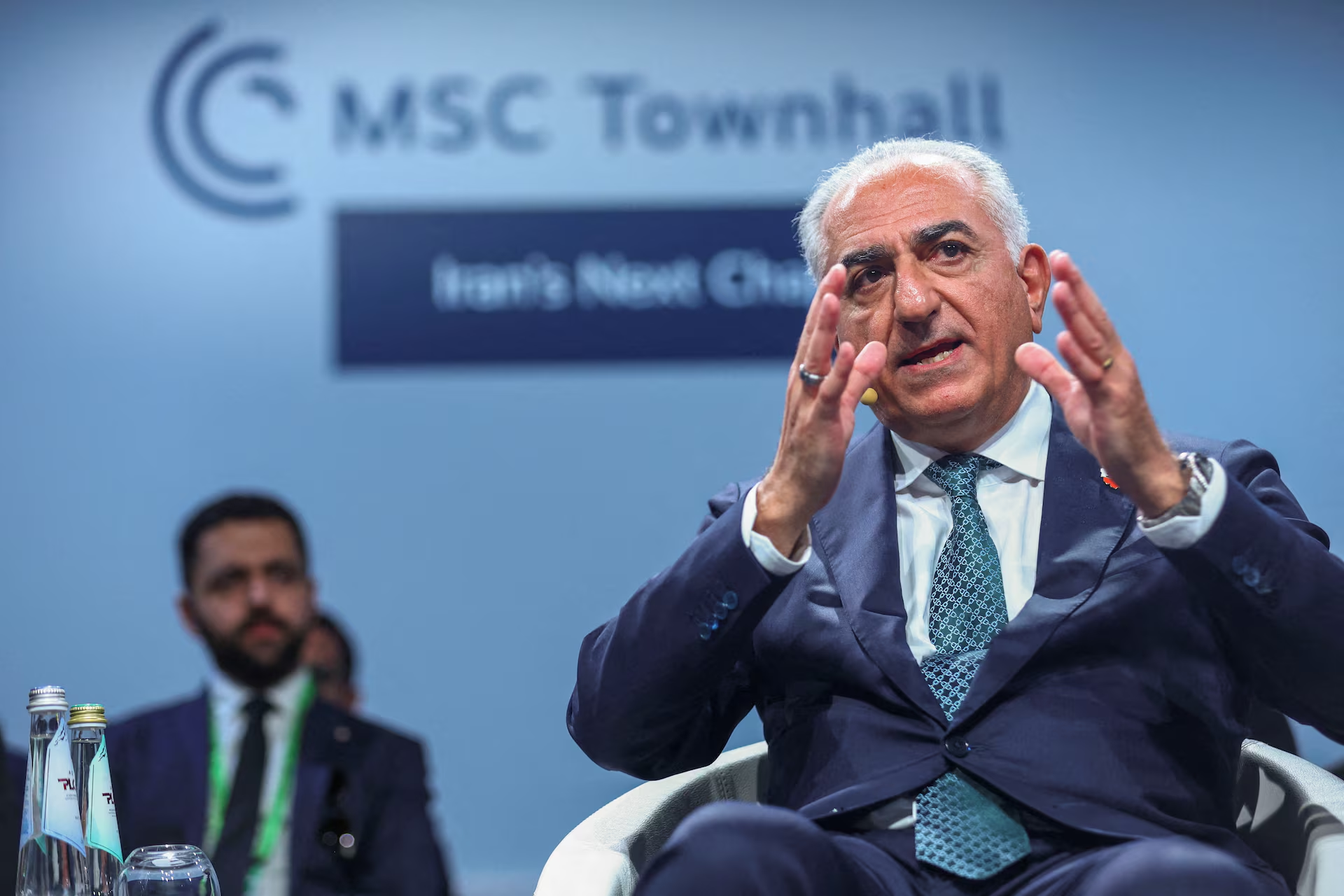
Reza Pahlavi advocates for Western intervention in Iran, criticizes Germany for refusing to engage in discussions, and warns that more lives are at risk.
Reza Pahlavi called on Western governments to back initiatives opposing Iran, while expressing discontent with Germany for not agreeing to meet him during his visit to Berlin.
Pahlavi, the son of Mohammad Reza Pahlavi, who was ousted during the Iranian Revolution that brought in Ayatollah Ruhollah Khomeini, criticized European nations for their lack of action regarding what he termed the violent repression of protests in Iran.
During a press conference in Berlin, he stated: “The question is not whether change will come.” Transformation is approaching.
He stated, “The real question is how many Iranians will lose their lives while the community of Western democracies merely continues to watch.”
Demonstrations held by both supporters and opponents in central Berlin prompted his comments. After Pahlavi was doused with a red liquid during a public gathering, a protester was taken into custody.
Pahlavi, having spent much of his life in exile, has surfaced as a possible opposition leader in the wake of extensive anti-government protests that swept through Tehran and other cities last year. Nevertheless, Iran’s opposition movements continued to be divided, and Western governments exercised caution in endorsing him due to uncertainty regarding his domestic backing.
European nations, such as Germany, have dismissed the possibility of aligning with the United States and Israel in the conflict, which intensified following joint military operations that allegedly resulted in the death of Ali Khamenei earlier in the war.
Pahlavi expressed disappointment at the German government under Friedrich Merz for declining to meet with him during his visit.
“Utilize your right.” “In democracies, you are entitled to engage in conversation with whomever you choose,” he stated.
His visit took place during a time when diplomatic efforts to resolve the conflict appeared to be stalled, with both Iran and the United States maintaining blockades around the strategically significant Strait of Hormuz, a vital route for global energy supplies.