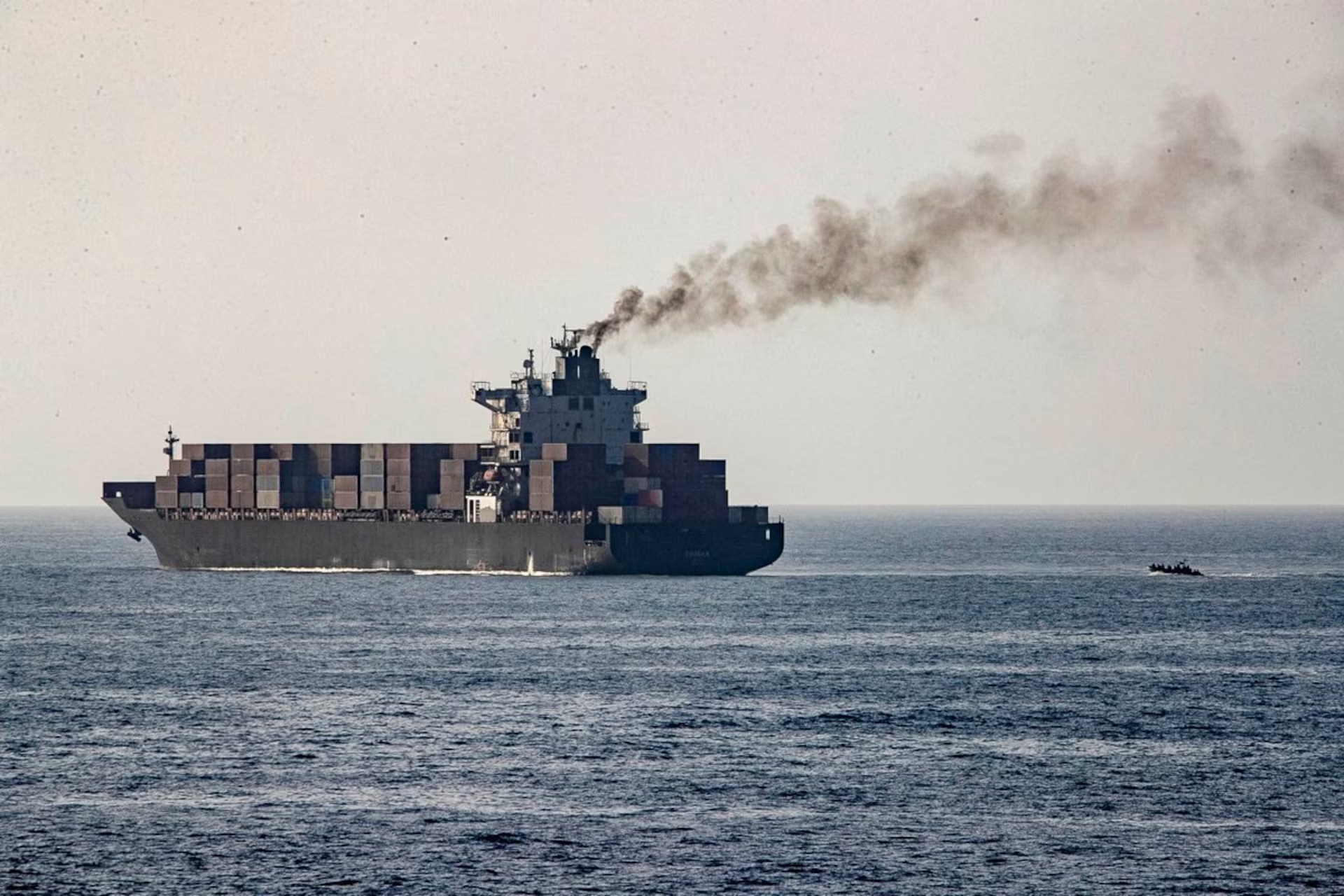
US has intercepted Iranian oil tankers in Asian waters, redirected the vessels, escalated blockade enforcement, and intensified global energy supply tensions.
According to multiple shipping and security sources, the United States military has intercepted at least three Iranian-flagged oil tankers in Asian waters, redirecting them away from areas near India, Malaysia, and Sri Lanka.
The actions occurred as Washington ramped up enforcement of its maritime blockade against Iran, further straining an already delicate ceasefire and escalating tensions in global energy markets.
According to sources, the intercepted vessels comprised the Iranian-flagged supertanker Deep Sea, which was partially loaded with crude and was last tracked near Malaysia’s coast approximately a week prior. A separate vessel, Sevin, which was transporting approximately 65 percent of its one million-barrel capacity, was similarly redirected after being observed near Malaysia.
A third tanker, Dorena, carrying around two million barrels of crude, was intercepted close to southern India. The US Central Command has confirmed that a US Navy destroyer is now escorting the vessel in the Indian Ocean following its alleged attempt to breach the blockade.
Shipping sources have also indicated that a fourth vessel, the Iranian-flagged Derya, might have been intercepted. The tanker was said to have not offloaded its cargo in India prior to the expiration of a US waiver on Iranian crude imports, and its last known location was off India’s western coast.
Although the US military has not publicly outlined all interception operations, Central Command revealed that 29 vessels have been instructed to turn back or return to port since the blockade commenced.
The maritime crackdown occurred alongside rising tensions in the region, as Iran allegedly opened fire on vessels trying to navigate the Strait of Hormuz and took control of two container ships.
The strategic waterway, an essential chokepoint for global energy flows, managed approximately one-fifth of the world’s oil and gas supply. The disruption caused considerable volatility in international markets and played a role in exacerbating the energy crisis.
According to security sources, US operations have increasingly focused on Iranian vessels in open waters beyond the Strait of Hormuz. This tactical shift is intended to mitigate risks linked to potential floating mines in the busy passage, which could threaten maritime security and disrupt oil shipments crucial for the global economy.
Nearly two months into the conflict involving the United States, Israel, and Iran, there are limited signs of renewed diplomacy. The interceptions highlighted a firm stance at sea, even as the conditions for a ceasefire remain uncertain.