Trump’s election fraud claims spread distrust before midterms, Reuters/Ipsos poll finds
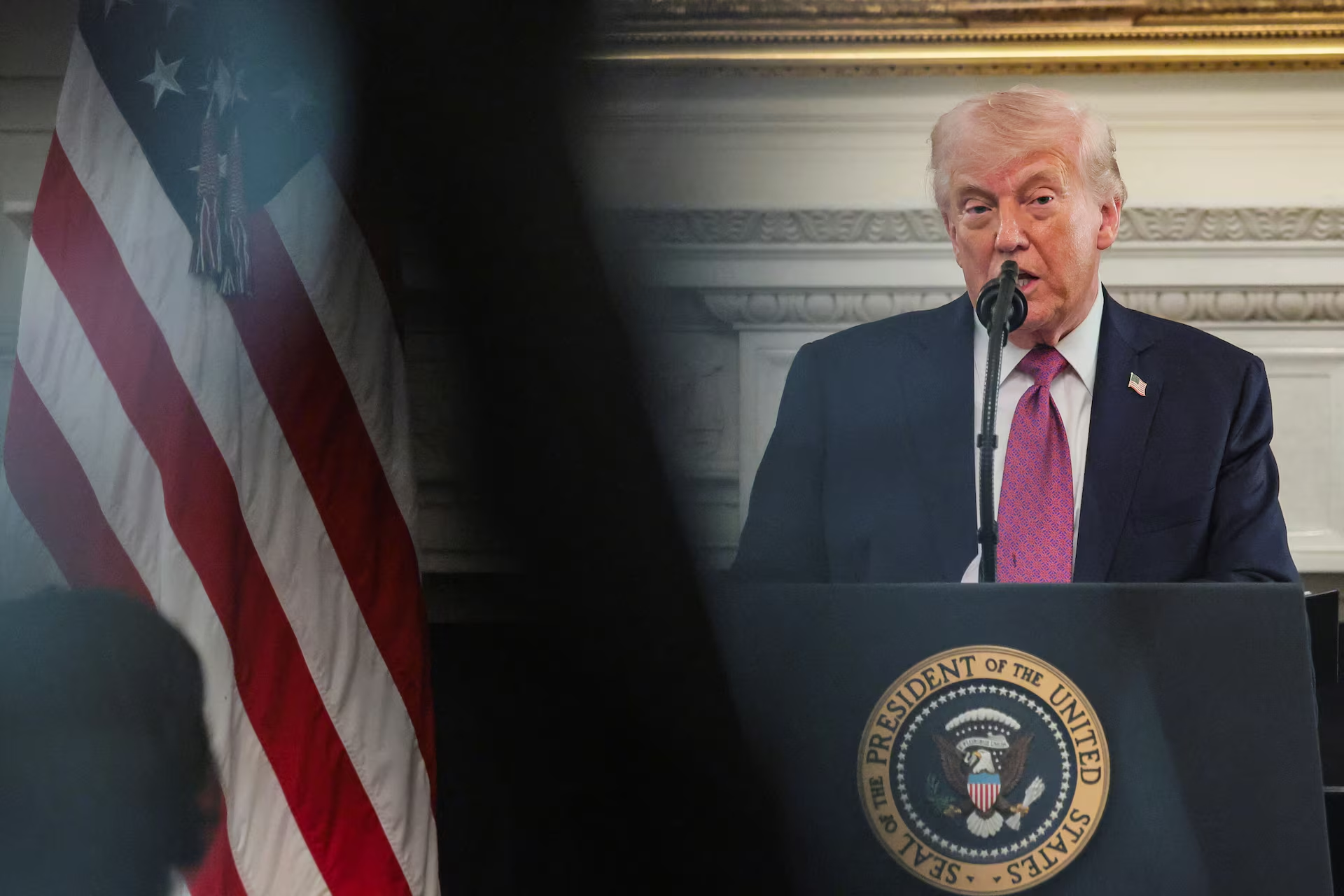
A Reuters/Ipsos poll indicates that President Donald Trump’s prolonged efforts to erode trust in U.S. elections have resonated widely with the American public, possibly paving the way for misinformation as the midterm elections in November approach.
The six-day poll completed on Monday revealed significant partisan divides regarding trust in elections. A substantial majority of Republicans expressed the belief that fraud is widespread, despite the absence of evidence to substantiate this assertion, and they showed a preference for a federal law enforcement presence at polling places.
Approximately 46% of respondents agreed with the assertion that non-citizens cast a significant number of fraudulent ballots in U.S. elections. Among these, 82% of Republicans concurred, in contrast to 18% of Democrats and 38% of independents.
About 53% of the people who answered said they were worried about fake mail-in or absentee ballots, while 43% said they weren’t. This concern displayed a clear partisan divide: 83% of Republicans expressed worry, in contrast to 33% of Democrats.
The responses collectively suggest that years of messaging from Trump and his allies, which has raised doubts about voting, have had a significant impact on Republicans. This is especially true regarding assertions that non-citizens vote in large numbers and that mail-in ballots are unreliable, even though numerous audits and academic studies have consistently shown that fraud in either scenario is extremely rare.
More broadly, the poll indicates that a significant number of Americans are prepared to accept allegations of misconduct in the upcoming November elections, when Democrats are anticipated to regain the House of Representatives and control of the Senate will also be contested amid voter dissatisfaction regarding the war with Iran and persistently high inflation.
TRUMP’S ASSERTIONS GAIN TRACTION
Kelly Rader, research director at States United Democracy Center, a nonpartisan organization dedicated to protecting free and fair elections, noted that the Reuters/Ipsos poll results highlight the lasting effects of misleading statements made by Trump and his associates. “People are responding to them, particularly Republicans, because they’re listening to the leaders that they trust, and it’s creating this vulnerability in people to believe lies about the election,” Rader stated in an interview.
Observing significant partisan divides in beliefs, such as those surrounding non-citizen voting, is always disheartening. Fortunately, the system is designed to endure such challenges, and states are prepared for the upcoming midterms this year.
Advocating for Voter Identification
An online poll conducted with 4,557 U.S. adults, featuring a margin of error of 2 percentage points, revealed bipartisan support for the requirement of official identification for voters. The results showed that 77% of respondents favored this measure, which included 63% of Democrats and 95% of Republicans.
The responses indicated a general support for Trump’s advocacy of voter ID requirements; however, the poll did not cover the more stringent measures proposed by Republicans that are currently being discussed in Congress.
The SAVE Act, mandating proof of U.S. citizenship for voter registration or updates for federal elections, has successfully passed the House. However, it encounters significant challenges in the Senate, with Democrats cautioning against potential disenfranchisement, as they argue that such measures disproportionately affect minority voters and could undermine the integrity of the electoral process. This move comes despite the fact that 23 states, primarily led by Republicans, have already implemented similar provisions.
The poll revealed that 63% of Republicans hold the belief that Trump’s false assertion regarding the 2020 election being stolen from him is true. This percentage has remained relatively stable over the years, even in light of the lack of evidence backing his ongoing allegations of widespread fraud.
In contrast, merely 9% of Democrats and 21% of independents expressed the belief that Trump’s loss in 2020 was a result of wrongdoing.
Confidence that our ballots will be counted
A bipartisan majority of Americans, with 79% of Democrats and 71% of Republicans expressing their confidence, indicated they believe their ballots will be counted in elections. Rader highlighted this finding as a positive aspect of the poll. “These conspiracy theories surrounding elections have not diminished people’s faith that their vote will be counted as they intended,” Rader remarked, noting that her organization’s research indicates this confidence is closely linked to voter turnout.
In a January interview with the New York Times, Trump expressed regret over not deploying the National Guard to take control of voting machines during the 2020 election. He also stated that Republicans “ought to nationalize the voting” during an appearance on former FBI Deputy Director Dan Bongino’s podcast in February.
The poll revealed minimal support for that concept, with merely 28% of Americans endorsing the deployment of troops to polling places. Republicans exhibited a division, with 45% supporting and 54% opposing.
Simultaneously, 62% of Republicans favored the presence of federal law enforcement at polling places, in contrast to 23% of Democrats and 36% of independents.