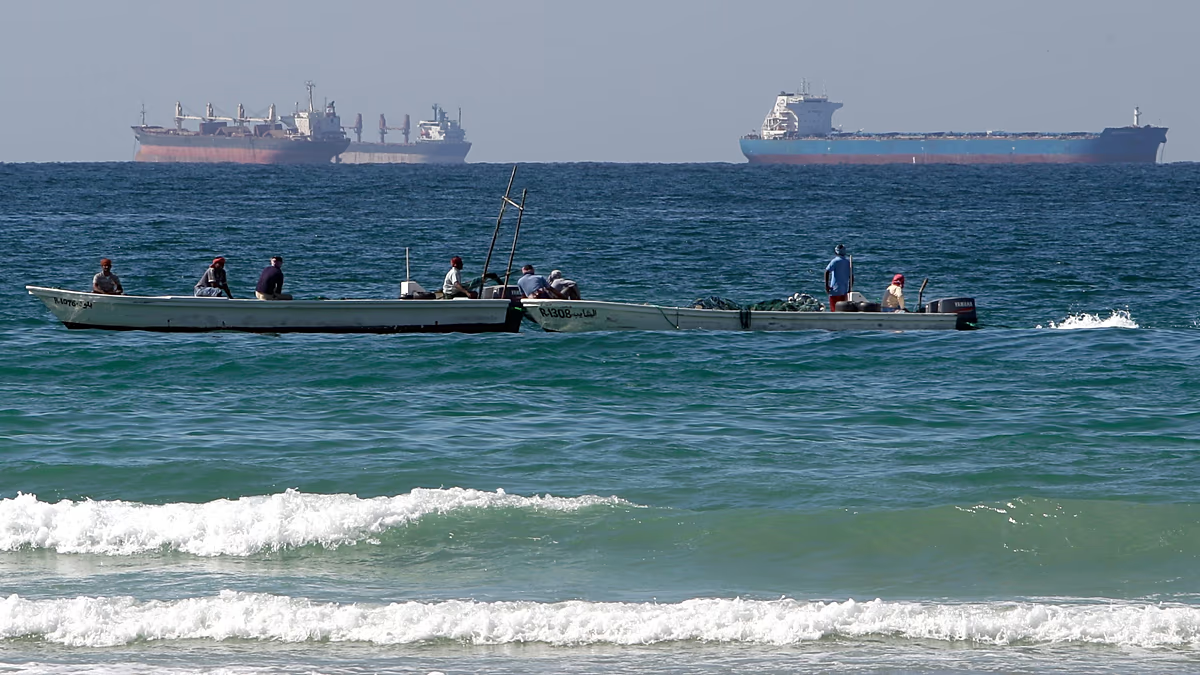
Oil prices increased following reports of gunfire hitting vessels in the Strait of Hormuz, raising tensions and concerns about supply.
Global oil benchmarks recovered, reversing previous declines as tensions heightened in the crucial waterway. Brent crude increased by 0.7% to $99.21 a barrel by 1049 GMT, while U.S. West Texas Intermediate also rose 0.7% to $90.26, building on gains from the previous session.
Gunfire reportedly struck at least three container ships in the Strait of Hormuz. The Revolutionary Guards Navy of Iran has reportedly seized two vessels for alleged maritime violations, subsequently transferring them to Iranian territory, according to the semi-official Tasnim news agency.
The Strait of Hormuz, an essential chokepoint for global energy trade, had previously managed approximately 20% of global oil and liquefied natural gas shipments prior to the escalation of conflict earlier this year.
Geopolitical uncertainty intensified following Donald Trump’s announcement as US President of an indefinite extension of the ceasefire with Iran, mere hours before it was set to expire. The action seemed to be one-sided, lacking any immediate verification from either Iran or US ally Israel. The anticipated peace talks in Pakistan did not occur, casting further uncertainty on the prospects for de-escalation.
In another development, Ukrainian President Volodymyr Zelenskiy announced that the Druzhba pipeline, which carries Russian oil, is prepared to restart operations. Industry sources have indicated that Russia may cease oil exports from Kazakhstan to Germany via the route beginning May 1.
Attention in the market is shifting towards the forthcoming US inventory data. Industry figures indicated that crude stockpiles decreased by 4.5 million barrels last week, accompanied by reductions in gasoline and distillate inventories. Analysts anticipate that official data will validate a draw of 1.2 million barrels.
Analysts indicate that ongoing reductions in inventory and robust export demand may suggest a tightening of global supply, as buyers in Europe and Asia hurry to secure energy in light of increasing geopolitical risks.