Trump Issues Warnings of Strikes on Iran’s Power Plants and Bridges, Dispatches Negotiators to Pakistan
US President Trump intensifies the Iran crisis with threats of strikes on infrastructure, while the US dispatches negotiators to Pakistan for urgent peace discussions.
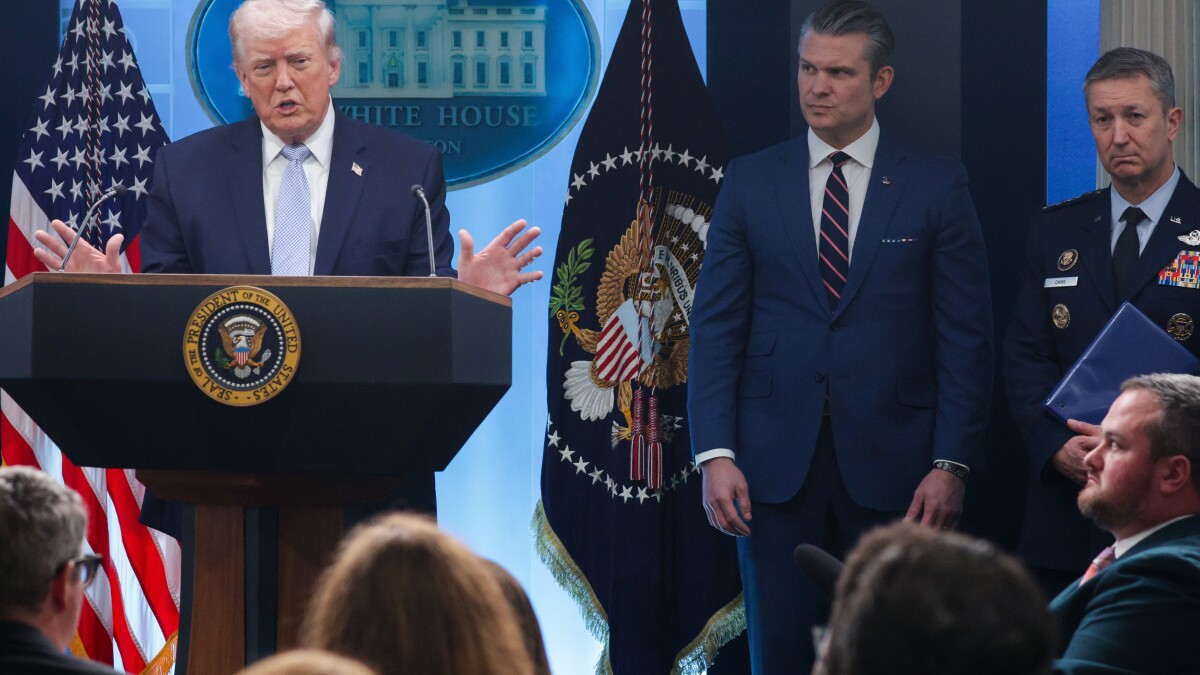
On Sunday, US President Donald Trump reiterated his warning to “knock out” Iran’s power plants and bridges if the Iranian regime does not agree to a deal to end the war. He also disclosed that he was sending representatives back to Pakistan for additional peace talks. Trump expects the US delegation to arrive this evening.
In an extensive post on his Truth Social platform, the US president addressed Iran’s recent closure of the Strait of Hormuz, which involved several attacks on shipping. He noted that many of these attacks targeted “a French ship” and a UK “freighter.”
Trump previously asserted, in a separate post over the weekend, that Iran had consented to never close the strait again. In the latest post, Trump asserted that the US “loses nothing” due to the closure of the strait, while stating that Iran was incurring millions in losses.
It is important to remember that the American president had previously cautioned Iran about the possibility of bombing its power plants during the conflict, only to later seek ways to retract that threat. The international community has widely condemned the striking power infrastructure, deeming it a violation of international law, as reported by Sky News.
Trump’s latest post concluded with a forceful all-caps statement, emphasizing that “It’s Time for The Iran Killing Machine to End!”
The president’s recent intervention has been significantly more assertive compared to his initial response to Iran’s closure of the strait. On Saturday, the US president appeared to downplay the situation, stating that Iran has been acting in a clever manner for the past 47 years. However, he also emphasized that both parties “are engaged in very productive discussions.”
“They aimed to shut the strait once more, as they have been doing for years; they cannot intimidate us,” Trump stated on Saturday.
“Iran chose to fire bullets on Sunday in the Strait of Hormuz—a complete breach of our ceasefire agreement!” A significant number of them targeted a French ship and a freighter from the United Kingdom. That was rather unkind, wasn’t it? My representatives are traveling to Islamabad, Pakistan—They will arrive tomorrow evening for negotiations.
“Iran recently announced the closure of the Strait, which is peculiar, as our blockade has already rendered it closed.” They are assisting us unknowingly, and they are the ones who suffer from the closed passage, losing $500 million each day! The United States gains nothing.
“In fact, numerous ships are currently en route to the U.S., specifically Texas, Louisiana, and Alaska, to load up, courtesy of the IRGC, always eager to play the role of ‘the tough guy!’” We are presenting a fair and reasonable proposal, and I sincerely hope they accept it. If they choose not to, the United States will proceed to dismantle every power plant and bridge in Iran.
“No More Mr. Nice Guy!” They will come down swiftly and effortlessly, and if they choose not to accept the deal, it will be my privilege to take the necessary actions that should have been taken regarding Iran by previous presidents over the past 47 years. “It’s time for the Iran killing machine to end,” Trump wrote.
A report indicates that the world has lost more than $50 billion in crude oil production since the onset of the Iran war nearly 50 days ago, and the repercussions of this crisis are expected to be felt for months and even years to come.
On Friday, Iranian Foreign Minister Abbas Araqchi announced that the Strait of Hormuz was open following a ceasefire agreement reached in Lebanon. Meanwhile, Trump expressed his belief that a deal to conclude the Iran war would materialize “soon,” although the exact timing is still uncertain.
Since the crisis began at the end of February, over 500 million barrels of crude and condensate have been removed from the global market, as reported by Kpler data—marking the largest energy supply disruption in modern history, according to Reuters.
In other words, the loss of 500 million barrels of oil from the market translates to a global reduction in aviation demand for 10 weeks, a complete halt to road travel by any vehicle worldwide for 11 days, or a five-day absence of oil for the global economy, according to Iain Mowat, principal analyst at Wood Mackenzie.
According to estimates from Reuters, this amount represents nearly a month of oil demand in the United States, or over a month of oil for all of Europe. The report indicated that this amount could be likened to approximately six years of fuel consumption for the U.S. military, which uses around 80 million barrels annually based on fiscal year 2021 data, or sufficient fuel to operate the global international shipping industry for about four months.
In March, Gulf Arab countries experienced a loss of approximately 8 million barrels per day in crude production, a figure that is nearly on par with the total output of Exxon Mobil and Chevron, two of the largest oil companies globally.
According to Kpler data, jet fuel exports from Saudi Arabia, Qatar, the United Arab Emirates, Kuwait, Bahrain, and Oman decreased from approximately 19.6 million barrels in February to only 4.1 million barrels for March and April combined thus far. According to estimates from Reuters, the decline in exports could have facilitated approximately 20,000 round-trip flights between New York’s JFK Airport and London Heathrow.
Since the onset of the conflict, crude prices have averaged approximately $100 a barrel, leading to an estimated $50 billion in lost revenues due to the missing volumes, according to Johannes Rauball, a senior crude analyst at Kpler. This corresponds to a 1 percent reduction in Germany’s annual gross domestic product, approximately equivalent to the total GDP of smaller nations like Latvia or Estonia.
Despite Iranian Foreign Minister Araqchi’s statement that the Strait of Hormuz remains open, the recovery of output and flows is anticipated to be gradual. According to Kpler, global onshore crude inventories have decreased by approximately 45 million barrels thus far in April. Since late March, production outages have amounted to approximately 12 million bpd.
On Sunday, Trump announced that US forces had fired upon and captured an Iranian-flagged cargo ship as it attempted to breach the US naval blockade in the Gulf of Oman.
“Today, an Iranian-flagged cargo ship named TOUSKA, nearly 900 feet long and weighing almost as much as an aircraft carrier, attempted to breach our naval blockade, and the outcome was unfavorable for them,” Trump wrote in a post.
The USS SPRUANCE, a U.S. Navy guided missile destroyer, intercepted the TOUSKA in the Gulf of Oman and issued a clear warning for them to halt. The Iranian crew disregarded instructions, prompting our Navy ship to halt them decisively by damaging the engine room. At this moment, the vessel is under the custody of U.S. Marines,” he stated.
Trump’s announcement follows his accusation that Iran has breached the existing ceasefire agreement through its activities in the crucial waterway. Tehran has once more obstructed the transit of the majority of vessels through the strait, citing US “breaches of trust.”
Tehran Dismisses New Negotiations Following Trump’s Warning
Iran has also dismissed the idea of a second round of talks with the US, even though Trump proposed that direct discussions would take place in Pakistan tomorrow (today). He intended to dispatch JD Vance, his vice president, to spearhead the negotiations.
Trump reiterated his warning to “knock out” Iran’s power plants and bridges if the Iranian regime does not agree to a deal to conclude the war. The conclusion of the ceasefire is nearing rapidly, as Trump cautions that he may not prolong it past Wednesday.
Iran has charged that the US blockade, which commenced on Monday, breaches the two-week ceasefire agreement established between the two nations.
Iran’s parliamentary speaker Mohammad-Bagher Ghalibaf characterized the blockade as “a foolish and stupid decision.” The blockade applies to vessels from all nations that seek to enter or leave Iranian ports and coastal regions, encompassing all Iranian ports located on the Arabian Gulf and Gulf of Oman.
The US military has issued prior warnings that any vessels attempting to breach the blockade will be boarded and confiscated.
Netanyahu: The Conflict Is Ongoing
Benjamin Netanyahu has cautioned that Israel’s conflict with Iran is far from over. The two countries are presently adhering to a ceasefire established through an agreement between the US and Iran, while Israel has likewise consented to a 10-day truce in Lebanon.
During the visit of Argentina’s President Javier Milei to Jerusalem, Israel’s prime minister stated that his country is vigilant regarding any changes to the current agreement.
Netanyahu stated, “We have been collaborating with the United States in a struggle against the great tyranny of Iran, which terrorizes the world, aims for our destruction, and seeks to undermine the United States, as well as to dismantle Western civilization as we understand it.”
“We have accomplished remarkable feats. The conclusion has not been reached just yet. At any moment, we may encounter new developments.
US negotiators are set to travel to Pakistan on Monday.
President Trump announced that U.S. negotiators will travel to Pakistan on Monday for another round of discussions with Iran, sparking optimism about prolonging a tenuous ceasefire that is set to end by Wednesday, despite ongoing tensions between Washington and Tehran regarding the Strait of Hormuz.
However, several hours later, Iran had yet to confirm its attendance. The chief negotiator, parliament Speaker Mohammad Bagher Qalibaf, stated in an interview broadcast on state television late Saturday that “there will be no retreat in the field of diplomacy,” while recognizing that a significant gap still exists between the parties involved.
Host Pakistan has yet to confirm a second round; however, authorities have started to enhance security measures in Islamabad. A regional official engaged in the efforts stated that mediators were completing preparations, and U.S. advance security teams were present on the ground. An official, who requested to remain unnamed, stated that they were not permitted to share details about the preparations with the media.
The White House announced that Vice President JD Vance, who spearheaded the initial round of significant in-person discussions lasting 21 hours last weekend, will head the U.S. delegation to Pakistan, accompanied by envoys Steve Witkoff and Jared Kushner, according to the Los Angeles Times.
On Saturday, Iran announced that it had received new proposals from the United States. It remained uncertain if either party had altered their positions on the matters that caused the previous round of negotiations to falter, such as Iran’s nuclear enrichment program, its regional proxies, and its control over the Strait of Hormuz.