Bulgaria’s former president, aligned with Kremlin interests, secures a decisive victory in the election
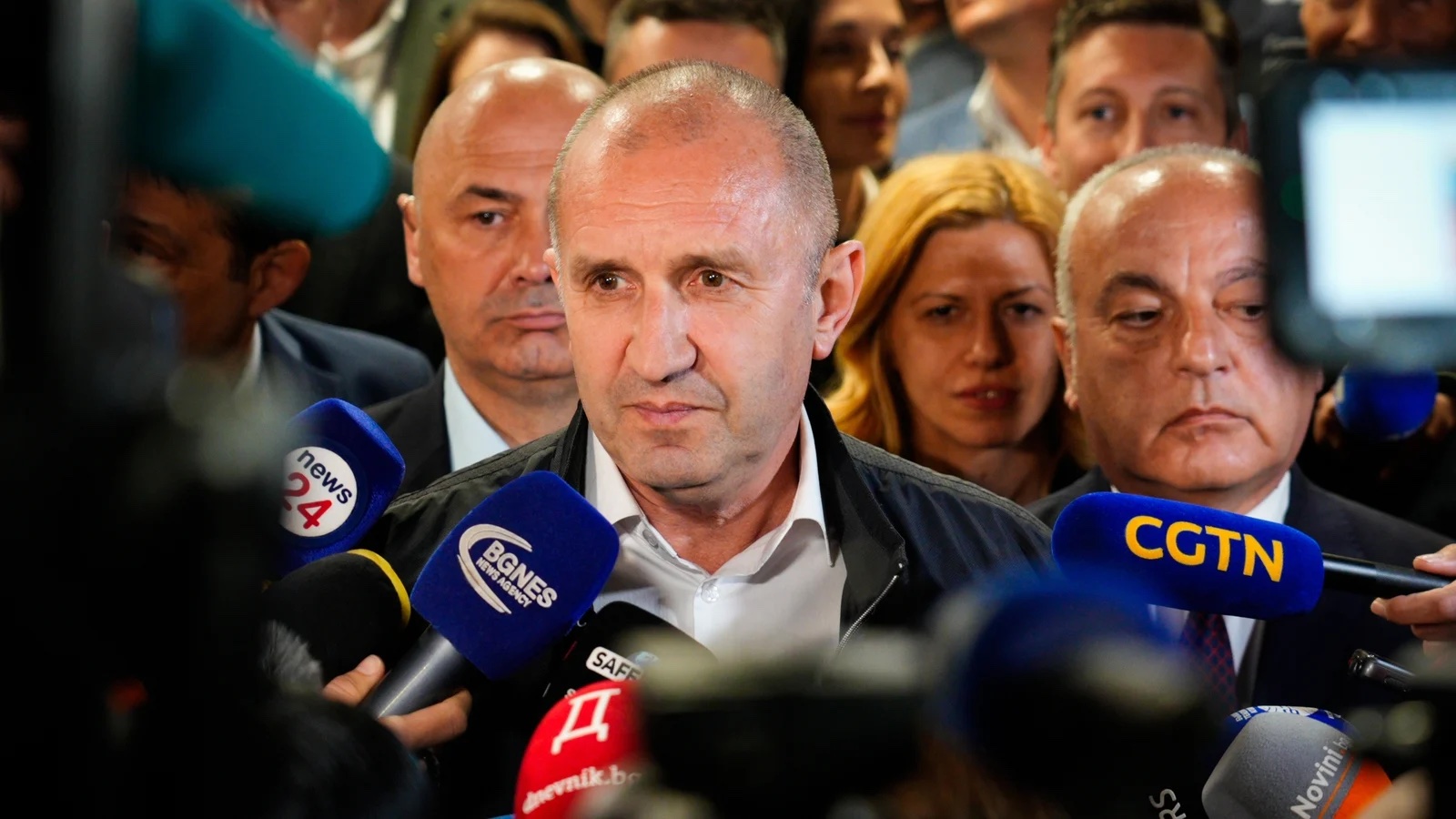
Former President Rumen Radev, who is pro-Russian, has achieved a significant victory in Bulgaria’s parliamentary election, according to official results released on Monday. This win has effectively dismantled the long-standing political powers and may bring the EU and NATO member states closer to Moscow.
The performance, surpassing opinion poll predictions, stands as one of the most significant outcomes for a single party in a generation and may, for now, bring an end to the persistent instability that resulted in eight elections over five years.
Radev’s Progressive Bulgaria party secured 44.6% of the vote following the completion of ballot counting, indicating the possibility of governing independently. However, he has not dismissed the idea of forming a coalition with a pro-European group or a smaller party.
Progressive Bulgaria’s count positioned it significantly ahead of the pro-European We Continue the Change-Democratic Bulgaria (PP-DB) coalition, which garnered 12.6%, and the long-standing GERB party, under the leadership of former Prime Minister Boyko Borissov, at 13.4%.
A eurosceptic and former fighter pilot who opposed military support for Ukraine’s war effort against Moscow, Radev resigned from Bulgaria’s largely ceremonial presidency in January to participate in the parliamentary election following mass protests that led to the ousting of the previous government in December.
He experienced a surge of frustration regarding the political instability in the Balkan nation of 6.5 million, where voters are weary of corruption and the long-standing parties that have controlled politics for decades. “There is now an opportunity for the changes people have been longing to see to finally become apparent,” Evelina Koleva, a manager at a digital marketing company in Sofia, the capital, told Reuters.
Inquiries Regarding International Relations
Both the European Union and Russia approved Radev’s victory.
In a post on X, Antonio Costa, the head of the European Council, which comprises the EU’s national governments, expressed, “Congratulations to Rumen Radev on your outright victory… I look forward to collaborating with you in the #EUCO on our shared agenda for a prosperous, autonomous, and secure Europe.”
The Kremlin expressed its encouragement regarding Radev’s intention to address issues with Russia through pragmatic discussions.
Radev’s campaign has been likened to that of Hungary’s pro-Kremlin former Prime Minister Viktor Orban, particularly when he discussed enhancing relations with Moscow and reinstating the unrestricted flow of Russian oil and gas into Europe.
Radev expressed his concerns regarding the European Union’s significant dependence on renewable energy sources, particularly in light of the ongoing energy crisis and the need for a balanced energy strategy that includes traditional energy sources alongside renewables.
Radev has remained unclear regarding his policy stance, leaving it uncertain how significantly he will alter Bulgaria’s foreign policy. Bulgaria, a Black Sea nation situated on the EU’s southeastern edge, joined the eurozone in January—a decision that Radev has openly criticized.
Analysts do not anticipate that he will attempt to reverse Bulgaria’s adoption of the euro or obstruct broader EU aid packages to Ukraine.
On Sunday, Radev expressed his readiness to collaborate with PP-DB on judicial reform, emphasizing that Bulgaria would “make efforts to continue on its European path.”
Concerns Regarding the Cost of Living
Before the vote on Sunday, Bulgaria’s caretaker Interior Minister Emil Dechev announced that authorities had made strides in addressing election fraud, with over 400 individuals detained on suspicion of vote buying and other malpractices, a significant increase from the 72 arrests for similar offenses during the last election in 2024.
Bulgaria has experienced significant development since the collapse of communism in 1989 and became a member of the EU in 2007. Life expectancy has increased significantly, unemployment rates are at their lowest within the EU, and the economy benefits from enhanced protections following the adoption of the euro.
However, it falls behind EU countries in various other metrics.
The cost of living has emerged as a significant concern since Bulgaria adopted the euro. The former government collapsed in response to protests regarding a new budget that suggested tax hikes and increased social security contributions. “The primary challenge facing the country is the economic crisis alongside the demographic crisis,” stated Tihomir Bezlov, a senior fellow at the Centre for the Study of Democracy in Sofia. “There appears to be a lack of ideas within the winning camp concerning either of these matters.”