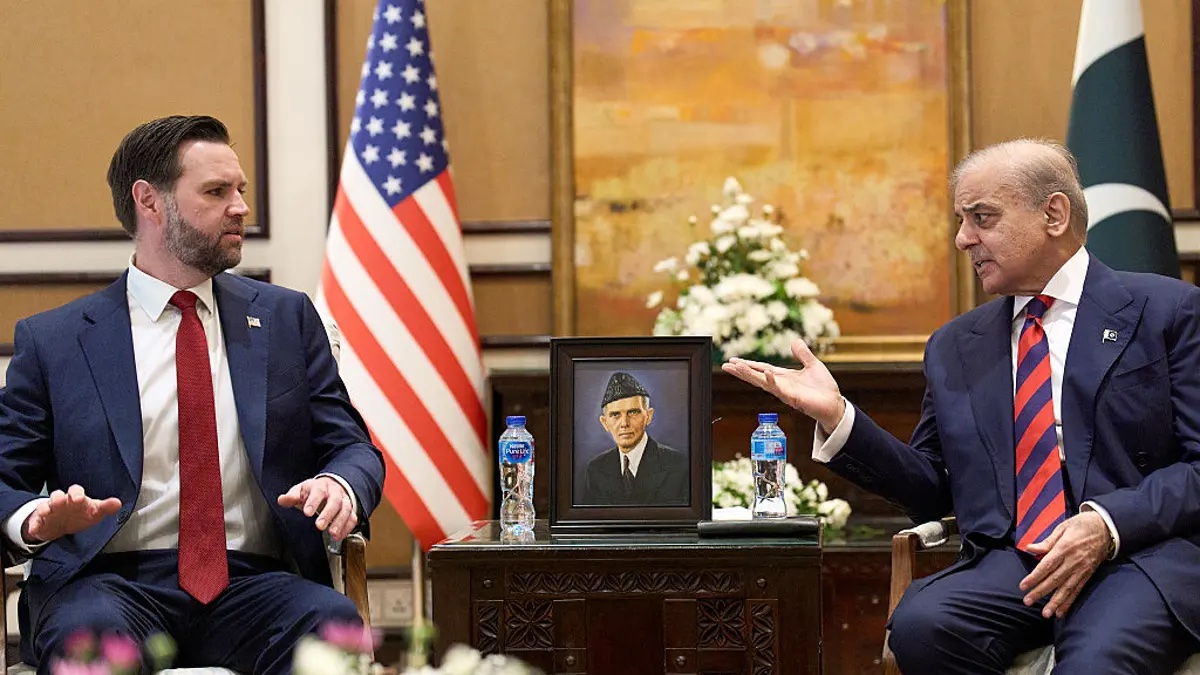
An Iranian source indicates that Iran might participate in peace talks following Pakistan’s efforts to resolve the US blockade
A senior Iranian official informed Reuters on Monday that Iran is contemplating participation in peace talks with the United States in Pakistan. This comes after Islamabad’s efforts to lift a U.S. blockade of Iran’s ports, which has been a significant obstacle for Iran’s re-engagement in peace initiatives.
Nonetheless, the official emphasized that no decision had been reached.
A senior Iranian official stated that Tehran was “positively reviewing” its participation as a two-week ceasefire approaches its expiration, though no final decision has been reached. The remarks reflected a distinct shift in tone from previous declarations dismissing attendance and vowing to respond to U.S. aggression.
An Iranian official stated that the mediator, Pakistan, is making constructive efforts to lift the U.S. blockade and facilitate Iran’s involvement.
The ceasefire seemed to be at risk following the U.S. announcement of seizing an Iranian cargo ship that attempted to breach its blockade, prompting Tehran to promise retaliation.
On Monday, Esmaeil Baghaei, spokesman for the Iranian Foreign Ministry, stated that Washington had demonstrated a lack of seriousness regarding the diplomatic process, asserting that Tehran would maintain its demands.
The U.S. aimed to initiate negotiations in Pakistan just before the ceasefire ends, with extensive security measures being implemented in Islamabad. However, Baghaei remarked that the U.S. was “insisting on some unreasonable and unrealistic positions.”
A senior Iranian source informed Reuters that Tehran’s “defensive capabilities,” encompassing its missile program, were not subject to negotiation.
The ceasefire between the U.S. and Iran is scheduled to expire on Tuesday night.
A source from Pakistan’s security sector indicated that Field Marshal Asim Munir, the country’s primary mediator, informed U.S. President Donald Trump that the blockade posed a barrier to negotiations, to which Trump responded by assuring he would take the advice into account.
On April 7, Trump announced a two-week ceasefire with Iran, though he has not indicated the exact end date.
A source from Pakistan engaged in the discussions indicated that it would conclude at 8 p.m. EST on Tuesday, corresponding to midnight GMT or 3:30 a.m. Wednesday in Iran.
When asked over the weekend about the possibility of an extension, Trump responded, “I don’t know.” Perhaps not. I might decide not to extend it. However, the blockade will continue to be in place.
The U.S. continues to uphold its blockade of Iranian ports, whereas Iran has lifted and subsequently reimposed its blockade of the Strait of Hormuz, a crucial passage that usually manages about one-fifth of the global oil and liquefied gas supply.
Oil prices retreated from earlier peaks, currently reflecting an increase of approximately 3-4% for the day, as traders expressed concerns over the potential collapse of the ceasefire. Traffic in the Strait of Hormuz was nearly halted, with only three crossings recorded over a 12-hour period, as indicated by shipping data.
U.S. Marines embark on Iranian vessel
The U.S. military reported that it engaged an Iranian-flagged cargo ship en route to Iran’s Bandar Abbas port on Sunday, following a six-hour standoff, effectively disabling its engines. The U.S. Central Command has published footage depicting Marines rappelling from helicopters onto the ship.
According to state media, Iran’s military reported that the ship was en route from China and accused the U.S. of “armed piracy.” They expressed their readiness to confront U.S. forces regarding the “blatant aggression,” yet felt limited by the presence of crew members’ families on board.
China, the primary purchaser of Iranian crude, voiced apprehension regarding the “forced interception.” Chinese President Xi Jinping urged for ships to return to normal passage through the strait and advocated for the resolution of the conflict through political and diplomatic means, as reported by the state news agency Xinhua.
On Sunday, Trump issued a warning that the U.S. would obliterate every bridge and power plant in Iran should it refuse his terms, maintaining a recent trend of similar threats.
Iran has stated that should the United States attack its civilian infrastructure, it would target power stations and desalination plants in its Gulf Arab neighbors.
PREPARING FOR DISCUSSIONS THAT MAY NOT OCCUR
Trump informed the New York Post that Vice President JD Vance is set to arrive in Islamabad within hours, leading a U.S. delegation. Vance headed the U.S. delegation during the initial round of discussions last week, which also featured Trump’s envoy Steve Witkoff and son-in-law Jared Kushner.
Although Iran had previously stated that it would not participate, Pakistan prepared for the discussions. Approximately 20,000 security personnel have been stationed throughout the capital, Islamabad, according to statements from a government official and a security official.
On Saturday, Iran’s parliament speaker, Mohammad Baqer Qalibaf, who has been at the forefront of negotiations for Iran, stated that while progress had been made, significant differences remained regarding nuclear matters and the Strait.
European allies, who have faced ongoing criticism from Trump regarding their support for his war effort, are concerned that Washington’s negotiating team is advocating for a quick, surface-level agreement that would necessitate months or even years of intricate follow-up discussions.
Thousands have lost their lives due to U.S.-Israeli strikes on Iran and an Israeli invasion of Lebanon, which have occurred concurrently since the war commenced on February 28, despite a truce currently being in effect.
Iran retaliated to the assaults with missile and drone strikes targeting Israel and neighboring Arab nations that accommodate U.S. military bases.