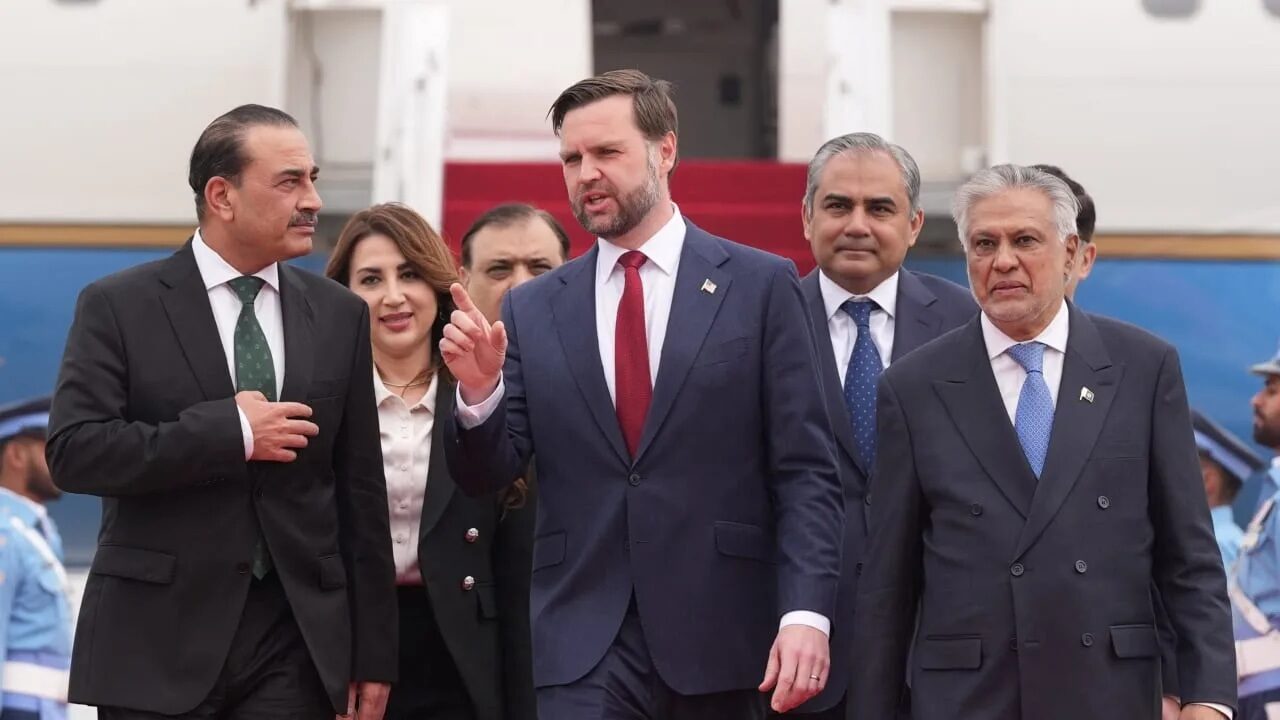
Allies are concerned that a hastily arranged US–Iran framework deal may lead to unintended consequences, resulting in a technical stalemate.
European allies are concerned that a U.S. negotiating team lacking experience is advocating for a quick, attention-catching framework deal with Iran, which could solidify rather than address underlying issues, according to diplomats who have previously engaged with Tehran.
There are concerns that Washington, keen to secure a diplomatic victory for President Donald Trump, might settle for a superficial agreement regarding Iran’s nuclear program and sanctions relief, only to face prolonged and intricate follow-on negotiations. “The worry isn’t about the absence of an agreement,” remarked a senior European diplomat, one of eight who spoke to Reuters and have either previously engaged with the nuclear issue or are still involved. “A poor initial agreement can lead to a cascade of ongoing issues.”
In response to a series of inquiries from Reuters, which covered topics such as negotiating style, team dynamics, objectives, and the risks associated with a swift agreement, the White House dismissed the criticism. “President Trump has a demonstrated history of securing favorable deals for the United States and its citizens, and he will only agree to one that prioritizes America,” spokeswoman Anna Kelly stated.
Trump ABANDONED THE 2015 NUCLEAR DEAL
Diplomats from France, Britain, and Germany, who initiated negotiations with Iran in 2003, express that they have been marginalized.
Between 2013 and 2015, the three collaborated with the United States to negotiate an agreement aimed at limiting Iran’s nuclear program in return for the easing of sanctions, referred to as the Joint Comprehensive Plan of Action.
In 2018, during his first term, Trump withdrew from the accord, which was the signature foreign policy agreement of his predecessor, Barack Obama, describing it as “horribly one-sided”.
Following 40 days of airstrikes, U.S. and Iranian negotiators commenced discussions in Islamabad earlier this month, once more centering on the well-known exchange of nuclear limitations for economic assistance. On Sunday, there were indications in the Pakistani capital that preparations were underway for the resumption of in-person negotiations.
Diplomats express that significant mistrust and contrasting negotiating approaches heighten the likelihood of a delicate framework that neither party can maintain politically.
“It required 12 years and significant technical effort,” stated Federica Mogherini, who oversaw the discussions from 2013 to 2015. “Is there anyone who genuinely believes this can be accomplished in 21 hours?”
GENERAL AGREEMENT, LACKING SPECIFICS
The diplomats indicated that a basic agreement might be attainable, centered on a nuclear package and an economic package. However, they cautioned that the nuclear aspect continued to be the most contentious issue. “The Americans believe that if you reach consensus on three or four points in a five-page document, that’s sufficient, but regarding the nuclear matter, each clause leads to numerous additional disputes,” remarked a second European diplomat.
Discussions are centered on Iran’s inventory of approximately 440 kilograms (970 pounds) of uranium enriched to 60%, a quantity that could potentially be utilized for multiple nuclear weapons if subjected to further enrichment.
The preferred choice is “downblending” within Iran, overseen by the International Atomic Energy Agency. A hybrid approach is another option, involving the shipment of some material overseas.
Turkey and France have been noted as potential destinations. Shipping material to the United States presents political challenges for Iran, while Russia is not a favorable option for Washington, according to two diplomats.
Even those options would necessitate extensive negotiations regarding the recovery of materials that may be buried due to airstrikes, as well as the verification of quantities and the secure transportation of those materials.
Iran has proposed the idea of storing material overseas for a designated duration.
“Whatever happens now is merely a beginning,” stated a Western diplomat who was previously engaged in nuclear discussions. “This is the reason the 2015 JCPOA extended to 160 pages.”
Beyond stockpiles exists a more profound contention regarding Iran’s entitlement to enrich uranium in any capacity. Trump has openly advocated for zero enrichment, whereas Iran maintains its right to enrich uranium for civilian uses and refutes any intentions of pursuing a nuclear weapon.
A potential compromise could involve implementing a temporary moratorium, which would then be followed by a resumption at minimal levels, governed by stringent conditions.
Europeans emphasized that a central role for the IAEA, including intrusive verification and unrestricted access, was crucial. “A negotiation with Iran is meticulous and subtle: every word matters,” stated Gérard Araud, France’s chief negotiator from 2006 to 2009. “That is not something to be hurried.”
RELIEF FROM SANCTIONS AND PRESERVING REPUTATION
The economic agenda centers on the removal of sanctions and the release of Iranian assets.
In the immediate future, Iran seeks access to a portion of its frozen funds held abroad. According to diplomats, broader sanctions relief would be delayed and necessitate European support, as Iranian leaders consider European trade essential for the long term.
Officials indicate that Washington is once more distinguishing an agreement in principle from its meticulous follow-up, a strategy they believe may lead to a misunderstanding of Iranian political culture.
“These discussions are not merely a real-estate transaction concluded with a handshake,” stated a senior regional diplomat informed by Tehran, alluding to the background of Trump’s primary negotiators, Steve Witkoff and Jared Kushner. “They encompass sequencing, sanctions relief, and mutual nuclear measures.”
Diplomats indicated that the war has solidified Iran’s position, demonstrating its ability to withstand pressure while pursuing financial relief.
Tehran’s primary request is a guarantee of non-aggression following previous attacks by the U.S. and Israel during earlier diplomatic initiatives.
U.S. allies share this concern. The Gulf states seek to address Iran’s ballistic missiles and proxy activities, whereas Israel advocates for stringent limitations.
In contrast, Iran views its remaining missile capability as an essential deterrent following the war that weakened its forces.
Diplomats assert that insisting on complete abandonment would be impractical without wider security assurances.
A senior official from the Trump administration stated that Washington’s redlines encompassed the cessation of uranium enrichment, the dismantling of significant enrichment facilities, the recovery of highly enriched uranium, and the acceptance of a more extensive de-escalation framework that involves regional allies.
EUROPE ON THE SIDELINES — YET STILL SIGNIFICANT
European officials recognize that they have partially marginalized themselves by advocating for the reinstatement of U.N. sanctions last year and by labeling Iran’s Revolutionary Guards as a terrorist organization.
However, they assert that their choice to remain uninvolved in the conflict has not escaped the attention of Tehran. “There’s simply not enough expertise in this U.S. team,” remarked a European official, pointing out that approximately 200 diplomats, financial, and nuclear experts participated in the 2015 talks. “We have dedicated two decades to this file.”
A White House representative stated that officials from the National Security Council, State Department, and Defense Department were in Islamabad and continued to be engaged.