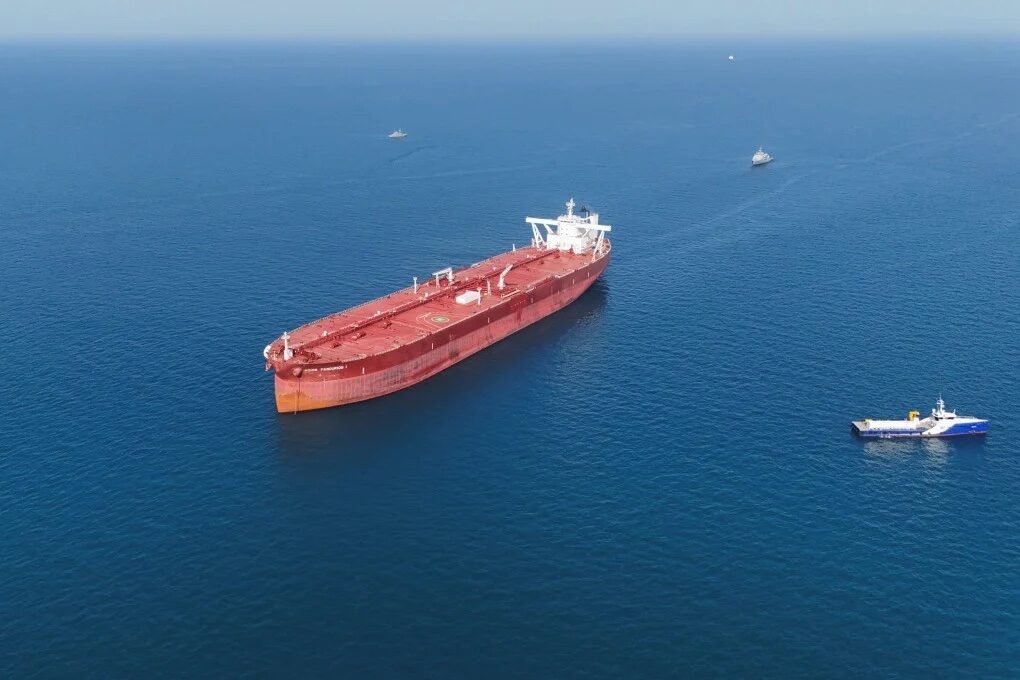
Trump indicates advancements regarding Iran as oil tankers restart their passage through Hormuz, even as uncertainties surrounding the ceasefire and nuclear tensions remain.
President Donald Trump has suggested that there are encouraging developments in the Iran conflict, stating there is “some pretty good news,” as oil tankers have restarted their movement through the Strait of Hormuz for the first time since the war commenced seven weeks ago.
On Saturday, shipping data indicated that a convoy of vessels, comprising four liquefied petroleum gas carriers along with several oil product and chemical tankers, was observed traversing the crucial waterway. The vessels navigated through Iranian waters south of Larak Island, accompanied by more tankers arriving from the Gulf, indicating a cautious return to regular maritime operations.
The development occurred after Iran reopened the strait in the wake of a separate ceasefire agreement brokered by the United States between Israel and Lebanon, alleviating worries about a lengthy interruption to global oil supplies. The strait was effectively closed during the conflict that commenced on February 28, disrupting almost one-fifth of global oil trade and causing a significant increase in energy prices.
While speaking aboard Air Force One, Trump refrained from sharing specifics about the “good news” but indicated that negotiations with Iran were moving forward.
“Things appear to be progressing positively in the Middle East with Iran,” he stated. We will be negotiating throughout the weekend. I anticipate that everything will proceed smoothly. A number of these matters have been discussed and settled upon, including key points related to nuclear non-proliferation and regional security agreements.
He emphasized that the primary goal of the United States continued to be preventing Iran from obtaining nuclear weapons.
“The primary concern is that Iran will not possess a nuclear weapon.” “You cannot allow Iran to possess a nuclear weapon, and that takes precedence over all other considerations,” Trump stated.
While there has been noticeable progress, the president cautioned that the existing ceasefire may fall apart if a more comprehensive agreement is not achieved prior to its expiration. He suggested that the truce may not be prolonged past Wednesday unless a deal is reached, while also affirming that a US blockade on Iranian ports would continue to be enforced.
Diplomatic uncertainty continues regarding the potential for direct talks between US and Iranian officials this weekend. Although Trump indicated that discussions were on the horizon, there were no evident signs of preparations for negotiations in Islamabad, where talks are said to be anticipated.
Mediation efforts spearheaded by Pakistan have persisted, with Field Marshal Asim Munir engaging in discussions in Tehran recently. Sources close to the situation indicate that a preliminary agreement may be reached shortly, likely to be succeeded by a comprehensive peace deal within the next 60 days.
However, tensions remain high. Officials in Iran have cautioned that ongoing US pressure might threaten access to the strait. Parliament Speaker Mohammad Baqer Qalibaf warned that the waterway “will not remain open” if the blockade continues.
Iran has permitted commercial vessels to transit during the ongoing 10-day truce; however, it has introduced new stipulations that necessitate coordination with the Islamic Revolutionary Guard Corps, which may include security checks and approvals to ensure compliance with national regulations. The United States and Israel’s military vessels and ships remain prohibited from transit.
Significant disagreements continue to exist regarding Iran’s nuclear program, which remains a focal point in the negotiations. The United States has suggested the removal of Iran’s stockpile of enriched uranium; however, Iranian officials have firmly declined any transfer outside their borders, asserting their entitlement to a civilian nuclear program.
While financial markets responded favorably to the reopening of the strait, evidenced by falling oil prices and rising global stocks, analysts warn that substantial gaps persist in the negotiations.