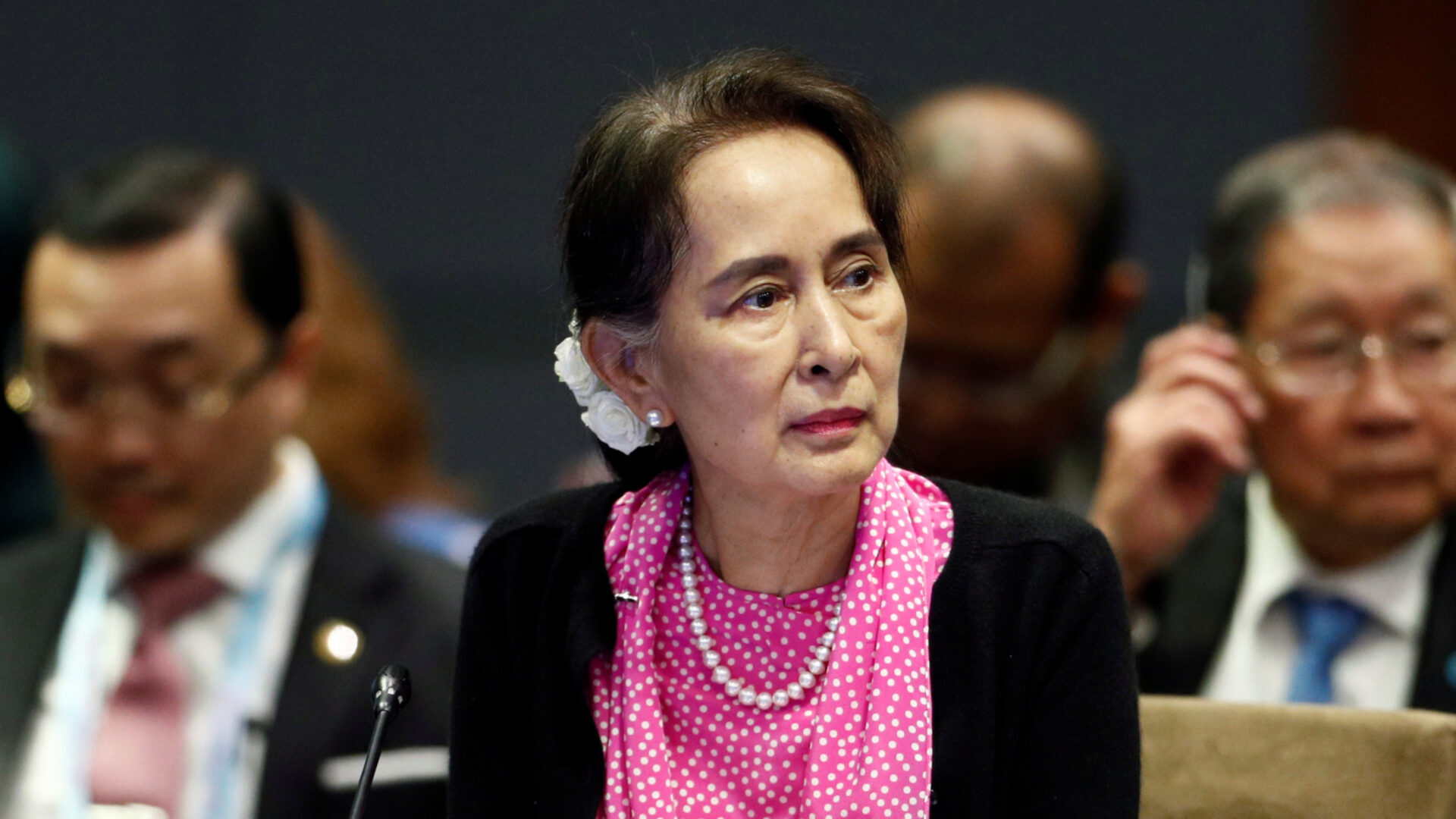
Myanmar has shortened the prison sentence of former leader Aung San Suu Kyi, her lawyer informed Reuters on Friday, as part of an amnesty initiated by a new president who removed her government in a coup five years prior.
Suu Kyi, 80, was serving a 27-year sentence for a range of offenses that her allies claimed were politically motivated to suppress her, including incitement, corruption, election fraud, and violations of a state secrets law.
The sentence has been reduced by one-sixth, yet it remains uncertain whether the Nobel Peace Prize winner will be permitted to complete the remainder of her sentence under house arrest, according to the lawyer.
The immensely well-known Suu Kyi, who had characterized the charges against her as “absurd,” has not appeared in public since the conclusion of her lengthy trials, and her location remains uncertain.
Previously, state media announced that President Min Aung Hlaing granted amnesty to 4,335 prisoners, marking the third instance of such action in the past six months. In Myanmar, amnesties are usually held annually to commemorate Independence Day in January and the New Year in April.
Among those released from prison was Win Myint, who held the position of president from 2018 until the military coup in 2021.
Win Myint, an ally of Suu Kyi, was “granted a pardon and the reduction of his remaining sentences under specified conditions,” state broadcaster MRTV said.
A representative for the military-backed government has yet to reply to a request for comment.
Min Aung Hlaing orchestrated the coup in 2021 that overthrew Win Myint and Suu Kyi’s democratically elected government. The Southeast Asian country was plunged into a nationwide civil war that continues to rage on.
Min Aung Hlaing was elected president on April 3 after elections held in December and January, during which the opposition faced significant suppression and was largely absent. Critics and Western governments characterized the vote as a mere facade, intended to solidify military control under the guise of democracy, as it failed to meet international standards for free and fair elections and was conducted amidst widespread violence and intimidation against opposition parties.