Dangote Engages with Global Financial Leaders, Advocates for Investment at IMF and World Bank Meetings
Aliko Dangote collaborates with global finance leaders, advocates for investment, and introduces Vision 2030 to propel Africa’s industrialization.
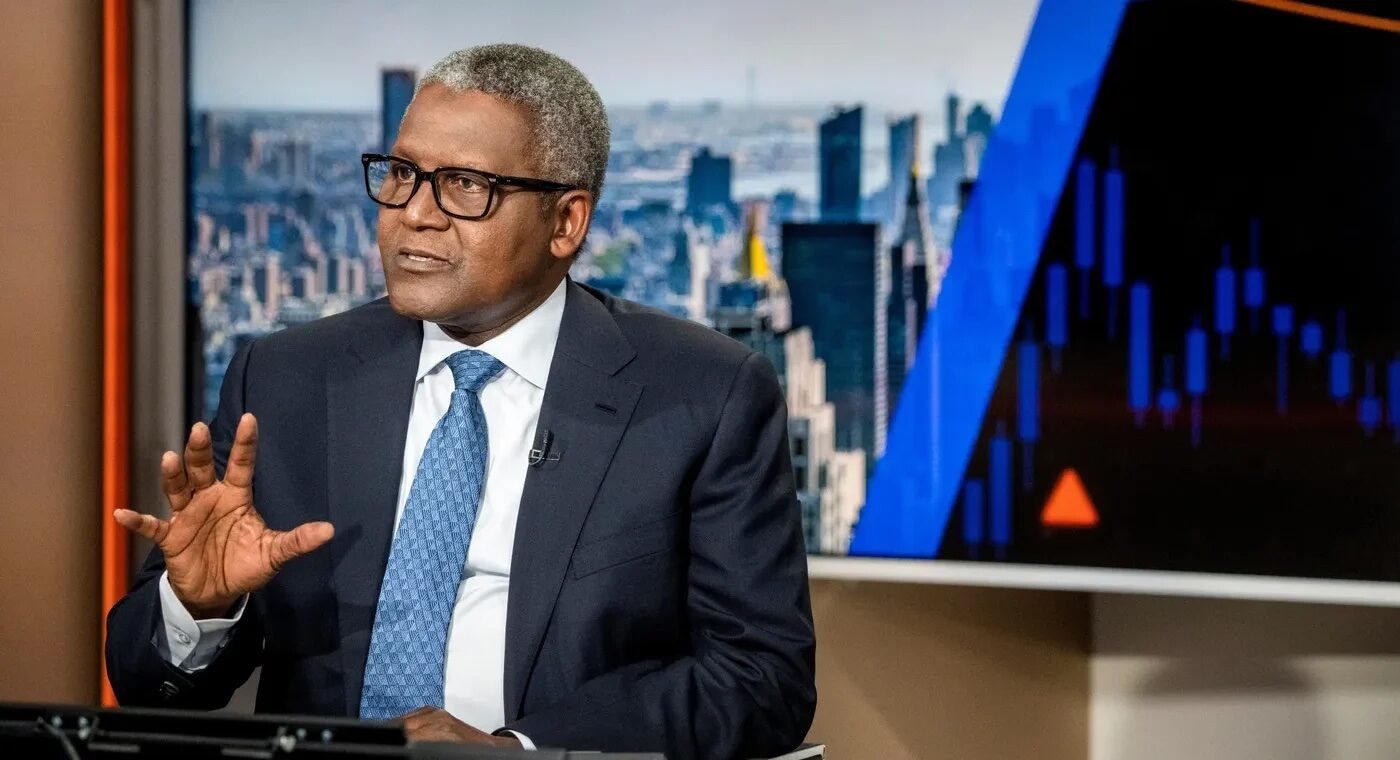
Aliko Dangote, president and chief executive of Dangote Group, engaged in a series of high-level discussions with global financial leaders during the ongoing International Monetary Fund (IMF) and World Bank Spring Meetings in Washington, D.C. These meetings aim to enhance investment flows and bolster partnerships within Nigeria’s energy and industrial sectors.
On Thursday, Dangote, Africa’s wealthiest individual, remarked that persistent foreign interests have consistently hindered the continent’s industrial advancement, particularly by limiting local entrepreneurship and creating dependency on external resources. He advocated for enhanced regional integration and increased domestic investment to realize the continent’s potential, emphasizing that such measures are crucial for overcoming the challenges posed by foreign interests and fostering sustainable growth in the energy and industrial sectors.
Dangote Industries Limited announced that it will present its Vision 2030, aimed at promoting innovation and the industrialization of Africa, at the Nasarawa trade fair.
During the current spring meetings, Dangote presented the keynote address at the unveiling of the World Bank Group’s flagship global initiative, Water Forward. The program seeks to transform water systems from mere social utilities into powerful drivers of industrialization, job creation, and significant economic growth in emerging and developing economies.
Dangote emphasized the essential importance of private sector investment and infrastructure in realizing the economic potential of water.
The event attracted a notable audience, featuring heads of government, the Secretary-General of the United Nations, leaders from European development institutions, and various multilateral development partners.
Among those present were finance and economic planning ministers from more than 100 countries, central bank governors, global regulators, business leaders, and representatives from donor agencies.
The attendees at the Water Forward launch demonstrated the significance and immediacy of the initiative.
In distinct meetings, Dangote engaged with Ajay Banga, President of the World Bank Group; Kristalina Georgieva, Managing Director of the IMF; and John Jovanovic, President/Chairman of the Export-Import Bank of the United States.
A statement from Dangote Group said that the talks focused on how the private sector can drive growth, the need for economic changes, and how to secure funding for large projects, trade growth, and industrial development in Nigeria and Africa.
The engagements occurred during a period of revitalized activity in Nigeria’s energy sector.
In March 2026, the country achieved a major milestone by becoming a net exporter of petrol for the first time in decades, thanks to the transformative impact of the Dangote Petroleum Refinery and Petrochemicals, which facilitated a shift from reliance on imports to local production.
Kpler’s data indicates that Nigeria exported approximately 44,000 barrels per day of petrol in the month, marginally surpassing imports and leading to a net surplus of around 3,000 barrels per day.
The milestone, as stated, is in line with Dangote Group’s recently launched long-term growth strategy, “Vision 2030: Supercharging Dangote Group for Long-Term Success,” which consists of a two-phase expansion program covering the periods of 2025–2028 and 2028–2030.
The group intends to enhance and refine its current operations while increasing capacity in essential sectors. This involves enhancing the capacity of the Dangote Petroleum Refinery from 650,000 barrels per day to 1.4 million bpd, alongside increasing fertilizer production from three million tonnes per annum to 12 million tonnes per annum, a strategy anticipated to establish the company as the world’s largest producer of urea.
The strategy outlines an expansion in cement, rice, and broader food production, along with new investments in infrastructure, including ports, pipelines, gas, mining, data centers, and power, which are deemed essential for Africa’s industrial transformation and digital resilience.
In the meantime, Dangote held the view that established foreign interests had persistently hindered Africa’s industrial advancement, particularly by limiting access to resources and markets for local businesses. He advocated for enhanced regional integration and increased domestic investment to realize the continent’s potential.
Dangote stated that although the potential of the African Continental Free Trade Area (AfCFTA) is considerable, its effectiveness depends on the operational capacity of regional markets throughout the continent.
He addressed a “Investing in Africa Forum,” which took place on the sidelines of the current IMF/World Bank spring meetings in Washington.
He stated, “The African free trade agreement will be effective, but it can only be effective when the regional markets function properly.”
“The regional markets need to be prioritized, as all indicators suggest that they are currently underperforming.”
“It is important to keep in mind that numerous international interests exist, and unfortunately, they do not desire to see Africa thrive.”
“For many years, Africa has lacked refineries. Even those initiated in other countries have faced significant obstacles due to various conflicting interests that hinder progress.”
Dangote emphasized that although foreign investment is essential, it is fundamentally influenced by risk perception, which is a matter that African investors must prioritize addressing themselves to create a more favorable environment for investment and development in the region.
He stated, “Foreigners will invest.” Foreigners are indeed very intelligent individuals. Whenever the topic of risk arises, they tend to examine it from multiple angles, considering factors such as market stability, potential returns, and local economic conditions. So how can we de-risk?
“The only way forward is for us Africans to lead by investing in Africa and to demonstrate that the perceived risk is not a real risk. If I don’t invest in Africa, I won’t be able to persuade anyone from outside the continent to invest here. Therefore, I must now demonstrate that this perceived risk is not active.
“Certainly, there are risks in China, Asia, and everywhere.” However, it is essential to understand how to reduce this risk, such as by implementing effective safety measures and fostering local investment opportunities.
Dangote added, “For us in Africa, what I keep advising is, yes, in terms of cash, there might be some people who have more cash than me, but I advise you, don’t keep that money in a foreign bank; bring it back home, invest. The place is good.
“We have this problem of constantly looking for foreign investors. Foreign investors are unlikely to come because they possess greater intelligence than we do, leading them to stay away. They will only join us when they recognize our commitment, our seriousness, and our willingness to invest our resources.
“When you invest your money, then they will join you. As soon as you begin, others will join in.
Highlighting opportunities in value addition, Dangote cited Zambia’s copper exports as an example of missed industrial potential.
He stated, “In terms of business, in a place like Zambia, they are busy exporting copper. We want to process that copper before it is exported. So, we want to just lead in some key critical areas where now other Africans will look and say this thing is easy, and everybody will jump in. Even if they don’t jump in, the other foreigners will now come in and be inspired.”
On his flagship refinery project, Dangote disclosed plans to significantly expand capacity, reinforcing his ambition to position Africa as a major player in global refining.
He stated, “However, moving ahead with the refinery, allow me to begin with the refinery.” We are increasing the refinery’s capacity to 1.4 million barrels per day. That will establish us as the largest refinery globally.
Upon returning home, Dangote Industries Limited pledged to present its Vision 2030, a plan aimed at fostering innovation and advancing Africa’s industrialization during an upcoming trade fair in Nasarawa State.
The Nasarawa Trade Fair and Exhibition (NASTFE) is prominently sponsored by the Dangote Group, featuring the theme, “Unlocking Industrial Synergy: Deepening the Value Chain and Driving Inclusive Growth in Nasarawa State.”
A statement from the company’s spokesman, Anthony Chiejina, indicated that additional strategic business units of the company would be involved in the annual event in the state capital, Lafia.
Chiejina announced that the fair will showcase products from the group’s strategic business units, including Dangote Cement, Dangote Sugar, Dangote Salt and seasonings, Dangote SinoTruk, Dangote Packaging, and Dangote Fertilizer.
The statement cited Regional Director/Senior Adviser to the Dangote Group President, Fatima Wali-Abdurrahman, noting that Nasarawa State plays a crucial role in the group’s broader investment strategy in Africa.
Wali-Abdurrahman remarked, “It is the location of Dangote’s Nasarawa Sugar Company Limited (NSCL). The sugar project, upon its completion, will stand as one of the largest sugar investments in Africa.
Wali-Abdurrahman expressed that the trade fair served as an important platform for the company to connect with key stakeholders and Nigerians eager to explore business opportunities with the organization.
She mentioned that a dedicated help desk will manage inquiries, allowing the company to effectively connect with participants regarding the Dangote Group’s strategic business units.
During a conversation with reporters in Lafia, the chairman and council members of the Nigeria Association of Small-Scale Industrialists (NASSI), Nasarawa State Chapter, Nidan Sambo Manasseh, stated that this year’s trade fair theme is well-aligned with the vision of the Dangote Group.
Manasseh expressed, “We are in strong alignment with the vision of Aliko Dangote, whose leadership is continually shaping Nigeria’s economic future.” His emphasis on industrialization, local production, and value creation motivates our initiatives to link MSMEs to organized value chains.
“This partnership creates a connection between grassroots businesses and large industries, fostering inclusive growth.”
Discussing the Dangote Group’s Vision 2030, Manasseh stated, “Our strategy is to align local enterprise development with large-scale industrial systems.”
Eromosele Abiodun, Nume Ekeghe, Peter Uzoho, and Ibrahim Oyewale