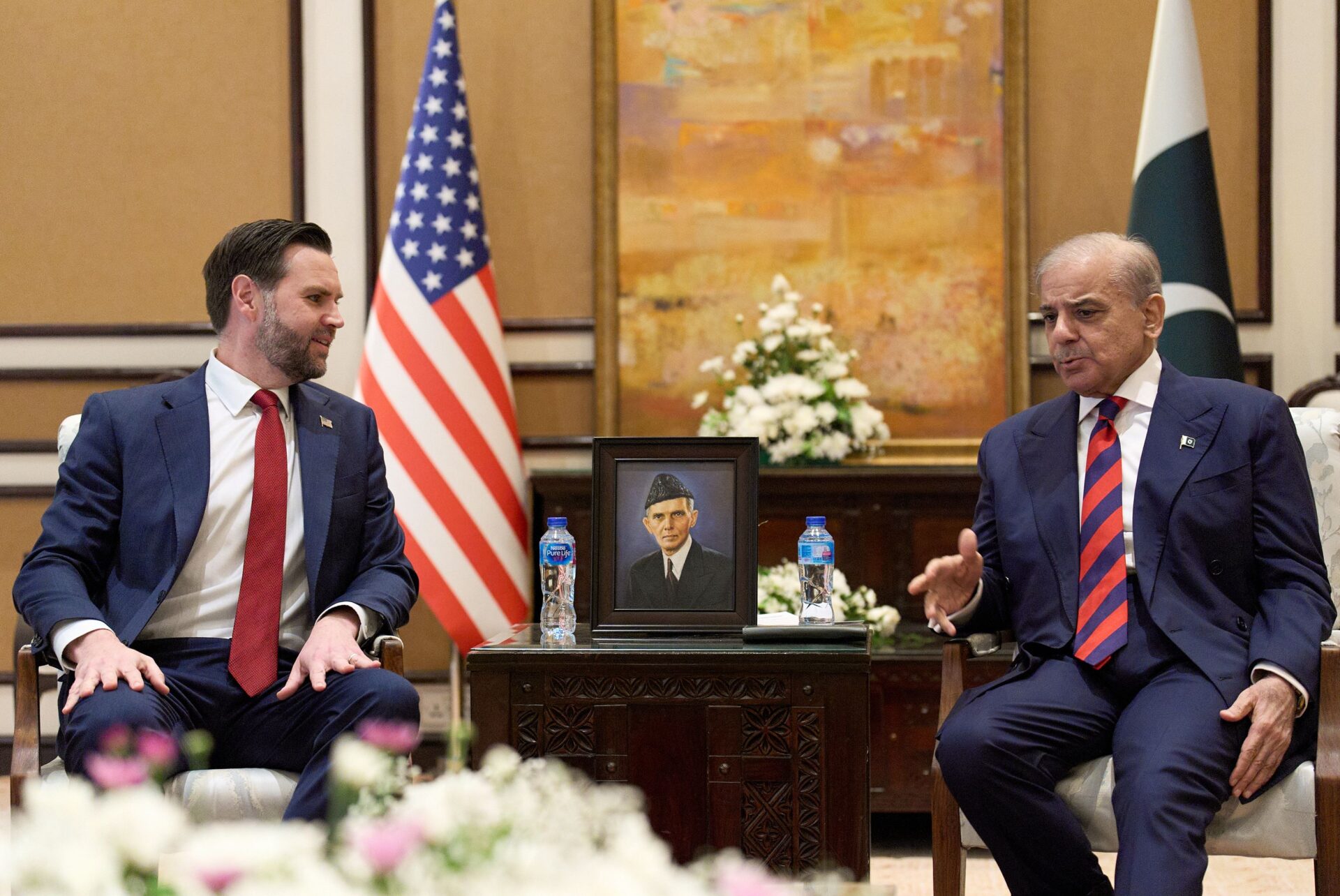
Trump indicates a potential resumption of talks with Iran as Vance calls for a comprehensive agreement amid ongoing tensions throughout the Middle East.
US President Donald Trump indicates that negotiations with Iran may resume in the coming days, suggesting a potential diplomatic reopening despite the ongoing military and economic pressures in the Middle East.
In a preview of a Fox News interview, Trump indicated that discussions between Washington and Tehran might resume “in the next two days,” hinting at a swift return to diplomacy following weeks of intensified regional conflict. He also stated that the war situation is “very close to over” but did not provide additional details regarding the basis of that assessment.
US Vice-President JD Vance emphasized the administration’s diplomatic approach, asserting that Trump is pursuing a “grand bargain” with Iran, suggesting a more comprehensive negotiated settlement rather than limited, issue-focused discussions.
Iran has yet to confirm any intentions for renewed negotiations. The president cautioned that any efforts to compel Iran into “surrender” would be “doomed to fail,” indicating ongoing defiance against US pressure.
On the military front, US Central Command (CENTCOM) commander Adm. Brad Cooper stated that the naval blockade of Iranian ports has “completely halted economic trade,” highlighting a notable disruption in maritime activity.
Nonetheless, there were still reports of some vessels crossing the Strait of Hormuz. Cooper reported that six ships were turned back, and tracking data indicated that at least one vessel changed its course in the Gulf of Oman, underscoring the persistent instability in vital shipping lanes.
The broader conflict persists in its expansion throughout the region. Israeli strikes on Hezbollah targets in Lebanon have persisted after recent diplomatic interactions between Israel and the Lebanese government in the United States.
An Israeli official cited by AFP reported that Hezbollah has intensified its operations, executing approximately 30 strikes aimed at northern Israel.
The conflict is generating significant global economic pressure. Brandon Fried, the executive director of the Airforwarders Association, stated that the disruption to air cargo is currently “broad and on a wide scale,” impacting global freight movement.
He cautioned that Middle Eastern carriers like Emirates, Etihad, and Qatar Airways, which typically account for up to a fifth of global cargo capacity, are currently functioning below full capacity, resulting in congestion and delays.
Fried noted that the increase in jet fuel prices, costs associated with rerouting, higher insurance premiums, and enhanced security measures are contributing to rising expenses, with air freight rates having already surged by 20–30 percent recently.
“As an industry, we can only tolerate such conditions for a limited time; eventually, the real customer will bear the cost,” he stated.
At the same time, the humanitarian situation within Iran is worsening. Martje van Raamsdonk from the Norwegian Refugee Council reported observing extensive destruction in Tehran, where ongoing strikes have severely impacted densely populated regions.
“They bombed almost daily in densely populated areas, so here in Tehran, a vast city with over ten million residents, many buildings have been destroyed and neighborhoods are unrecognizable,” she stated.