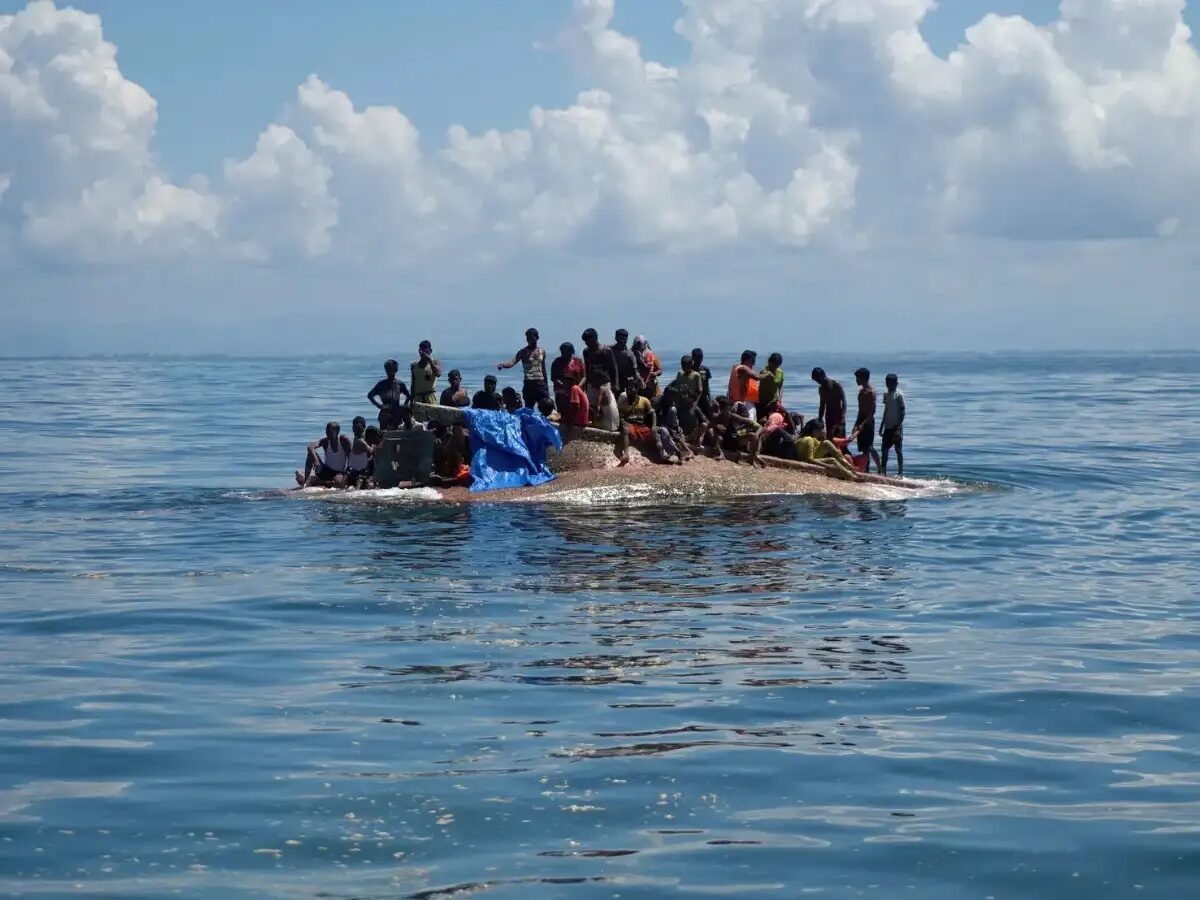
UN agencies have reported that approximately 250 migrants are missing following a boat capsizing, highlighting the perilous dangers associated with Rohingya sea journeys.
Approximately 250 Rohingya refugees and Bangladeshi migrants, including children, are unaccounted for following a boat capsizing last week in the Andaman Sea, as reported by the United Nations’ refugee and migration agencies.
The vessel, having left Bangladesh and en route to Malaysia, is said to have sunk after being struck by severe winds, turbulent seas, and overcrowding, according to the agencies.
The precise timing of the disaster is still uncertain. On April 9, a vessel flying the Bangladesh flag rescued nine survivors who were discovered “clinging to drums and wooden debris” in the open sea, as reported by the coast guard.
An anonymous coast guard official informed the BBC that the survivors departed from Bangladesh on April 4, seeking improved opportunities in Malaysia.
He mentioned that the boat faced a storm on approximately April 7 or 8 and remained adrift for almost two days while passengers fought for their survival.
“They remained adrift at sea for almost two days, clinging to barrels and fragments of timber,” the official stated.
The motor tanker Meghna Pride, flying the Bangladesh flag and en route from Bangladesh to Indonesia, located the survivors at approximately 2 a.m. on April 11. The crew welcomed them aboard before transferring them to the Bangladesh Coast Guard vessel Mansur Ali upon entering national waters.
Survivors reported that they believed nearly 100 individuals had been observed during the ordeal, although officials state that the total number is still unconfirmed.
“However, the precise number remains uncertain, and there is no evidence of the others or the vessel,” the officer stated.
Rafiqul Islam, a survivor, recounted to AFP that he floated at sea for almost 36 hours before being saved. He reported experiencing burns due to exposure to spilled oil from the vessel.
The 40-year-old stated that he was convinced to embark on the journey after being assured of employment in Malaysia.
The UN High Commissioner for Refugees (UNHCR), in collaboration with the International Organization for Migration (IOM), stated that the tragedy underscores the deteriorating circumstances confronting displaced Rohingya populations.
“This tragic incident highlights the severe repercussions of prolonged displacement and the lack of sustainable solutions for the Rohingya,” the agencies stated.
Since a military crackdown in 2017, hundreds of thousands of Rohingya have escaped Myanmar. The Muslim minority group in Myanmar is denied citizenship and continues to endure persecution.
Numerous individuals are currently residing in overcrowded camps in Bangladesh, especially in Cox’s Bazar, where restricted opportunities and diminishing humanitarian assistance are driving some to undertake perilous sea voyages.
The UN agencies reported that the persistent violence in Myanmar’s Rakhine State has extinguished any hope for a safe return in the foreseeable future, compelling many to jeopardize their lives at sea in pursuit of safety and opportunity.
“These boats are frequently small and confined, missing essential amenities such as fresh water and sanitation,” the statement noted, emphasizing that numerous journeys conclude in death, detention, or forced return.
In Malaysia and Indonesia, authorities have previously denied entry to migrant boats, thereby restricting escape routes for individuals fleeing persecution.
In January 2025, Malaysia reportedly turned away two boats carrying approximately 300 refugees after supplying them with food and water.
A Rohingya refugee in Cox’s Bazar previously stated to Reuters: “People are dying in the fighting, dying from hunger.” Some believe that perishing at sea is preferable to a slow demise here.
UN agencies have emphasized the necessity for ongoing international funding and immediate measures to tackle the underlying issues of displacement in Myanmar, highlighting the importance of safe, voluntary, and dignified returns for refugees.