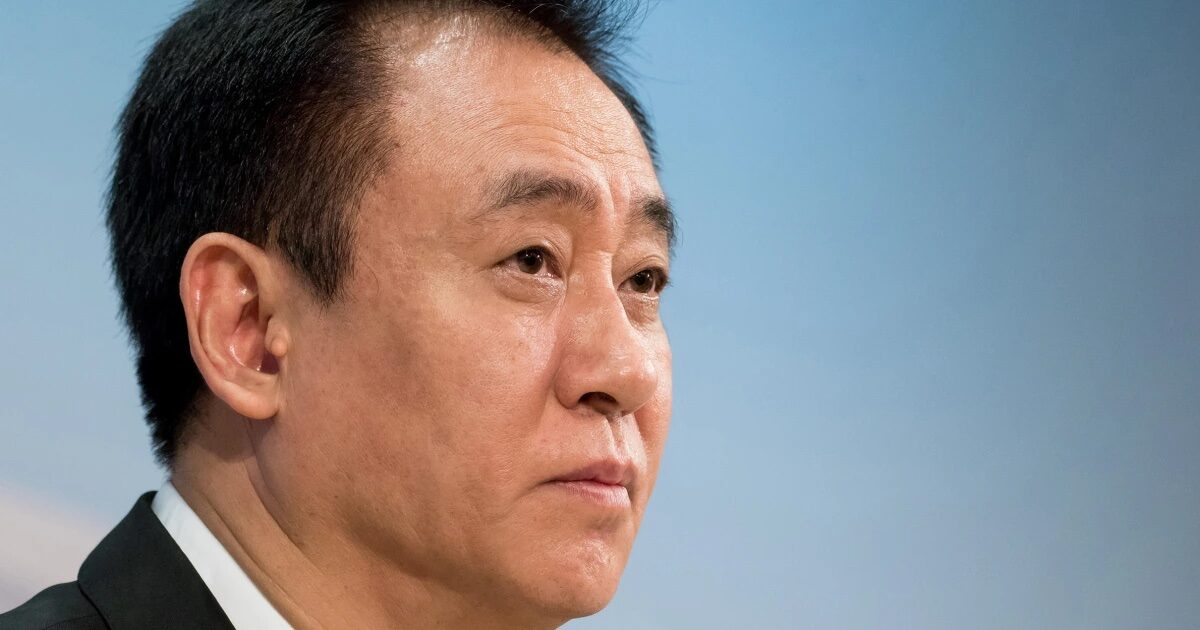
Hui Ka Yan, the founder of Evergrande, has entered a guilty plea regarding fraud and financial crimes during court proceedings in Shenzhen.
The founder of China Evergrande Group, recognized as the world’s most indebted property developer, has pleaded guilty to charges that include misuse of funds, fundraising fraud, and the illegal acceptance of public deposits, according to a court in Shenzhen, a city in southern China.
The company has been in default since 2021 on the majority of its $300 billion in liabilities, reflecting the broader challenges facing China’s property sector that have persistently hindered economic growth.
Founder Hui Ka Yan “pleaded guilty and expressed remorse” during trial proceedings on Monday and Tuesday, according to a posting by the court on its official WeChat account.
The liquidators of Evergrande chose not to provide any remarks regarding the case.
A comment from Hui, 67, could not be obtained, as he has not been seen in public since his detention by Chinese authorities in 2023, following Evergrande’s default.
The Shenzhen Municipal Intermediate People’s Court has stated that Hui and the company are facing charges related to the illegal extension of loans, fraudulent issuance of securities, and bribery by various units. Verdicts will be delivered at a later date, although no specific date has been set.
The company’s inability to repay billions of dollars in wealth management products sparked frustration among the lower and middle classes, many of whom saw their investments vanish, leading to protests and jeopardizing social stability.
The maximum penalties for illegal fundraising include life imprisonment and the confiscation of property, while bribery can also result in life sentences.
In 2024, China’s securities regulator imposed a fine of $6.6 million on Hui, who was once among China’s wealthiest individuals, and permanently banned him from participating in the securities market, following the discovery that Evergrande’s main unit had inflated its earnings and engaged in securities fraud.
Hui, a former steel technician raised by his grandmother in a rural village in central Henan province, amassed his wealth through the development of affordable housing.
After establishing Evergrande in 1996, he transformed it into China’s largest property developer by contracted sales, taking on debt with immense determination.
He embraced new ventures, exploring electric cars and soccer, both of which are passions of President Xi Jinping, as part of his strategy to diversify his business interests and align with national priorities.
In 2017, Hui held the title of Asia’s richest man, boasting a net worth of $45.3 billion, as reported by Forbes. As of 2023, his net worth was estimated to be $3 billion.
In 2024, Evergrande received a liquidation order from a Hong Kong court and was removed from the Hong Kong stock exchange last year, marking the conclusion of a tumultuous boom and bust saga.
Beyond mainland China, Evergrande’s liquidators have engaged in legal battles to freeze the offshore assets of the founder and his former spouse, aiming to recover $6 billion in dividends and compensation disbursed to Hui and other past executives.