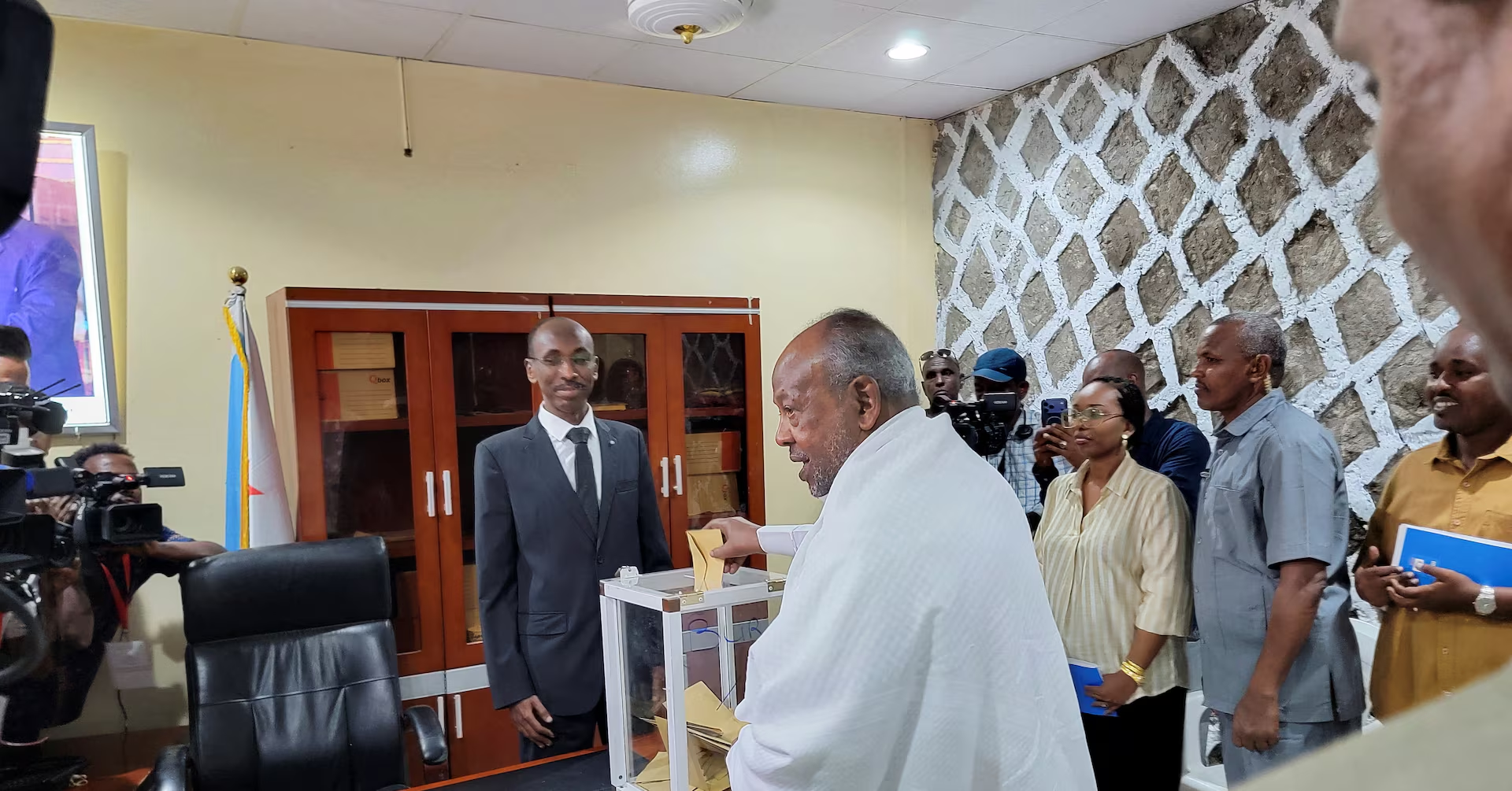
Djibouti’s President Ismael Omar Guelleh has secured re-election with 97.8% of the vote, according to state-owned Radio Television Djibouti on Saturday. This victory grants him a sixth term, prolonging his 27-year tenure over the strategically significant East African nation.
Guelleh shared a photo of himself featuring the French term “RÉÉLU,” meaning “re-elected.”
The nation, home to fewer than 1 million inhabitants, is located on the Gulf of Aden at the gateway to the Red Sea and is host to military bases from the U.S., China, France, Italy, and Japan. Since 2023, Yemen’s Houthi militants have attacked numerous commercial vessels that have arrived in the country.
The 78-year-old Guelleh, selected in 1999 to follow his uncle Hassan Gouled Aptidon, always assured his triumph, given the overwhelming influence of his party over national institutions.
In October of last year, parliament decided to eliminate the 75-year age limit for presidential candidates and also abolished the referendum that was previously necessary to ratify a new constitution.
The two primary opposition parties chose to boycott the election.
During the vote on Friday, Guelleh encountered a solitary opposition candidate, Mohamed Farah Samatar, who hails from a minor party lacking representation in parliament.
Since 2016, two of the primary opposition parties have refrained from participating in elections, alleging that the election authorities are not impartial, which has led to concerns about the legitimacy of the electoral process and the representation of diverse political views in the government.
According to data from state-owned media, voter turnout reached 80.4%. In the most recent election of 2021, Guelleh secured victory with more than 97% of the votes cast.
Unlike many other nations in the Horn of Africa, Djibouti has maintained a degree of stability recently, with Guelleh’s government making significant investments in port infrastructure to establish itself as the primary gateway to landlocked Ethiopia.
Human rights organizations allege that the Djiboutian authorities are suppressing political opponents, activists, and journalists. The government has dismissed claims of extensive abuses and has refuted criticism regarding the electoral process.
In 2020, security forces suppressed uncommon anti-government street protests that arose following the arrest of a former air force pilot who had criticized purported corruption and clan-based discrimination.