Negotiators from the US and Iran convene in Pakistan, facing challenges from distrust, concerns over sanctions, and disputes in Lebanon that jeopardize the delicate progress of the ceasefire.
Negotiators from the United States and Iran have arrived in Pakistan for crucial peace talks amid a backdrop of deep mistrust, concerns over sanctions, and regional disputes that create uncertainty for this delicate diplomatic initiative.
The discussions were monitored closely as officials verified that both delegations had arrived in Islamabad for negotiations regarded as a significant test of the current ceasefire efforts.
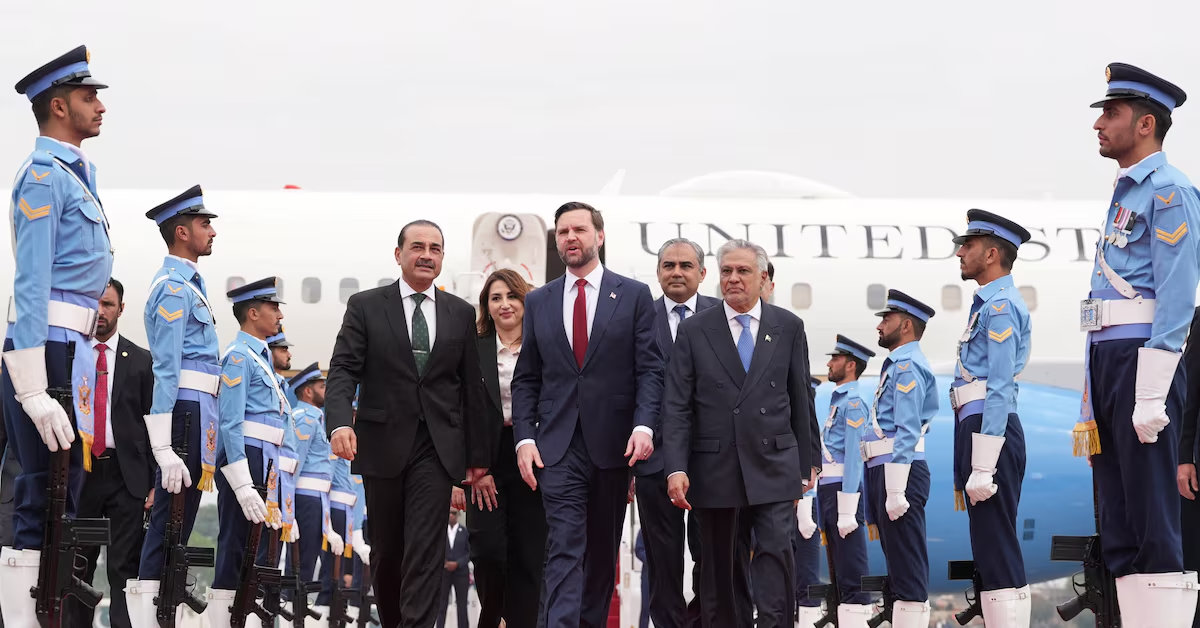
Upon his arrival in Islamabad, US Vice President JD Vance was welcomed by Pakistan’s foreign minister, just hours after the arrival of his Iranian counterparts, highlighting the urgency and sensitivity of the discussions ahead.
The meeting was characterized by observers as one of the most challenging diplomatic tasks of Vance’s vice-presidency, with constrained opportunities for success and considerable political risk should the negotiations fail.
Mohammad Bagher Ghalibaf, leading Iran’s delegation, stated that his team approached the talks with caution, emphasizing that although they had “good intentions,” they “do not trust” the United States.
Vance had previously cautioned that Washington would not participate constructively if Iran sought to manipulate the process, asserting that the Americans would not be open to Tehran’s attempts to “play us.”
The discussions in Islamabad arose from a two-week ceasefire between the US and Iran, facilitated by Pakistan’s discreet diplomatic efforts. Officials from Pakistan served as intermediaries, conveying messages between the two parties in what sources characterized as a meticulously managed process conducted by “a tiny circle.”
Insiders report that the atmosphere surrounding the negotiations has been described as “sombre and serious but still hopeful that a cessation of hostilities will be the outcome.”
Despite a sense of cautious optimism, significant issues remained unresolved. Diplomats emphasized the ambiguity regarding Lebanon’s formal inclusion in the ceasefire, along with ongoing disputes over sanctions and wider regional security issues.
At the same time, diplomatic efforts were happening, with Lebanese officials stating that their negotiators were ready to meet with an Israeli team in Washington, which made the situation even more complicated regarding the US-Iran talks.
Pakistan’s role as a mediator was influenced by its enduring connections with Iran, as both nations share a border and uphold what Islamabad frequently refers to as a “brotherly” relationship. Simultaneously, its interaction with Washington continued to hold strategic importance.
Former US President Donald Trump once referred to Pakistan’s army chief, Field Marshal Asim Munir, as his “favorite” Field Marshal, highlighting that the military leader had a deeper understanding of Iran “better than most.”