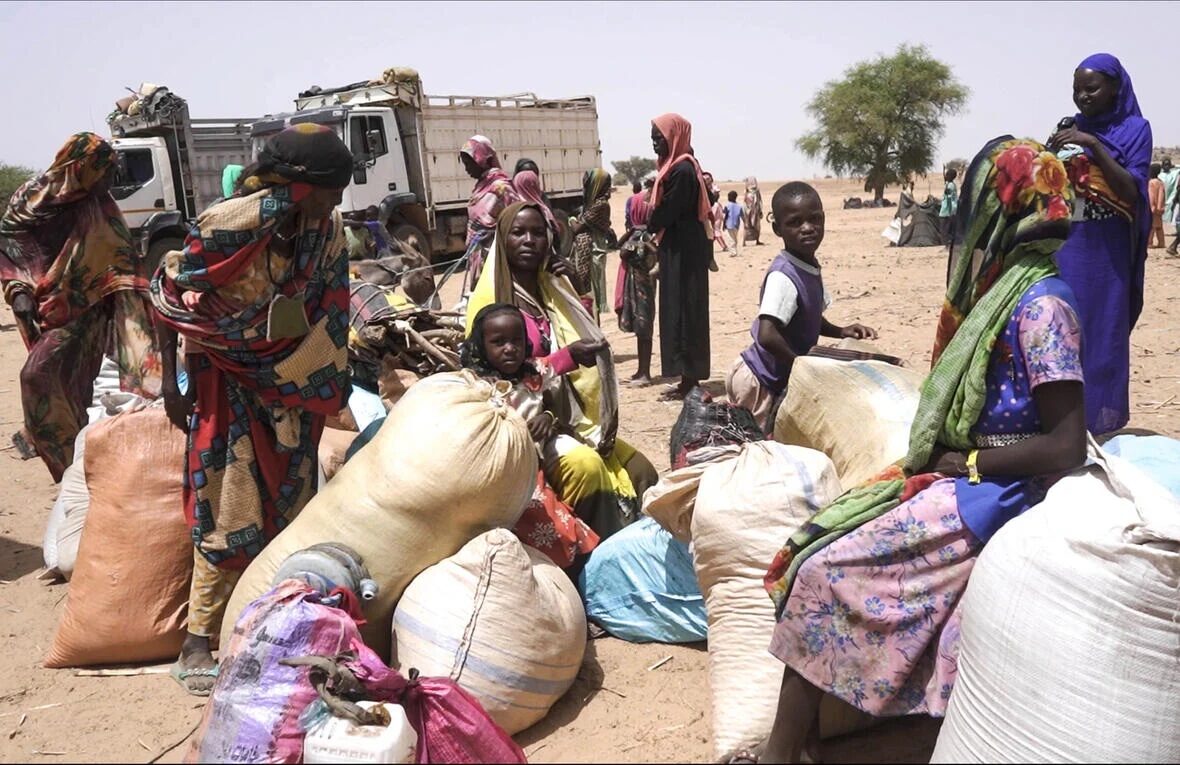
Over a million Sudanese refugees are at risk of severe reductions in essential aid, including food and water, unless donors address a funding gap exceeding $400 million, two U.N. agencies reported on Thursday.
More than 1.3 million Sudanese refugees have sought refuge in neighboring Chad, with the majority arriving since the onset of the conflict in Sudan between the army and the paramilitary Rapid Support Forces in April 2023. Included are survivors of mass killings and famine from Darfur.
The World Food Programme and the U.N. refugee agency are facing a significant funding shortfall, which hampers their ability to assist everyone in need. They anticipate further reductions in services in the upcoming months unless they can secure an additional $428 million, as stated in a joint announcement.
“With less than half the resources we require, we cannot deliver sufficient food to the people who need it most,” remarked WFP Chad Country Director Sarah Gordon-Gibson. “This situation will compel them to adopt harmful coping mechanisms and jeopardize lives.”
The U.N. joint statement did not specify which donors had reduced funding, although the UNHCR refugee agency has previously indicated that reductions in U.S. foreign aid are a significant factor contributing to funding gaps. Nonetheless, Sudan and Chad are included in a list of 17 countries designated to receive $2 billion in U.S. aid in 2026.
Other Western donors have similarly reduced foreign aid as they redirect funds towards defense.
The UNHCR has indicated that it is able to assist only four out of every ten refugees in Chad, resulting in many lacking access to shelter, and most classrooms are overcrowded with over 100 children for each teacher. In the northeastern province of Ennedi Est, refugees are enduring conditions with less than half of the minimum daily water requirement, it stated.
The Norwegian Refugee Council described extreme hunger levels in Chad, citing a survey showing that 70% of refugee families in Chad reported reducing meals in the past month.