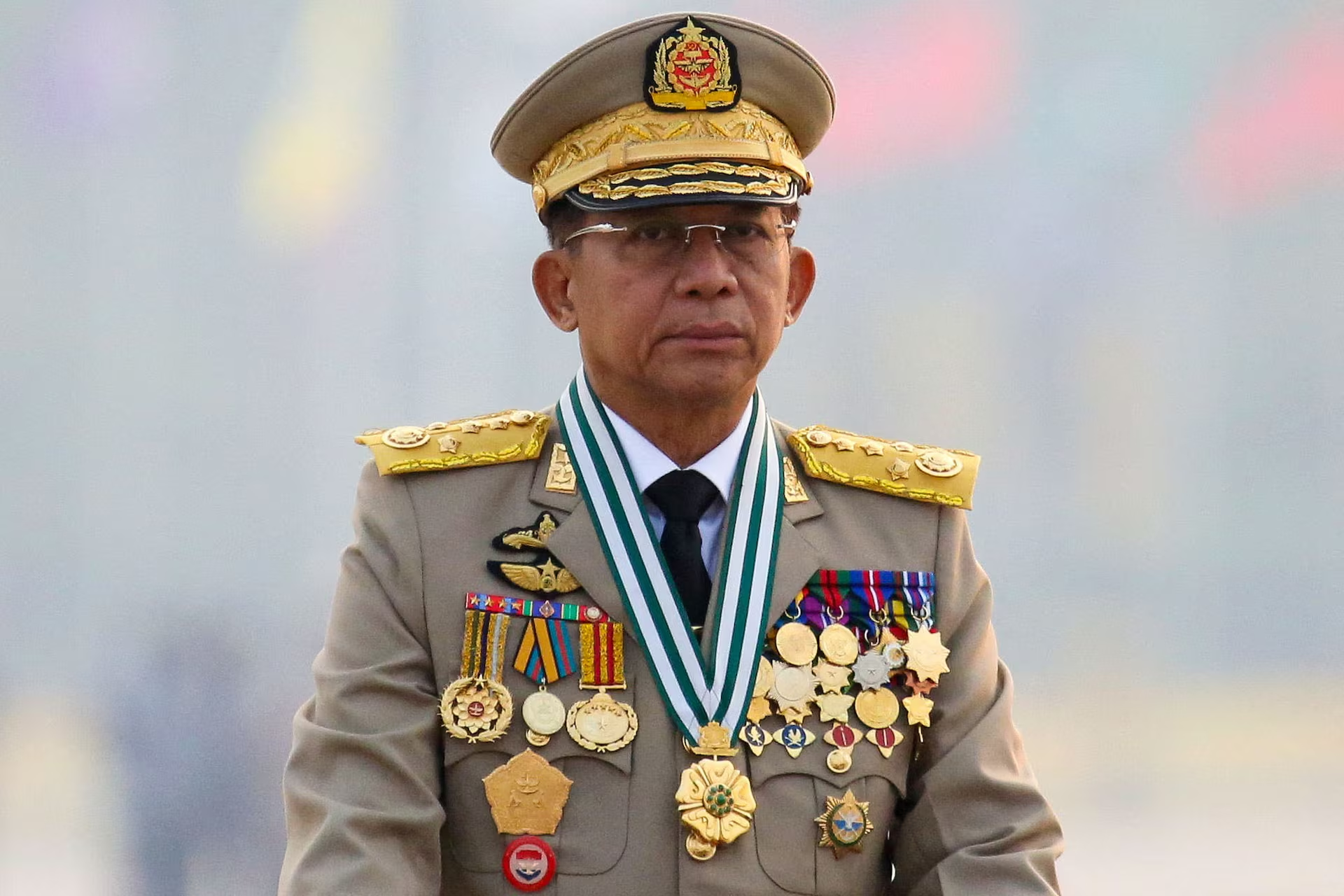
Myanmar’s new President Min Aung Hlaing stated on Friday that his government faces numerous challenges and aims to enhance the country’s international reputation, including the normalization of relations with the Southeast Asian bloc ASEAN after five years of isolation.
In his inauguration address, the former military chief, who orchestrated a 2021 coup that resulted in civil war and international sanctions, stated that his government would aim to encourage foreign investment and foster domestic business growth as part of “effective, long-term strategic plans” for resource-rich Myanmar.
“Myanmar is currently progressing toward democracy, yet the new government faces numerous challenges,” Min Aung Hlaing stated before a parliament filled with lawmakers from an army-backed party and military-selected legislators. “The new government will follow a roadmap centered on democracy and federalism… our main focuses are democracy and peace.”
His speech lasted under 20 minutes and was vague regarding his agenda, failing to outline the measures that would be implemented to end Myanmar’s international isolation or address the ongoing civil war, during which the military is accused of committing widespread atrocities against civilians. It rejects any allegations of misconduct.
CHALLENGING JOURNEY TO THE PRESIDENCY
Min Aung Hlaing, 69, was elected president by parliament a week ago, solidifying his control over power following a coup that dismantled a decade of fragile democracy and prompted a departure of foreign investors from what was previously regarded as one of Asia’s most promising frontier markets.
His tumultuous yet meticulously planned transition from top general to civilian president comes after a landslide election victory by a military-formed party that faced no credible opposition, leading critics and Western governments to label the vote a sham intended to extend military rule under the guise of democracy.
The coup and ensuing crackdown on nationwide protests led to an intervention by the 11-member Association of Southeast Asian Nations, which later barred the junta from attending its summits, prompting fury from the generals who called it a violation of the bloc’s non-interference policy.
“We will enhance international relations and strive to restore normal relations with ASEAN,” Min Aung Hlaing said in the speech, which more than 50 foreign delegates attended, including from Russia, China and Thailand, among the few countries that maintained engagement with the junta.
AMNESTIES UNDER REVIEW
The ceremony featured the swearing-in of Min Aung Hlaing’s new cabinet, comprising holdovers from the junta era and retired military officers, who have governed Myanmar directly for five of the last six decades.
During his speech, Min Aung Hlaing stated that to foster peace and reconciliation, “appropriate amnesties” would be considered, though he did not provide further details.
Thousands of junta opponents are still in detention, with the most notable being Nobel laureate Aung San Suu Kyi, the 80-year-old leader of the elected government that Min Aung Hlaing overthrew.
When reporters inquired about his initial actions as president, a smiling Min Aung Hlaing, attired in civilian clothing, expressed his intention to pursue stability, peace, and development for Myanmar.
“I encourage all to come together and put in their best efforts,” he stated.