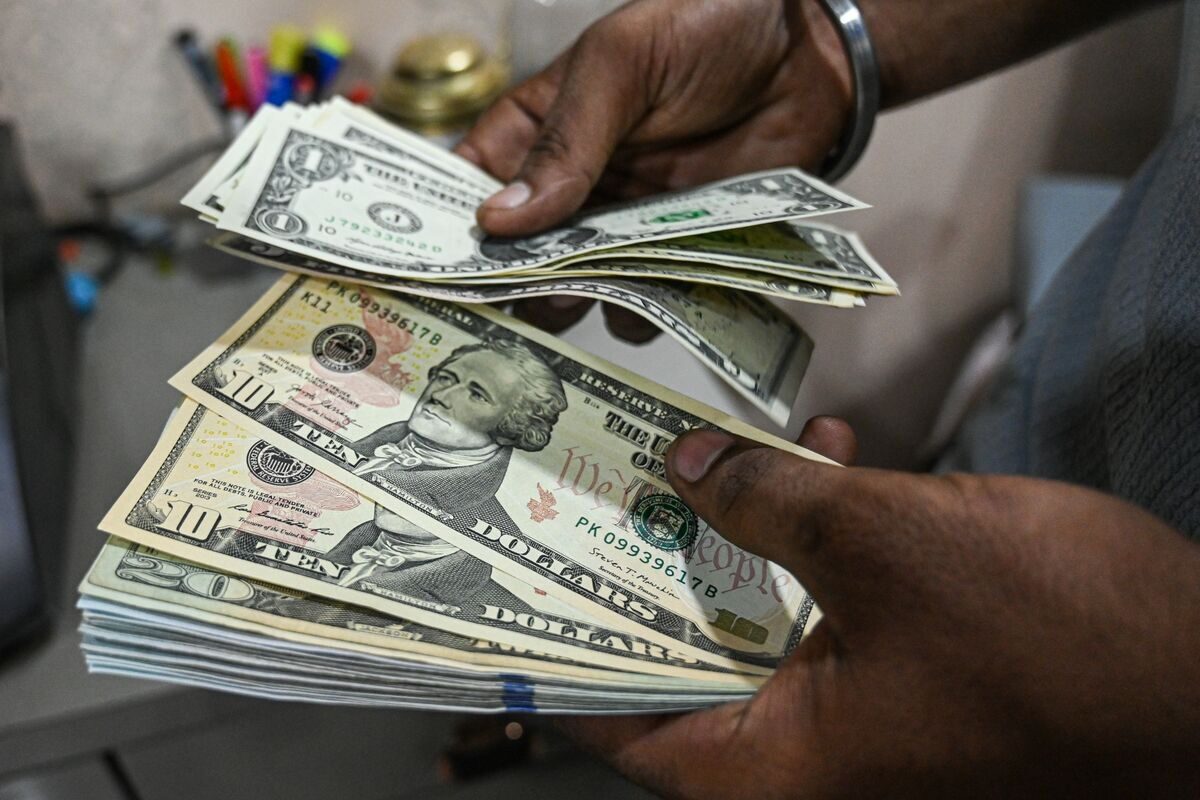
The dollar fluctuates in response to uncertainty surrounding the Middle East ceasefire, increasing oil prices, and changing global investor sentiment.
The US dollar faced uncertainty on Thursday following widespread losses, as investors evaluated the stability of the delicate two-week ceasefire between the United States and Iran.
The ceasefire seemed unstable, as Israel persisted with military actions against the Iran-aligned Hezbollah in Lebanon. Meanwhile, Tehran accused both Israel and the US of breaching the agreement and cautioned that moving forward with peace talks would be “unreasonable.”
The Strait of Hormuz continued to be inaccessible to vessels lacking a permit, resulting in an increase in oil prices. Sho Suzuki, a market analyst at Matsui Securities, stated, “There are likely some concerns arising regarding the sustainability of ceasefire expectations and whether a ceasefire can actually be finalized at all.”
The dollar index, which assesses the greenback relative to a basket that includes the yen and the euro, decreased by 0.01% to 99.05. The euro increased by 0.01% to $1.1663, while sterling edged up 0.01% to $1.3393. The yen gave up some of its gains from the prior day, declining 0.13% to 158.8 per dollar.
Suzuki observed that ongoing tensions in the Middle East might lead to an expansionary fiscal policy, which could result in a weaker yen, particularly if the Bank of Japan responds to economic instability by lowering interest rates. According to data from Tokyo Tanshi, the overnight indexed swap (OIS) market suggested a 55% likelihood of an interest rate increase by the Bank of Japan in April. A breakdown of the ceasefire might diminish these expectations, leading to a further decline in the yen.
BOJ Governor Kazuo Ueda was set to appear in parliament at 0415 GMT on Thursday.
The US dollar gained advantages during the Iran war due to the US being a net energy exporter, which provided protection against the shocks that economies heavily reliant on oil, such as Japan and parts of Europe, experienced. The five-week conflict interrupted global oil and gas supplies, diminishing investor confidence.
Analysts noted that the fragile truce enhanced Iran’s influence over maritime activities in the Strait of Hormuz. President Donald Trump has retreated from his threats to target Iranian civilian infrastructure, resulting in Iran gaining enhanced bargaining power, which may lead to increased tensions in the region and affect future negotiations regarding oil and gas supplies.
On Thursday, the US was set to release personal spending data for February along with the PCE deflator, which is the Personal Consumption Expenditures price index that measures inflation based on changes in the price of goods and services consumed by individuals. Following the ceasefire, there was a slight improvement in sentiment; however, the dollar-yen pair was anticipated to stay within a limited range in Tokyo. Strong US data, however, could potentially lead to a rebound, according to Akihiko Yokoo of Mitsubishi UFJ Bank.
In other markets, the Australian dollar decreased by 0.13% to $0.7033, whereas the New Zealand dollar increased by 0.07% to $0.5826. Bitcoin decreased by 0.61% to $70,944.20, while Ethereum saw a decline of 1.35% to $2,180.21.