Vietnam’s leading figure To Lam increases influence, new Prime Minister appointed
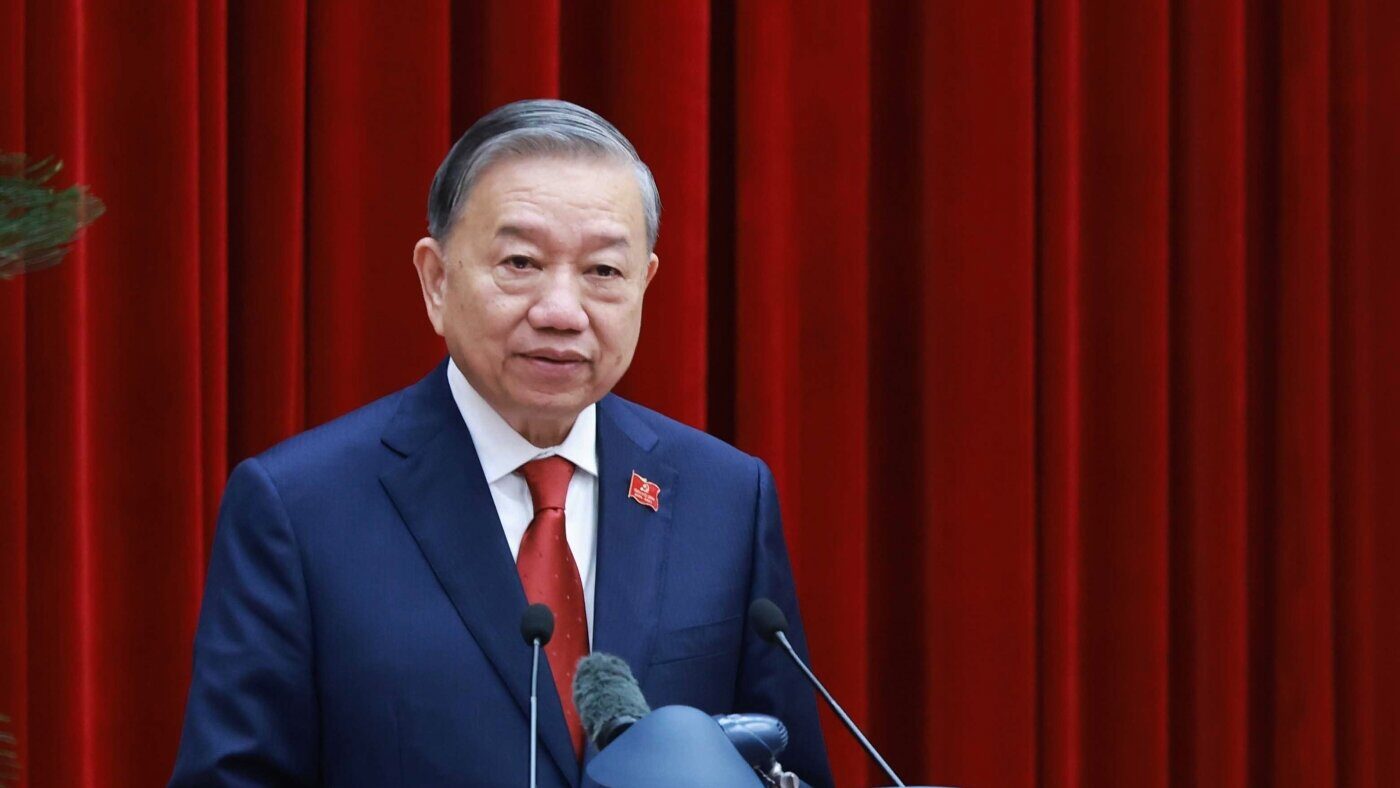
Vietnam’s lawmakers on Tuesday unanimously elected Communist Party Secretary General To Lam as the state president for the next five years, positioning him as the most powerful leader in the country in decades.
The highly awaited shift signifies a departure from Vietnam’s conventional collective leadership model, centralizing power in a single individual in ways that analysts suggest may steer the one-party state towards increased authoritarianism while also facilitating quicker decision-making, akin to its neighbor China.
The parliament announced on its website that all 495 deputies present at Tuesday’s National Assembly session supported the Communist Party’s nomination, while five lawmakers were not in attendance. During a meeting held in late March, officials announced the conclusion of the nominations for key state leadership positions.
The previous head of public security has now assumed a dual role to govern the nation for the upcoming five years, following his successful re-election as general secretary in January.
On Tuesday, the parliament made a widely anticipated decision by unanimously electing Le Minh Hung as the new prime minister of the country.
LAM COMMITS TO A NEW GROWTH MODEL
Following the vote, Lam addressed deputies in a televised speech, expressing that it was an honor to hold both positions and committed to “a new growth model with science, technology, innovation, and digital transformation as the primary driving forces.”
He stated that his primary focuses were to ensure stability, encourage swift and sustainable national development, and enhance “all aspects of people’s lives.”
“Concentrating greater power in To Lam’s hands could pose risks to Vietnam’s political system, such as increased authoritarianism,” stated Le Hong Hiep, a senior fellow at the ISEAS Yusof Ishak Institute in Singapore.
Nonetheless, this consolidation “might allow Vietnam to develop and execute policies with greater speed and efficiency,” thereby fostering growth, he stated, particularly in areas such as economic reform and infrastructure development.
According to Alexander Vuving from the Asia-Pacific Center for Security Studies in the United States, the merging of the two roles “will shift Vietnam’s domestic politics to a new normal where most of the old assumptions about Vietnam’s politics, including those regarding collective leadership, are no longer valid.”
Lam held both positions for a few months after the passing of the late party general secretary Nguyen Phu Trong in 2024.
Even after stepping down from the state presidency in favor of army general Luong Cuong, Lam frequently behaved as though he still held the position, traveling widely and representing the nation in discussions with foreign leaders.
During his initial term as party chief, 68-year-old Lam initiated extensive economic reforms aimed at enhancing Vietnam’s competitiveness, garnering a mix of praise and criticism.
Lam aims to achieve double-digit growth by adopting a new development model that reduces dependence on low-cost manufacturing, which has historically supported Vietnam’s export-driven boom spearheaded by foreign multinationals.
His actions have occasionally disrupted the administration and businesses, yet he has demonstrated a practical adaptability in carrying them out, which has allowed him to navigate the challenges posed by these reforms while maintaining support from key stakeholders.
He has backed the growth of private conglomerates; however, prior to his reappointment, he also released a directive highlighting the primary role of state-owned enterprises to reassure party traditionalists, indicating a balancing act between fostering private sector growth and maintaining the influence of state-owned enterprises in the economy.
Political stability has frequently garnered appreciation from foreign investors, who view Lam as a leader supportive of business interests. Nonetheless, his support for national champions and drive for rapid growth have sparked worries among some regarding favoritism, corruption risks, asset bubbles, and waste.
In the realm of foreign policy, Lam has upheld Vietnam’s “Bamboo Diplomacy,” aiming to balance relations with major powers while broadening international partnerships. “Lam’s dual role would not indicate any shifts in Vietnam’s foreign policy, despite worries that the country is consolidating more authority in one person,” noted Khang Vu, a visiting scholar at Boston College.
EX-CENTRAL BANK GOVERNOR ASSUMES ROLE AS PRIME MINISTER
Hung, 55, who has recently been elected as prime minister, previously held the position of central bank governor from 2016 to 2020, making him the youngest individual to occupy that role.
He takes over from Pham Minh Chinh, 67, who led a rapidly growing economy during his five years in office and was one of Vietnam’s most prominent leaders, both domestically and internationally, due to his frequent trips abroad and involvement in global summits.
Hung has maintained a discreet presence in his positions at the party and the central bank.
While Hung lacks formal training in economics, some officials view his nomination as a move to bring economic expertise into the upper echelons of the administration, which has largely been led by individuals with security backgrounds.
In his post-election address to lawmakers, Hung committed to pursuing sustainable growth and striving to achieve the party’s ambitious annual economic growth target of at least 10% through to 2030.
Although he lacks a personal background in security, his family has strong connections to the ministry that Lam once led: Hung’s father served as the public security minister, and two of his brothers hold the rank of generals in the security forces.