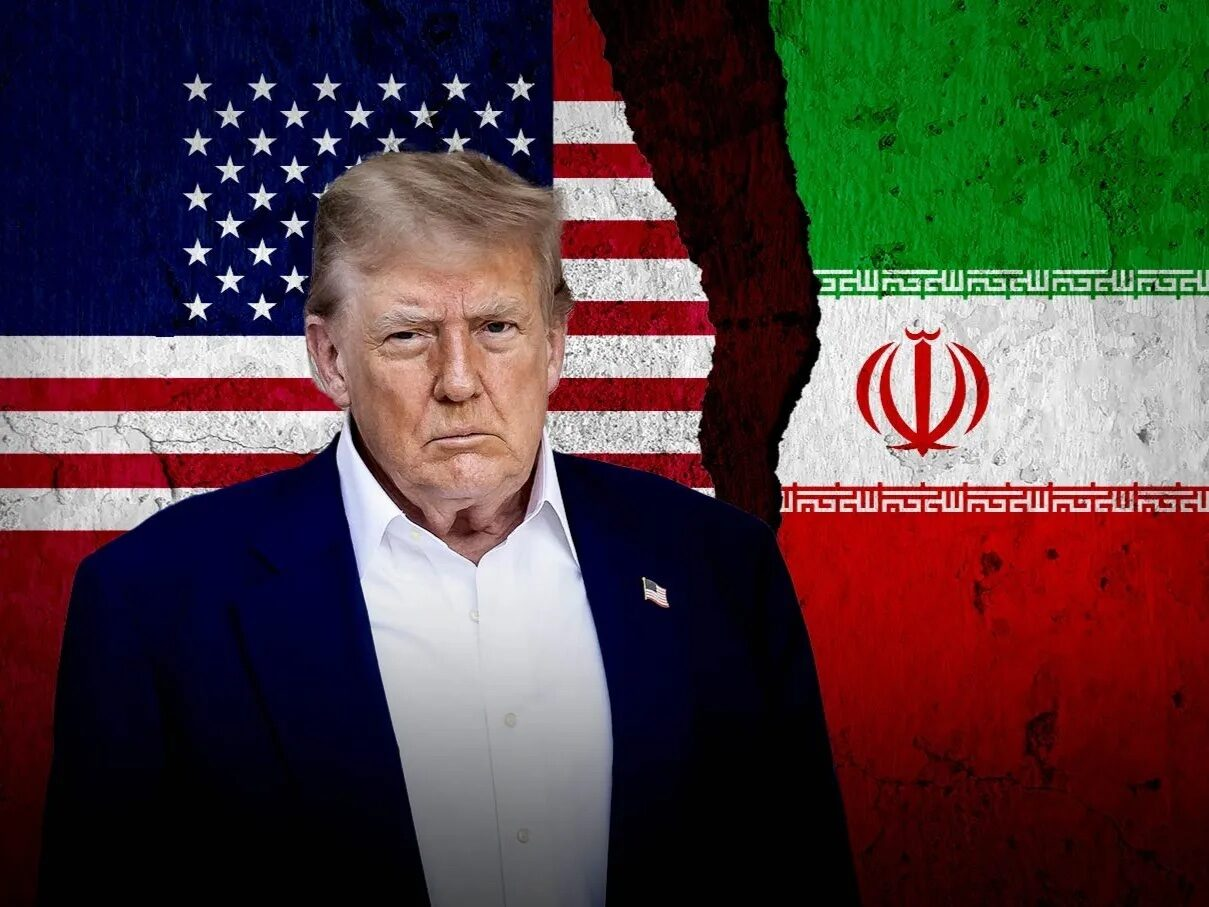
Iran has dismissed the US ceasefire proposal, insisting on a permanent peace, while Trump cautions that the country could face severe consequences.
On Monday, Iran expressed its desire for a permanent resolution to the conflict between the United States and Israel, while resisting calls to reopen the Strait of Hormuz. Meanwhile, US President Donald Trump cautioned that the country could face severe consequences if it failed to meet his Tuesday night deadline for a deal.
Tehran has rejected a ceasefire in response to a US proposal conveyed through mediator Pakistan, stating that a permanent end to the war is essential, according to the official IRNA news agency.
The Iranian response included 10 clauses, such as ending regional conflicts, establishing a protocol for safe passage through the Strait of Hormuz, lifting sanctions, and focusing on reconstruction, the agency reported.
Trump, who has warned of severe consequences for Tehran if a deal is not reached by 8 p.m. EDT Tuesday (midnight GMT) regarding the Strait of Hormuz, a crucial passage for global energy supplies, dismissed the Iranian response and asserted that his deadline is non-negotiable.
During a news conference, Trump stated that Iran could be “taken out” in one night, adding that “that night might be tomorrow night,” in reference to Tuesday. He pledged to dismantle Iranian power plants and bridges, dismissing worries that these actions could be considered a war crime or alienate the 93 million people of Iran.
In the absence of an agreement with Tehran, Trump stated: “Every bridge in Iran will be decimated” by midnight EDT (0400 GMT) on Wednesday, and “every power plant in Iran will be out of business, burning, exploding, and never to be used again.”
Iran’s leading joint military command described Trump as “delusional” and characterized his warnings as “rude, arrogant rhetoric and baseless threats,” as stated by spokesperson Ebrahim Zolfaqari on state TV.
In response to Trump’s recent remarks, Iran’s deputy sports minister, Alireza Rahimi, urged artists and athletes to create human chains at power plants nationwide on Tuesday, April 7.
“We will stand united to declare: attacking public infrastructure is a war crime,” Rahimi stated on X.
Experts have indicated that attacks on civilian infrastructure, such as power plants and bridges, would qualify as war crimes. Trump stated that Iranians are “willing to suffer that in order to have freedom” and noted that the U.S. has intercepted messages requesting bombings.
Following the attacks by the US and Israel on February 28, Iran took decisive action to close the Strait of Hormuz, a vital passage for approximately one-fifth of the global oil and natural gas supply. The waterway’s grip on the global economy has emerged as a significant bargaining tool, and Tehran is hesitant to let it go without a fight.
A framework for ending the war, brokered by Pakistan, suggested an immediate ceasefire, followed by discussions on a more comprehensive peace settlement to be finalized within 15 to 20 days, according to a source familiar with the proposals.
Iran has issued a warning to retaliate against a US-Israeli strike that occurred early Monday at Sharif University of Technology in Tehran, a leading science institution in the country. According to Iran’s WANA news agency, the attack resulted in damage to an artificial intelligence data center and other facilities.
Iran’s Foreign Minister Abbas Araqchi stated on X, “Aggressors will see our might” in response to the Sharif bombing. Iran’s science minister has alleged that the United States and Israel have targeted approximately 30 universities during the conflict.