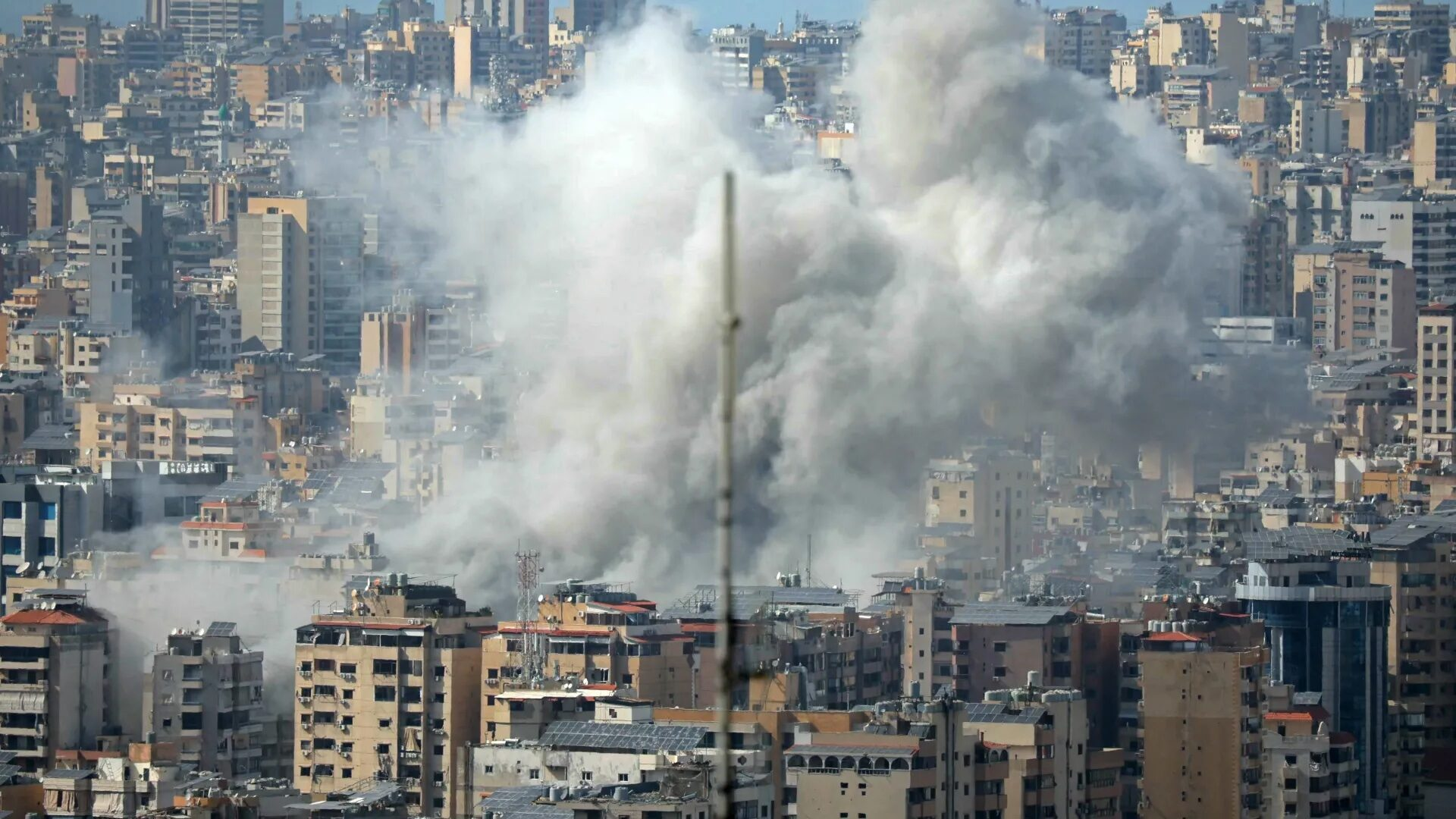
An Israeli strike in east Beirut has resulted in the death of a Christian party official, further escalating sectarian tensions in Lebanon as the war continues to expand.
An Israeli airstrike on an apartment in Ain Saadeh, east of Beirut, late Sunday resulted in the death of a local official from a Christian political party, escalating internal tensions in Lebanon as the conflict with Hezbollah intensifies throughout the country.
A strike targeted a residential building in a predominantly Christian town located in the hills east of the capital, resulting in three fatalities, as reported by Lebanon’s health ministry. The mayor of Ain Saadeh reported that the victims resided on a floor below the intended target.
The Lebanese Forces Party, a strongly anti-Hezbollah Christian political group, confirmed that two of the deceased were Pierre Moawad, a local party official, and his wife, Flavia.
“We are bearing a significant burden for a conflict into which we have been pulled by the unruly group Hezbollah,” Razi El Hage, a parliamentarian from the Lebanese Forces, spoke to Lebanese broadcaster MTV.
The most recent strike occurs during an intensifying Israeli military operation in Lebanon, initiated in reaction to cross-border fire from Hezbollah. Lebanese authorities report that over 1,460 individuals have lost their lives since the onset of the heightened conflict.
Israel has broadened its air and ground operations throughout southern and eastern Lebanon, as well as in certain areas of Beirut’s southern suburbs, instructing residents in various locations to evacuate. The campaign has resulted in the displacement of over one million individuals, a significant number of whom belong to the Shi’ite Muslim community that constitutes the primary support base for Hezbollah.
Some residents in Christian areas have voiced concerns that Hezbollah-linked fighters might be taking refuge in civilian neighborhoods, while local officials have also highlighted their worries about the potential for sectarian spillover.
Christian lawmaker Nadim Gemayel, who opposes Hezbollah, has previously cautioned that Israel’s strikes might be inadvertently escalating tensions by relocating displaced Shi’ite communities to different areas of the country.
No evacuation warning was issued prior to Sunday’s strike. Residents in Ain Saadeh noted that the targeted apartment building seemed to be unoccupied.
“I’ve lived in my house for 20 years, and I’ve never even seen this apartment illuminated.” “There’s no one in it,” remarked Antoine Aalam, a 70-year-old resident residing across from the building.
The Israeli military has confirmed the strike, stating it aimed at a “terror target east of Beirut,” though no additional details were provided. It stated that reports of civilian casualties were being reviewed and did not address inquiries regarding concerns about sectarian implications.
Earlier strikes on Sunday also targeted Beirut’s southern suburbs, resulting in the deaths of five individuals, including a teenage girl and two Sudanese migrant workers. Additionally, another strike in southern Lebanon claimed the lives of a man and his wife, injuring their two children.
The escalation persists even after a ceasefire was established in 2024 during the earlier conflict between Israel and Hezbollah, as Israeli forces continue their operations in certain areas of southern Lebanon. Officials in Lebanon report that ongoing requests for a renewed ceasefire have yet to receive a response.
In his inaugural televised address following the recent escalation, President Joseph Aoun emphasized the vital importance of maintaining national unity.
“Our main priority is to maintain civil peace, which is a non-negotiable boundary,” he stated.