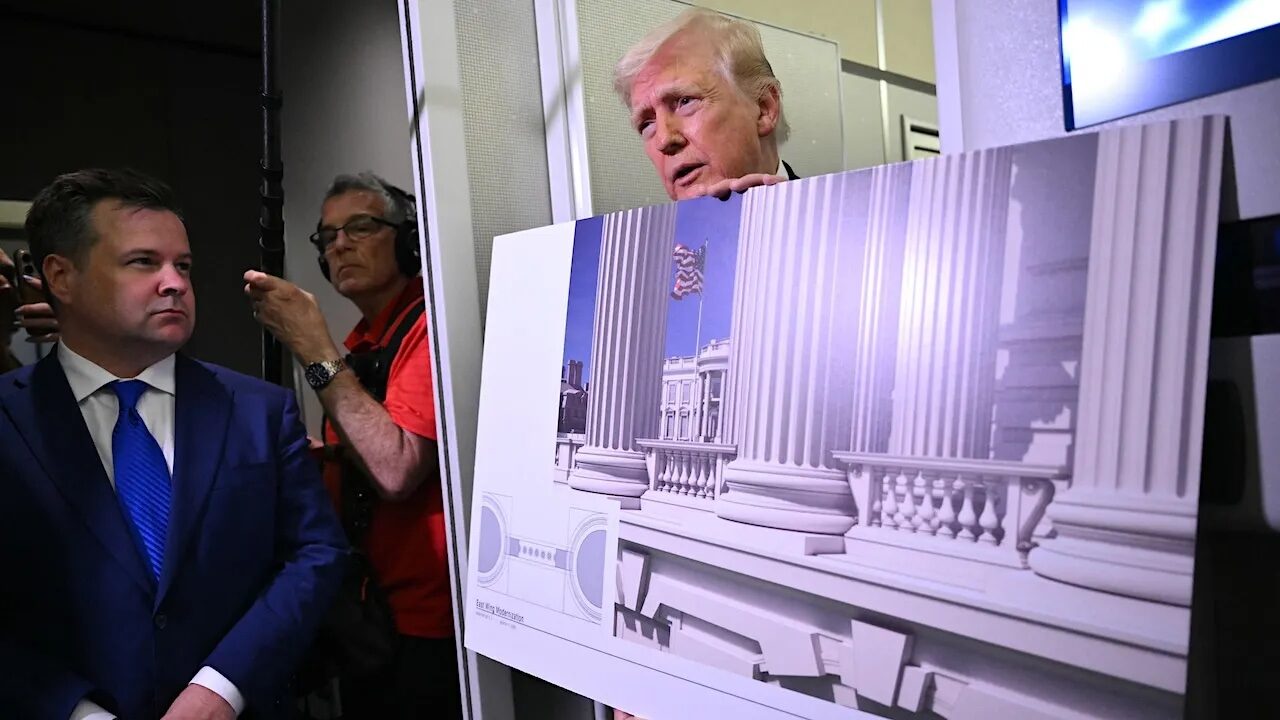
Trump raises constitutional concerns about presidential authority and historic preservation in his emergency petition to restart the White House ballroom project.
Following a federal judge’s ruling to suspend work on a contentious $400 million White House ballroom project, the Trump administration has filed an emergency appeal citing national security to resume construction.
The administration claimed in its submission to the United States Court of Appeals for the District of Columbia Circuit that the court’s decision had left the presidential home “open and exposed,” potentially endangering the president, his family, and employees.
US District Judge Richard Leon’s decision earlier this week to temporarily freeze the project and allow a 14-day opportunity for appeal is the basis for the legal conflict. George W. Bush appointed Leon, who had voiced concerns about the Justice Department’s “shifting theories” about why it was avoiding legislative approval.
Whether a serving president is entitled to accept large structural alterations to the White House, especially the demolition of historically significant areas without legislative review, is at the heart of the dispute.
The abandoned project is located on the site of the former East Wing, which was built in 1902 and later enlarged under Franklin D. Roosevelt’s presidency. The ballroom is a component of Trump’s larger remodeling project, which also includes upgrades to the John F. Kennedy Center for the Performing Arts and plans for a 250-foot ceremonial arch.
The National Park Service filed an emergency motion challenging the district court’s jurisdiction to hear the case, claiming that the complaint is based on “a single pedestrian’s subjective architectural feelings.”
The National Trust for Historic Preservation filed the initial lawsuit, arguing that Trump overreached his executive authority by demolishing the historic East Wing and starting construction without the required authorization.
Trump has rejected the accusations, arguing that since the ballroom project is being financed by private donations rather than public funds, congressional approval was not required.
Preservation specialists have cautioned that the initiative lacks institutional protections, nevertheless. The lack of “checks and balances” raises serious questions about precedent and government, according to George Washington University professor emeritus Richard Longstreth.