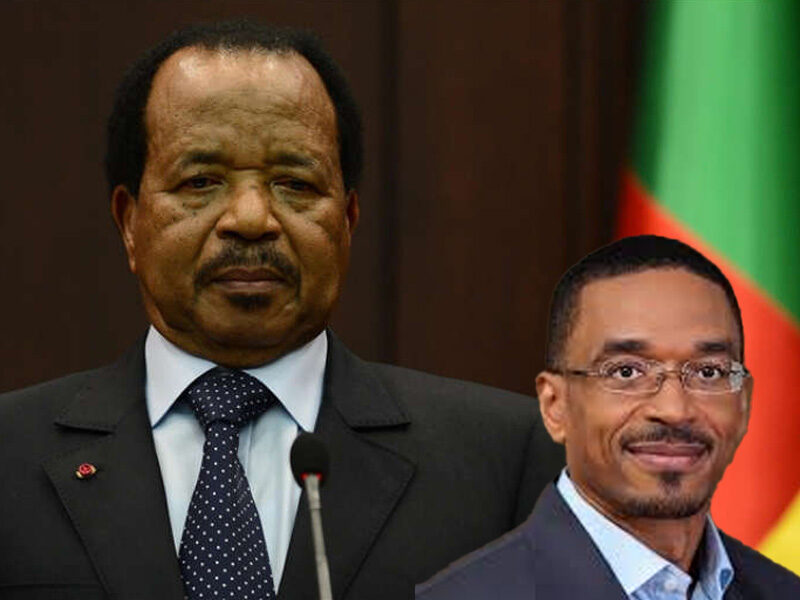
Franck Biya, son of Paul Biya, takes on the roles of vice president and military leader in Cameroon amid escalating unrest and a contested election that heightens political tensions across the country.
President Paul Biya of Cameroon has designated his son, Franck Emmanuel Biya, as Vice President of the Republic and Head of the Armed Forces, thereby strengthening his grip on the nation’s political and military frameworks amid increasing turmoil.
The appointment, revealed in an official decree dated 4 April 2026, also names Franck Biya as Minister Delegate at the Ministry of Defense, positioning him at the heart of Cameroon’s security framework.
The document indicates, “Mr. Franck Emmanuel BIYA has been appointed Vice President of the Republic of Cameroon.”
Additionally, it states, “Mr. Franck Emmanuel BIYA has been appointed as the Head of the Armed Forces.”
The decree states, “The Vice President of the Republic, Mr. Franck Emmanuel BIYA, is also appointed Minister Delegate at the Ministry of Defense of the Republic of Cameroon.”
The presidency, referencing constitutional provisions and defense laws, stated that the appointments were made to meet “service requirements.” It further noted that the decree “shall be registered, published according to the procedure of urgency, and inserted in the Official Gazette.”
The decision follows months after Biya, 92, took the oath for an unprecedented eighth term amid a contested election that has sparked nationwide protests and drawn international attention.
Biya garnered 54 percent of the vote in the election, surpassing opposition candidate Issa Tchiroma Bakary, who received 35 percent. Tchiroma Bakary has dismissed the results, asserting that he was the legitimate victor and alleging electoral fraud by the authorities, which the government refutes.
In spite of the controversy, Biya characterized the election as “satisfactory” and praised the electoral body for its management, while also congratulating security forces for managing the demonstrations without responding to claims of excessive force.
The Constitutional Council rejected several petitions contesting the results, noting inadequate evidence or a lack of jurisdiction.
Biya, who has been in power in Cameroon since 1982 following the succession of former president Ahmadou Ahidjo, is currently facing increased criticism from opponents who allege that he is consolidating his control through political and military means.
The promotion of his son to the vice presidency and command of the armed forces is expected to heighten worries regarding succession planning and democratic governance in the Central African nation, as demands for reform persistently increase.