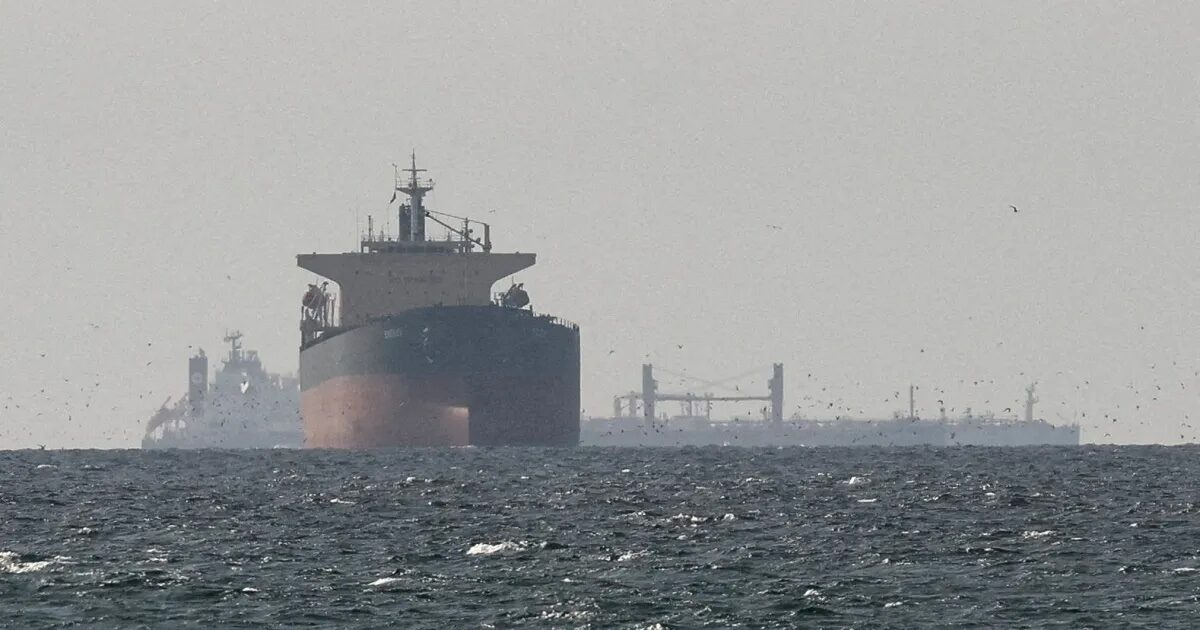
Three tankers operated by Oman, a container ship owned by France, and a gas carrier owned by Japan have navigated the Strait of Hormuz since Thursday, according to shipping data. This movement illustrates Iran’s approach of permitting passage for vessels it considers friendly.
Iran first closed the Strait, a passage for approximately one-fifth of global oil and LNG flows, following U.S. and Israeli airstrikes on Iran at the end of February, which resulted in an escalating conflict. Subsequently, it announced that it would allow transits by vessels without any connections to the U.S. or Israel.
Oil and commodities markets are eager for indications that traffic is returning. In recent weeks, several tankers and container ships have successfully navigated through the blockade, but periods of total standstill quickly followed this activity.
A container ship belonging to France’s CMA CGM passed through the Strait on Thursday, coinciding with French President Emmanuel Macron’s statement that only diplomatic efforts, rather than a military operation, could facilitate access to the Strait.
The French vessel altered its automatic identification system destination to “Owner France” prior to entering Iranian waters, indicating its nationality to Iranian authorities.
Oman facilitated discussions between Iran and the U.S.
The vessels seem to have turned off their AIS transponders while crossing, as their signal vanished from the vessel-tracking data.
On Thursday, two very large crude carriers and one LNG tanker operated by Oman Shipping Management departed from the Gulf, as reported by MarineTraffic and LSEG data.
Oman, having facilitated discussions between Iran and the United States prior to the attacks, has expressed disapproval regarding the initiation of strikes during the ongoing negotiations.
On Friday, Japan’s Mitsui O.S.K. Lines announced that the LNG tanker, Sohar LNG, which it co-owns, had successfully crossed the Strait. This marks it as the first Japan-linked vessel and the first LNG carrier to achieve this since the onset of the conflict.
The spokesperson for the organization did not provide information to Reuters regarding the timing of the passage or the necessity of negotiations.
As of early Friday, approximately 45 ships owned or operated by Japanese companies continued to be stranded in the region, as reported by Japan’s transport ministry.
On Friday, the Green Sanvi, another LPG tanker owned by Mitsui, departed the Gulf, navigating through Iran’s territorial waters, as indicated by the shipping data.
The India-flagged vessel indicated its destination as “India ship, India crew.”
Additionally, the Panama-flagged Danisa, a very large gas carrier, departed the Gulf using the same route, en route to China, according to the data.