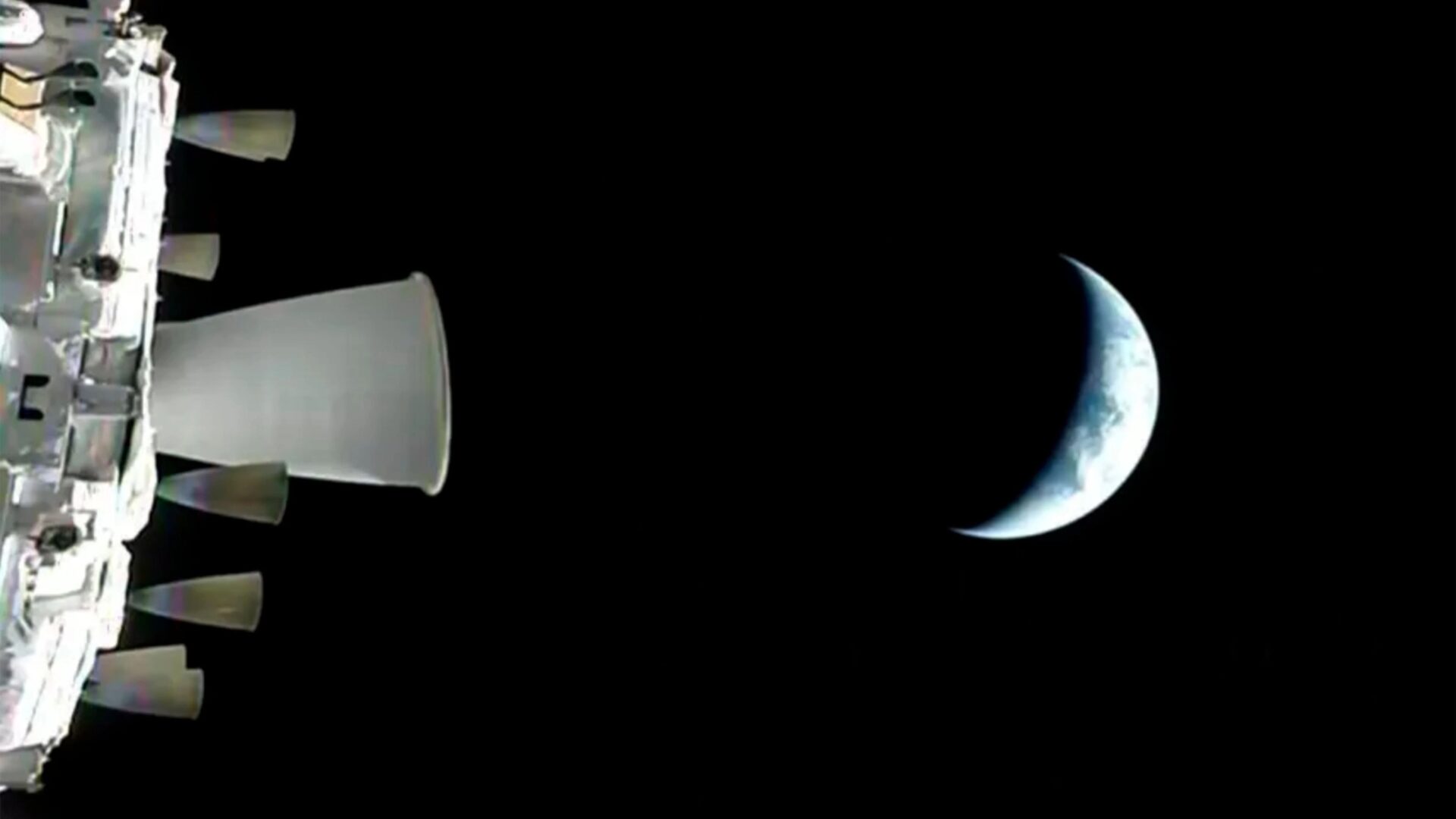
For the first time since 1972, the astronauts of Artemis II have departed from Earth orbit, embarking on a historic journey to the moon.
The astronauts of NASA’s Artemis II have successfully ignited their engines, commencing their voyage to the moon. This event signifies humanity’s first exit from Earth orbit since the Apollo era over fifty years ago.
The crucial translunar injection burn took place 25 hours post-liftoff on Thursday night, launching the Orion capsule beyond Earth orbit and establishing its path for a lunar fly-around planned for early next week. The spacecraft is currently journeying almost 250,000 miles (400,000 kilometers) towards the moon, carrying a crew of three Americans and one Canadian.
“Ladies and gentlemen, I am thrilled to announce that for the first time since 1972 during Apollo 17, human beings have left Earth orbit,” NASA official Lori Glaze stated during a news conference, affirming this significant achievement. She remarked that the engine firing was “flawless.”
The astronauts onboard recounted a moment filled with emotion and wonder as Earth gradually disappeared from view. Canadian astronaut Jeremy Hansen remarked that the crew was captivated by the view.
“Humanity has once again demonstrated our potential, and it is your aspirations for the future that guide us on this journey around the moon,” Hansen stated.
He remarked that the experience was so enthralling that the crew pressed their faces closely against the spacecraft windows, constantly wiping them clean to absorb what he described as the “phenomenal” view of Earth from deep space.
Prior to embarking on the journey to the moon, NASA held the crew in Earth orbit for approximately one day to perform essential tests on the Orion capsule’s life-support systems, confirming that all conditions were secure for the extended voyage.
Following the successful maneuver, Artemis II now stands as a crucial test flight and the initial stage of NASA’s larger goals to create a lasting human presence on the moon, which includes plans for a future lunar base.