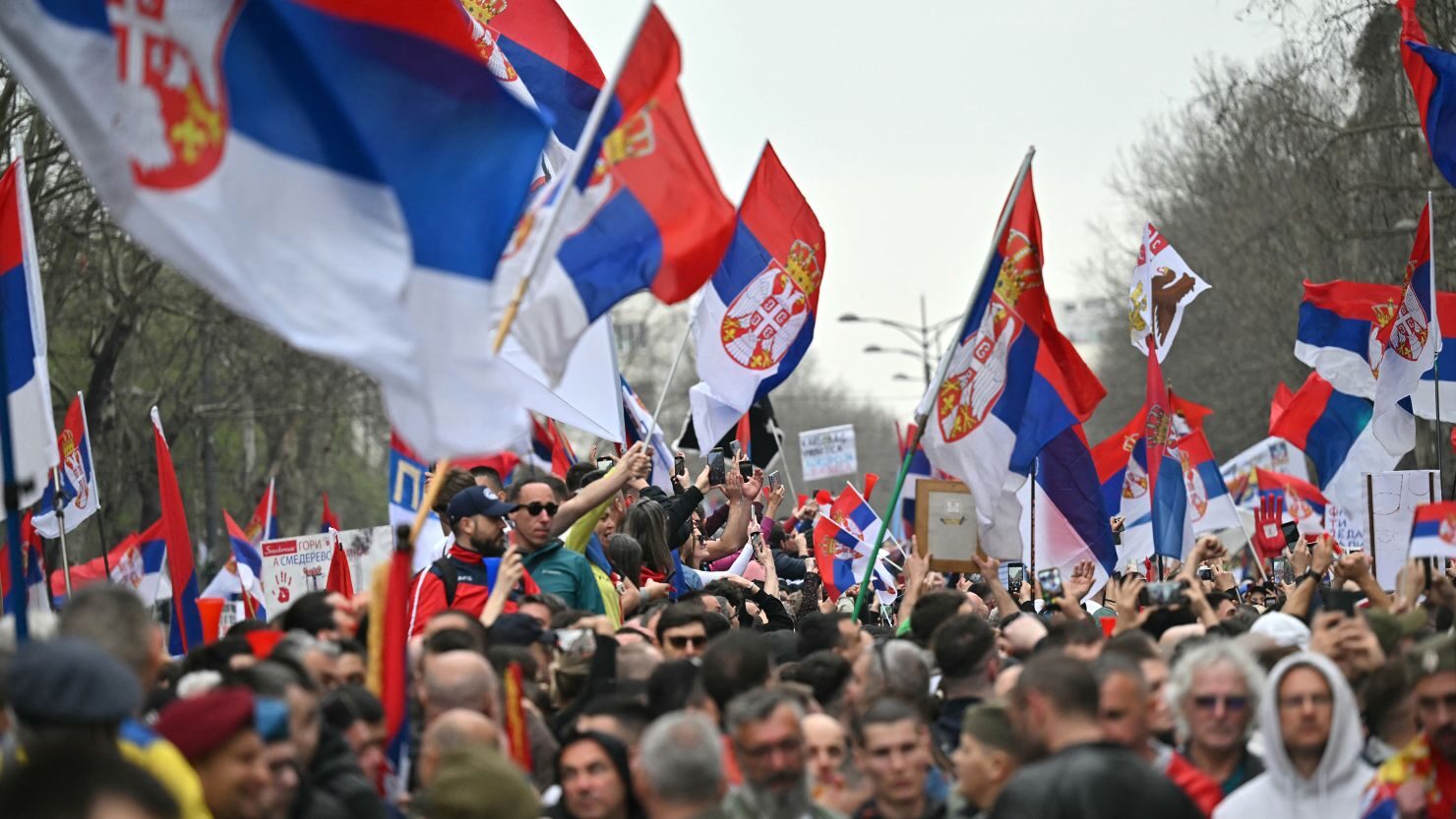
Serbia’s President Aleksandar Vucic is set to initiate discussions on Friday, which he has described as an effort to extricate the country from a political crisis. However, critics have dismissed these talks as futile negotiations preceding any potential early election.
Vucic, a populist leader, is pressured from a protest movement that opposes the government and corruption. This movement began in December 2024, following the tragic collapse of a concrete awning at a railway station in the northern city of Novi Sad, which resulted in the deaths of 16 individuals.
Protesters are calling for an early parliamentary election, seeking to hold it before the scheduled date in December 2027.
On Tuesday, after a tumultuous protest in Belgrade, Vucic suggested the possibility of a vote this summer or later in the year, as his second and final five-year term concludes in 2027.
Over the past year, he has expressed his desire for a society-wide dialogue, indicating that he wishes to include all parliamentary parties and students, among others.
Vucic’s office announced that on Friday he will meet with representatives from the pro-Russian Movement of Socialists, as well as leaders from the Bosniak and Hungarian national minorities’ Party of Justice and Reconciliation and the Party of Vojvodina Hungarians—parties that support his ruling Serbian Progressive Party (SNS).
Ana Brnabic, the parliamentary speaker from the SNS ranks, informed state RTS TV that the discussions would focus on the calls for an early parliamentary election and Serbia’s relationship with the European Union.
Savo Manojlovic, leader of the Move-Change movement involved in the protests, stated that discussions with Vucic would be futile. “There should be no negotiations regarding free elections, an autonomous university, or an independent judiciary,” he remarked.
The Green-Left Front, in opposition, declared its decision not to participate, stating: “We will persist in our unwavering fight against Vucic’s criminal regime on every front.”
Prior to its accession to the EU, Serbia is required to undertake judicial reforms, address corruption, improve relations with neighboring Kosovo, and align its foreign policies with those of the European bloc.
Belgrade navigates its pro-Western aspirations while maintaining relationships with China and Russia.