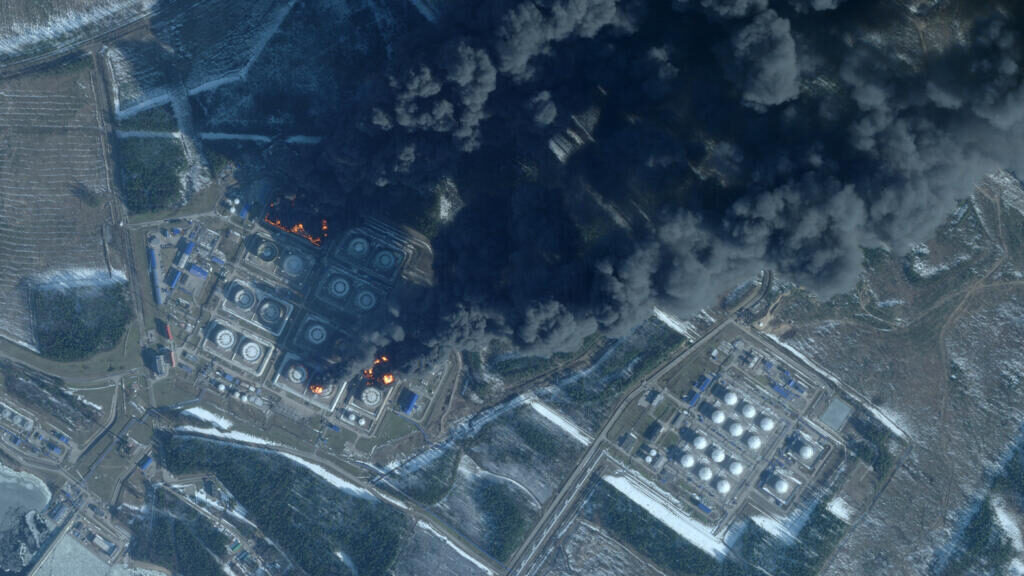
Ukraine targets Russian Baltic oil facilities, igniting fires, stopping exports, and disrupting supply chains, as satellite imagery shows extensive damage.
Recent satellite imagery and confirmed footage show that Ukraine has conducted multiple strikes on essential oil export infrastructure in Russia’s Leningrad region during the past week, resulting in significant facilities being on fire for several days.
Analysis indicates that at least three oil sites near Saint Petersburg, located about 500 miles (800km) from the Ukrainian border, were targeted between March 23 and 28. The Baltic Sea ports of Ust-Luga and Primorsk are included, along with the inland Kirishi oil refinery.
According to data from the Centre for Research on Energy and Clean Air, the affected sites hold significant strategic importance, with 22% of Russia’s oil exports in 2025 expected to be shipped from Primorsk and 20% from Ust-Luga.
Recent shipping data indicates that no oil tankers were loaded at any of Russia’s three Baltic ports on March 26 and 27, marking the first two-day halt of this kind since Moscow initiated its full-scale invasion of Ukraine in 2022.
Satellite images taken on March 24 depict large plumes of smoke emanating from Primorsk, while further imagery from March 27 shows fires at Ust-Luga and notable structural damage at Kirishi. Examination reveals:
Primorsk: a minimum of eight storage tanks have been destroyed or damaged
Ust-Luga: a minimum of eight storage tanks have been destroyed or damaged
Kirishi: a minimum of two storage tanks have sustained damage
Thermal data from NASA’s FIRMS system confirmed the presence of ongoing fires, with heat signatures observed at Primorsk early Monday and at Ust-Luga later that day. Leningrad Governor Alexander Drozdenko announced that the fires had been contained by Sunday and confirmed that there were no casualties.
Verified videos depict the aftermath of the strikes, showcasing towering smoke columns over Primorsk and the damaged infrastructure at all three locations.
Robert Brovdi, commander of Ukraine’s drone force, stated that the coordinated operation aimed at Russia’s “oil arteries, refining capacity, and crude export infrastructure” over a span of five days.
Ukraine’s military characterized the Kirishi refinery as one of Russia’s three largest oil-processing facilities, generating fuel that sustains the nation’s armed forces.
Estimates reported by Reuters indicate that as much as 40% of Russia’s oil export capacity experienced temporary disruption on March 25 due to the initial wave of attacks.
In spite of the disruption, analysis indicates that Russia generated around £7.1 billion from oil exports during the last three weeks of March, as global prices soared due to wider geopolitical tensions, including the continuing US-Israel conflict with Iran.
Volodymyr Zelensky stated that allies had encouraged Kyiv to reduce its attacks on Russian energy infrastructure in light of the global energy crisis, noting that these strikes would only halt if Russia ceased its assaults on Ukraine’s energy systems.