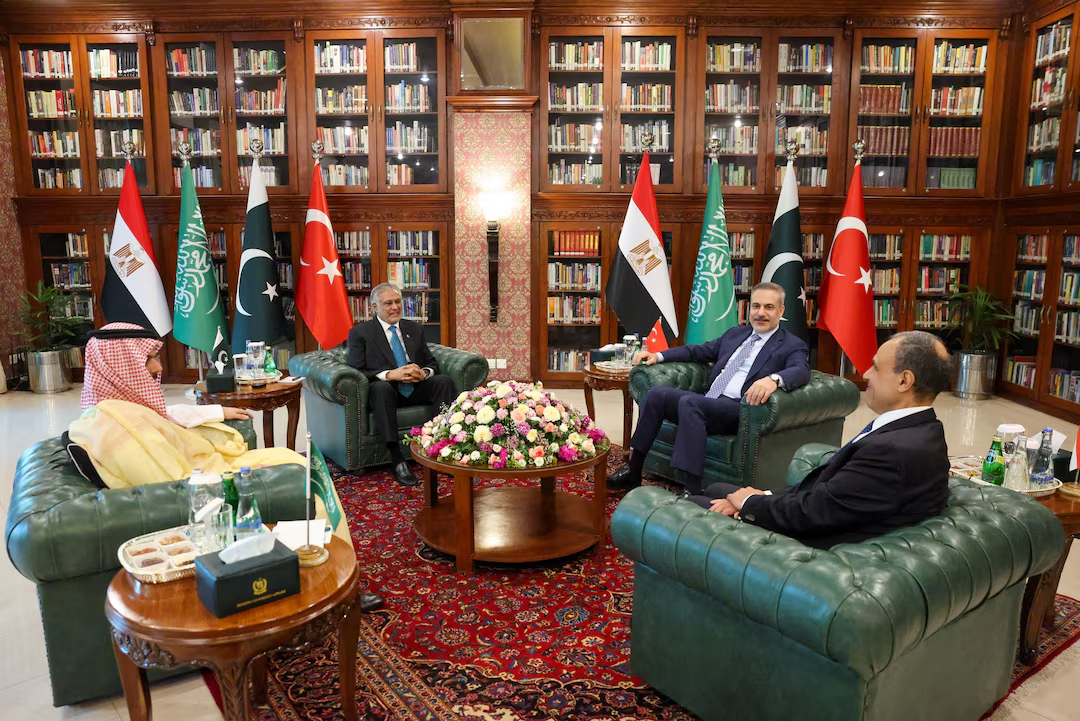
Pakistan facilitated discussions with Turkey, Egypt, and Saudi Arabia on Sunday in its endeavor to mediate a resolution to the Iran war. The preliminary talks concentrated on suggestions to restore shipping access through the Strait of Hormuz, according to sources familiar with the situation.
At the conclusion of the first day of discussions in Islamabad, Pakistan’s Foreign Minister Ishaq Dar stated that foreign ministers from the regional powers had explored “possible ways to achieve an early and lasting resolution to the conflict in the region” and had received updates on potential U.S.-Iran dialogues taking place in Islamabad.
The discussions took place as Iran cautioned the U.S. about initiating a ground assault, while global oil prices rose in response to ongoing clashes involving Iran, the U.S., and Israel.
According to five sources familiar with the matter, the countries convening in Pakistan have presented proposals to Washington related to maritime traffic in the Gulf as part of broader initiatives aimed at stabilizing shipping flows.
The Strait of Hormuz used to serve as a passage for approximately one-fifth of the world’s oil and liquefied natural gas supplies; however, Iran has successfully disrupted shipping activities through this route in reaction to the air strikes by the U.S. and Israel that commenced a month ago.
Dar stated that all parties had conveyed their trust in Pakistan’s role, noting that China “fully supports” the initiative.
Suggestions for the Reopening of Hormuz
Pakistan, sharing a border with Iran, like Turkey, has utilized its strong relationships with both Tehran and Washington to establish itself as a significant diplomatic conduit in the conflict, with Ankara and Cairo also contributing to the efforts.
A source from Pakistan indicated that proposals, including those from Egypt, were submitted to the White House prior to Sunday’s meeting, and these proposals featured fee structures similar to those of the Suez Canal.
According to two additional Pakistani sources, Turkey, Egypt, and Saudi Arabia may establish a consortium to oversee oil flows through the waterway and have invited Pakistan to take part. A source from Pakistan indicated that Islamabad has not received a formal request to join and asserts that it will reject any such request.
The sources revealed that both the U.S. and Iran had discussed the proposal for a management consortium. A Pakistani source indicated that the country’s army chief, Asim Munir, has maintained regular communication with U.S. Vice President JD Vance.
The foreign ministries of Egypt and Pakistan did not provide a response to the request for comment regarding the reported proposals. The media office of the Saudi government and the White House did not respond promptly to a request for comment.
A diplomatic source from Turkey indicated that Ankara’s main focus is on achieving a ceasefire. “The safe passage of ships could act as a significant confidence-building measure in this context,” the source stated, preferring to remain unnamed.
On Sunday, Dar conducted individual meetings with his counterparts from Turkey and Egypt, according to his office.
In a post on X, he stated that Iran had consented to permit 20 additional Pakistani-flagged ships to pass through the Strait of Hormuz.