More than 3,500 US troops are being deployed to the Middle East amid the escalating conflict with Iran
US troops have arrived as the conflict with Iran intensifies, while millions across the nation rally against President Trump’s domestic and foreign policies.
Officials announced on Saturday that over 3,500 troops from the United States, including the USS Tripoli with approximately 2,500 Marines, have arrived in the Middle East as strikes in the Iran war intensified.
Millions of protesters filled the streets across the US, as organizers claimed this could be the largest single-day demonstration in the country’s history. The ‘No Kings’ movement orchestrated coordinated rallies opposing President Donald Trump and his administration’s policies.
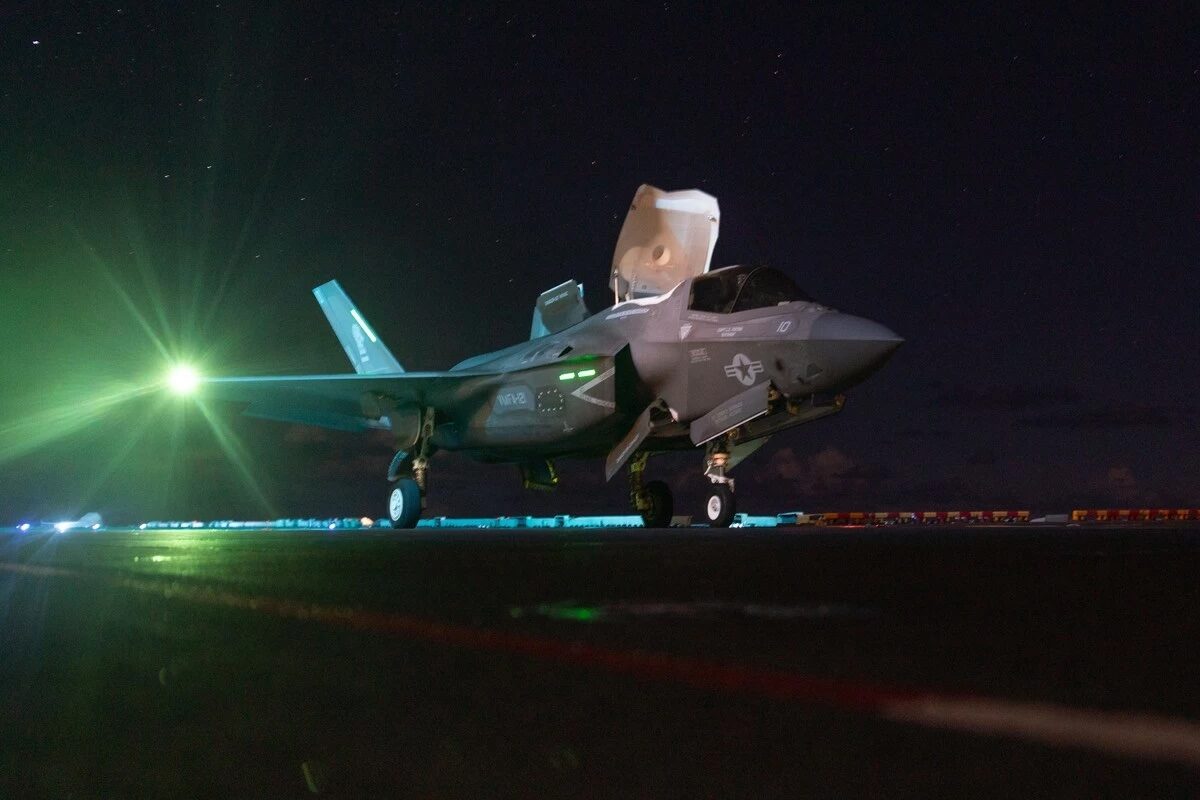
The US Central Command announced via social media that the USS Tripoli, the flagship of the Tripoli Amphibious Ready Group and the 31st Marine Expeditionary Unit, has arrived in its designated area of responsibility.
It is the latest version of the amphibious warships, referred to as a “big deck,” providing ample space for F-35 stealth fighter jets, Ospreys, and various other aircraft.
The ship was previously stationed in Japan when the order to deploy to the Middle East was issued nearly two weeks ago.
Central Command stated that alongside the Marines, Tripoli also contributes transport and strike fighter aircraft, in addition to amphibious assault assets in the region. The USS Boxer, accompanied by two additional ships and another Marine Expeditionary Unit, has been dispatched to the region from San Diego.
CENTCOM reported on Saturday in a fact sheet that over 11,000 targets have been struck since the commencement of Operation Epic Fury on February 28.
On Friday, US Secretary of State Marco Rubio stated that the United States can achieve its goals “without any ground troops.”
He also stated that President Trump “must be ready for various contingencies” and that American forces are positioned “to provide the president with maximum flexibility and the best chance to adapt to any situations that may arise.”
The deployment of U.S. troops to the area follows an incident in which at least 10 American service members were affected, including two who sustained serious injuries due to Iran launching six ballistic missiles and 29 drones targeting Saudi Arabia’s Prince Sultan air base.
The ongoing war, which shows no signs of abating even with reports of Trump advocating for a deal, has significantly disrupted global air travel, interrupted oil exports, and led to a sharp increase in fuel prices. The economic fallout has been worsened by Iran’s control over the Strait of Hormuz, a crucial waterway.
On Saturday, Iranian-backed Houthi rebels announced their involvement in the month-old conflict by asserting that they had launched a missile, which Israel reported intercepting.
At the same time, millions of protesters filled the streets throughout the US, with organizers claiming it might evolve into the largest single-day demonstration in the nation’s history, as the ‘No Kings’ movement held synchronized rallies opposing President Donald Trump and his administration’s policies.
Over 3,000 protests were organized across the nation, covering all 50 states, with further demonstrations taking place in cities throughout Europe, Asia, and Australia, highlighting the expanding global impact of the movement.
The protests, referred to as ‘No Kings Day,’ represent the third significant mobilization since 2025 and have grown considerably in both size and scope.
Organizers indicated that participation might soar into the millions, following earlier rallies that attracted unprecedented crowds.
Across New York, Los Angeles, and Washington, D.C., protesters took to the streets, holding placards that denounced what they viewed as authoritarian tendencies, economic struggles, and contentious foreign and domestic policies during Trump’s administration.
The protests were driven by concerns regarding immigration enforcement, escalating living expenses, and a contentious US military operation in Iran, which has now entered its fourth week.
Demonstrators expressed their worries regarding civil liberties, limitations on abortion, and the expansion of executive power.
A major rally in Minnesota, seen as the heart of this year’s demonstrations, attracted tens of thousands, featuring notable public figures and activists participating in performances and speeches.
The ‘No Kings’ protests began in 2025 as a reaction to what many critics perceived as a rise in authoritarian governance.
In Washington, D.C., demonstrators marched past iconic landmarks, while in smaller towns and traditionally conservative areas, turnout increased significantly, reflecting what organizers characterized as a “broad-based national movement.”
Protests demonstrating international solidarity were observed in cities like Paris, Rome, and Tokyo, underscoring worldwide apprehension regarding US political developments and foreign policy choices.
In spite of the magnitude of the demonstrations, the White House downplayed the protests, with officials describing them as politically motivated and influenced by opposition groups.