On Saturday, a coalition of World Trade Organization members reached an agreement to bypass adoption obstacles for the inaugural baseline on digital trade regulations, choosing instead to implement the agreement among willing participants, according to the WTO.
In recent years, attempts by a coalition of countries to incorporate the E-Commerce Agreement into the WTO rulebook faced opposition from dissenting members on two occasions. The agreement seeks to promote a transparent atmosphere for digital commerce.
A senior diplomat informed Reuters that the drive to hasten the entry into force, among members accounting for 70% of global trade, arises from increasing frustration with those obstacles. According to WTO regulations, plurilateral agreements involving specific groups of members necessitate a consensus.
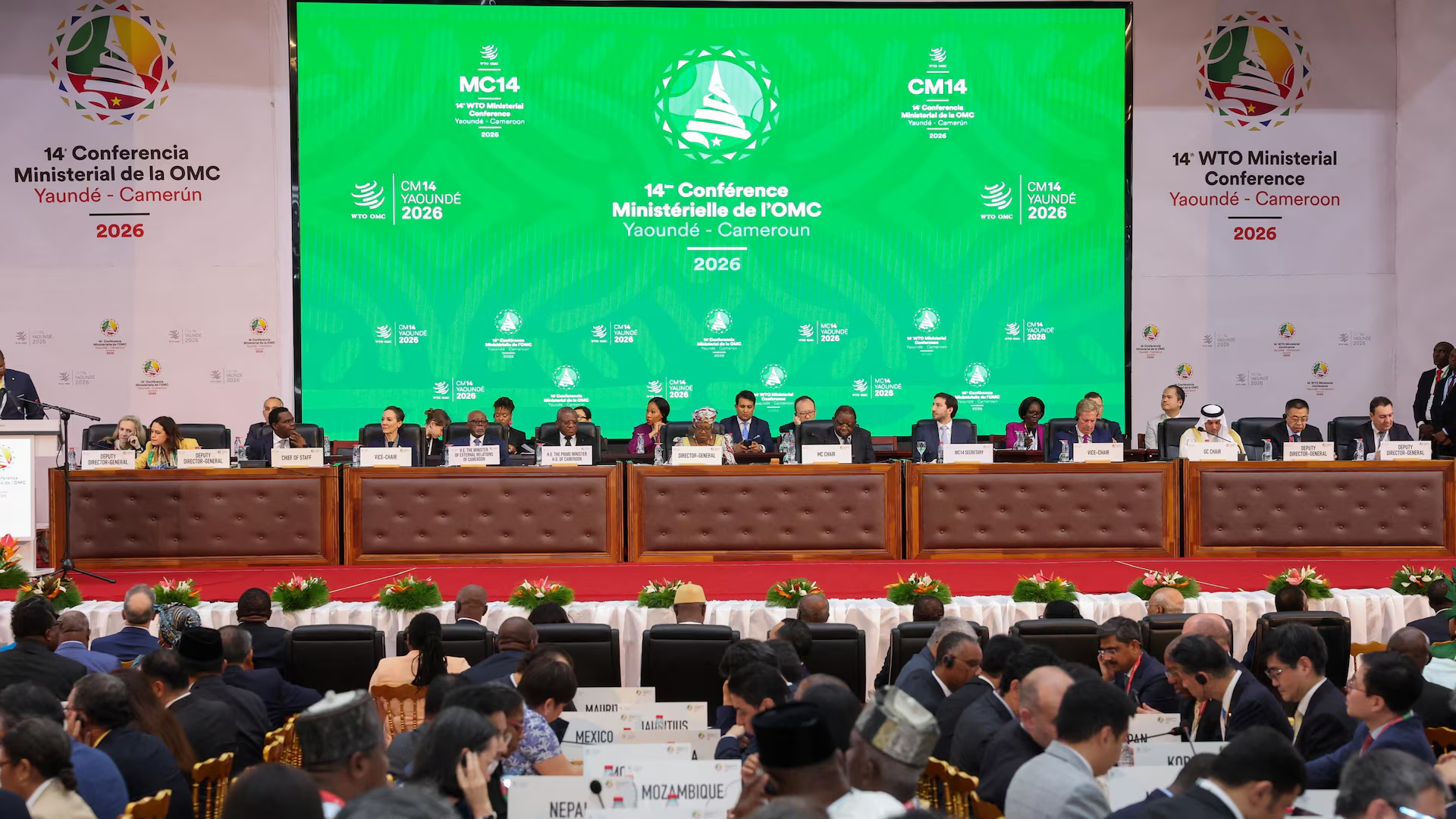
During the 14th WTO Ministerial Conference in Cameroon, 66 members reached an interim arrangement to implement the deal within their nations while seeking wider integration into the WTO framework.
Yamada Kenji, Japan’s State Minister of Economy, Trade and Industry, praised it as a “historic step” toward global digital trade regulations.
UK Business and Trade Secretary Peter Kyle praised the initiative. “As the first global digital trade deal, this will make trade cheaper, faster, and more secure for businesses around the world,” Kyle stated.
India has emerged as a key player in obstructing a deal, contending that trade agreements ought to be established multilaterally through consensus. “A strong message is being sent to India, and others, that if you utilize consensus to hinder any reform process or progress, we will move forward regardless,” remarked a senior European diplomat.
According to two senior diplomats, India is presently obstructing a distinct plurilateral WTO agreement under discussion in Cameroon that seeks to enhance investment in developing nations.
India has thus far resisted the International Facilitation for Development Agreement due to concerns that its negotiating power could be weakened.
The United States has not joined the 66 countries that have signed the agreement, as the matter is currently being reviewed by the U.S. administration.
The agreement stands apart from an e-commerce moratorium that prohibits customs duties on digital downloads and streaming. This issue is currently at the center of a political impasse between the U.S. and India during the WTO meeting in Cameroon.