Israeli police prevented a Catholic cardinal from accessing the Holy Sepulchre in Jerusalem on Palm Sunday
The Latin Patriarch of Jerusalem was prevented by Israeli police from celebrating Palm Sunday at the Church of the Holy Sepulchre, an event that has not occurred in centuries, according to the Patriarchate. The police cited security concerns related to the war in Iran.
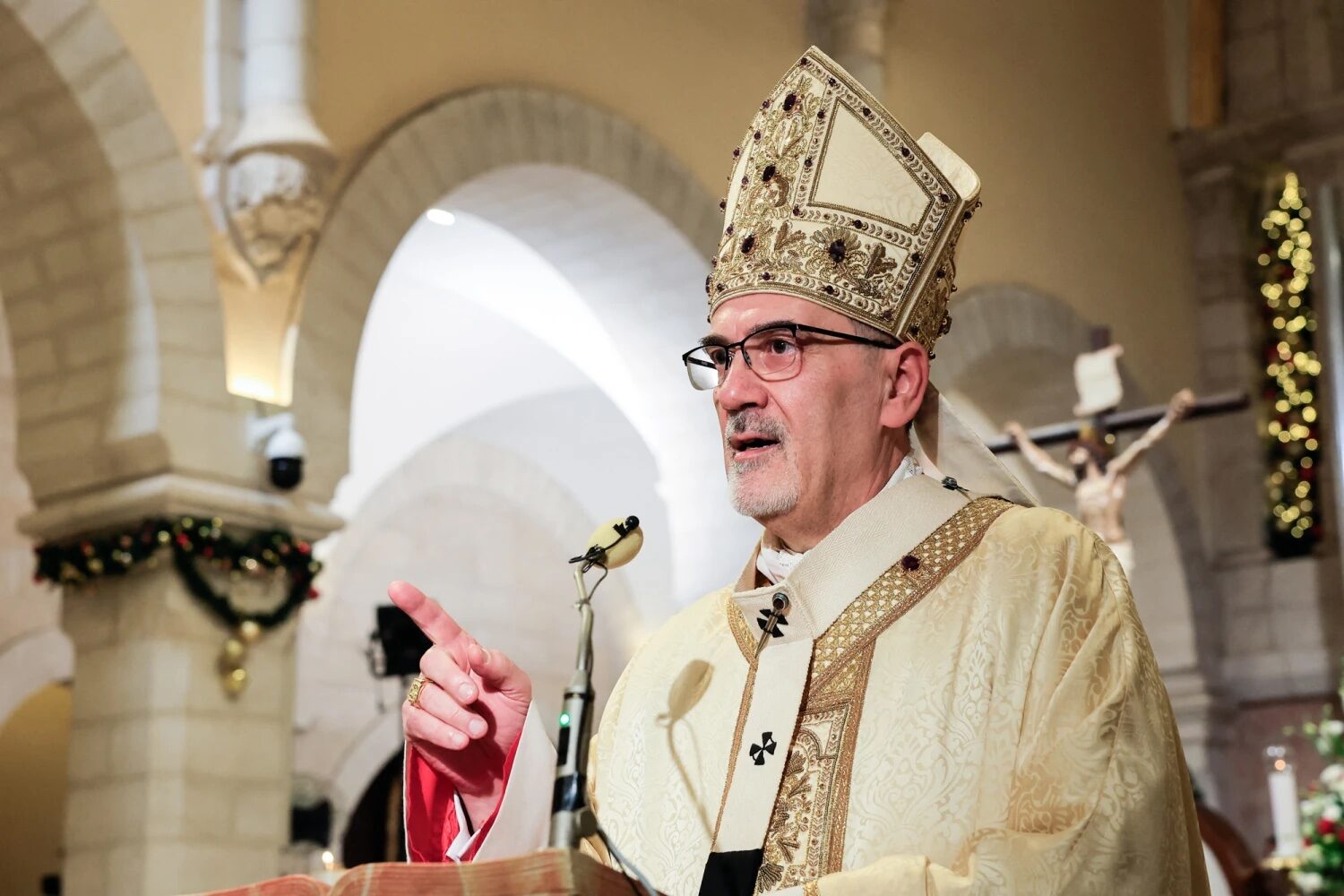
Cardinal Pierbattista Pizzaballa and Friar Francesco Ielpo were halted by police as they made their way to the church located at the site where Christians believe Jesus was crucified and resurrected, according to the Latin Patriarchate of Jerusalem. “In consequence, and for the first time in centuries, the Heads of the Church were barred from celebrating the Palm Sunday Mass at the Church of the Holy Sepulchre,” the statement noted.
Israeli Prime Minister Benjamin Netanyahu stated: “There was no malicious intent whatsoever, only concern for his (Pizzaballa’s) safety and that of his party.”
He stated that arrangements were ready to enable church leaders to worship at the church in the upcoming days.
Israeli police announced that all holy sites in Jerusalem’s Old City, including those revered by Christians, Muslims, and Jews, have been closed to worshippers since the onset of the U.S.-Israeli conflict regarding Iran, especially at locations lacking bomb shelters.
Authorities announced that they had declined a request from the Patriarchate for an exemption on Palm Sunday.
“According to the police, the Old City and its sacred sites form a complicated region that restricts access for large emergency and rescue vehicles, greatly hindering response efforts and presenting a genuine threat to human life in the case of a mass casualty event.”
Limitations Impact Easter, Ramadan, Passover
Palm Sunday signifies the start of Holy Week, the most significant week in the Christian calendar, culminating in Easter. The Old City was often bustling, as Roman Catholics moved through the grand wooden doors of the Holy Sepulchre.
This year, Christians, Muslims, and Jews have faced challenges in observing Easter, Ramadan, or Passover as they typically would, owing to police restrictions.
During Ramadan, Jerusalem’s Al-Aqsa Mosque was mostly vacant, and as Passover nears on Wednesday, there have been only a handful of worshippers at Judaism’s Western Wall.
Italy’s Prime Minister Giorgia Meloni expressed criticism regarding the police action, while Foreign Minister Antonio Tajani announced on social media his intention to summon Israel’s ambassador concerning the incident.
President Emmanuel Macron of France criticized the decision made by the Israeli police, stating that it “contributes to the concerning rise in violations of the status of the Holy Places in Jerusalem.”
U.S. Ambassador to Israel Mike Huckabee expressed that the denial of the Patriarch’s entry to the church on Palm Sunday was “difficult to understand or justify.”
The Vatican has not provided a response to the request for comment. On Sunday, Pope Leo stated that God turns away the prayers of leaders who initiate wars and possess “hands full of blood,” delivering unusually strong comments as the Iran war entered its second month.
Residents express concerns about inconsistent enforcement.
On March 16, shrapnel from ballistic missiles launched by Iran and debris from Israeli interceptors that brought them down landed near the church and the adjacent hilltop plateau recognized by Muslims as the Al-Aqsa compound and by Jews as the Temple Mount.
Residents of the Old City and religious officials noted that the police restrictions on worship have not been applied consistently.
It was observed that Muslim Waqf preachers gained access to Al-Aqsa Mosque during Ramadan and Eid al-Fitr, while cleaners were allowed to prepare for Passover by removing prayer notes from the Western Wall, a customary practice.
On Sunday, Franciscan friars and worshippers were permitted entry into another shrine in the Old City, just a brief stroll through the narrow alleyways from the Holy Sepulchre, to commemorate Palm Sunday.
A Reuters photograph captured approximately a dozen individuals with their heads bowed in prayer, holding palm fronds.