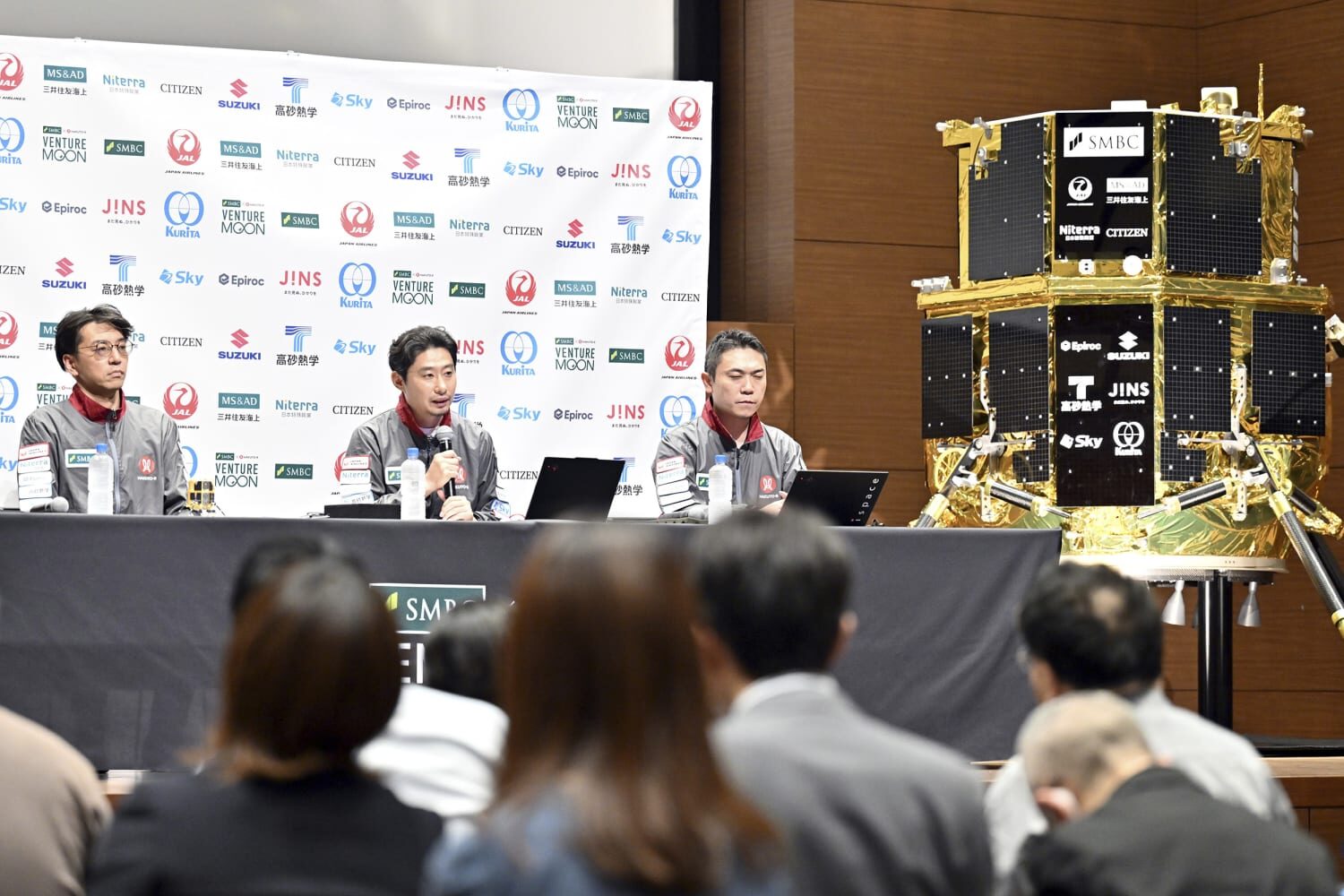
Ispace has postponed its NASA-supported lunar mission to 2030, reorganized its operations, and reduced its workforce following two unsuccessful Moon landing attempts.
Japanese space startup ispace announced a postponement of a US government-sponsored lunar mission to 2030 and plans to reduce its global workforce, signaling a strategic shift following two unsuccessful moon landing attempts.
The Tokyo-based company has announced plans to consolidate the development of its lunar landers across its Japan and US units, resulting in a three-year delay for a mission commissioned under NASA’s commercial lunar payload services program, now set for 2030 instead of the previously targeted 2027.
The postponement arises as the United States amplifies its initiatives to send astronauts back to the Moon before China, increasingly depending on commercial and international collaborations.
In line with its updated strategy, ispace announced plans to launch five lunar orbiters by 2030. The orbiters are anticipated to deliver telecommunications, navigation, and surface observation services to facilitate long-term development efforts on the Moon.
Chief Financial Officer Jumpei Nozaki indicated that the restructuring might incur costs in the millions and could necessitate further equity financing, in addition to job reductions impacting numerous employees.
Since its listing in Tokyo in 2023, ispace has faced financial losses and a decline in share value after two unsuccessful attempts to land on the Moon. As of last year, the company employed around 300 individuals in Japan, the United States, and Luxembourg.
The third mission is set for 2028 as part of Japan’s commercial space program, showcasing the “Ultra” lunar lander, which is designed to transport payloads of up to 200 kilograms to the lunar surface.
To date, only two private US companies, Intuitive Machines and Firefly Aerospace, have successfully accomplished Moon landings.
NASA has recently detailed updates to its Artemis program, which include plans for as many as 30 uncrewed lunar missions starting next year, highlighting the increasing intensity of competition in lunar exploration.
“Although we are opposing NASA’s initiative to fast-track moon missions in 2028-29, as the sole private company outside the U.S. possessing moon landing technology, we are aiming for a more significant involvement in their program,” Nozaki stated.
Shifts in US space policy under Donald Trump have introduced uncertainty for Japanese space ventures, which had expected enhanced cooperation between the two nations to address China’s expanding ambitions in space.