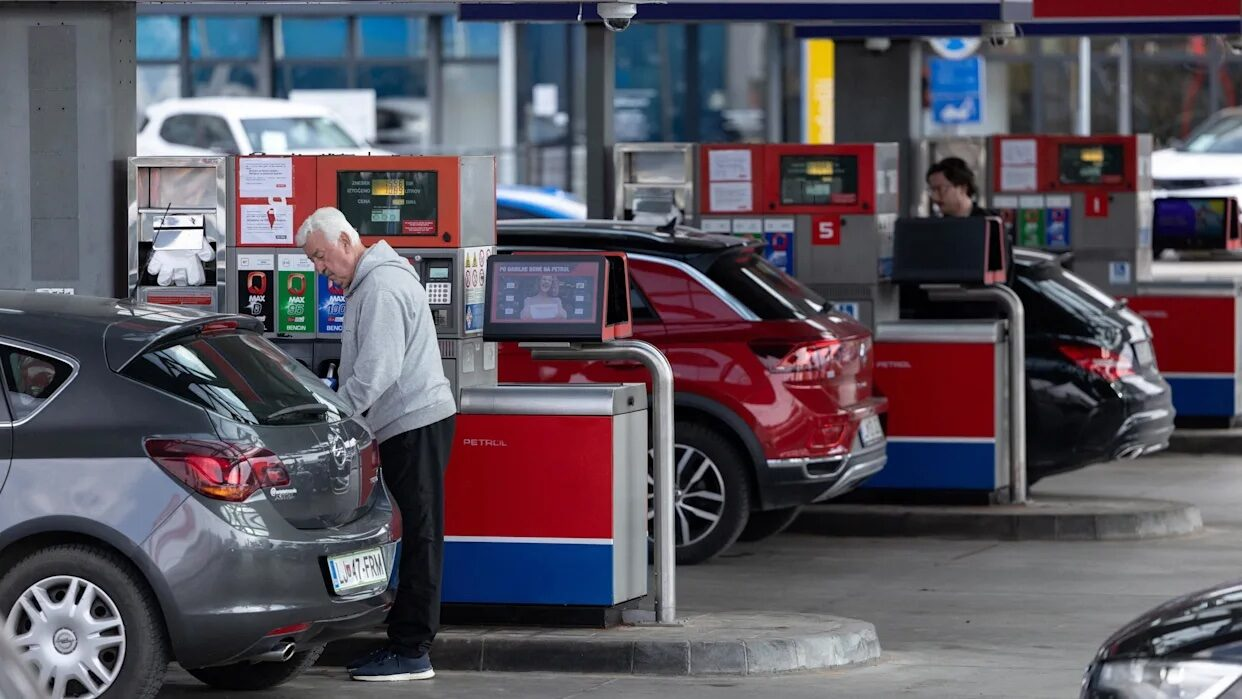
Slovenia has emerged as the first EU nation to implement fuel rationing amid escalating energy costs and supply disruptions.
Slovenia has emerged as the first member state of the European Union to implement fuel rationing, amid ongoing disruptions related to the conflict involving the US, Israel, and Iran, which are putting pressure on global energy supplies and increasing prices.
Under the new measures, private motorists can purchase a maximum of 50 litres of fuel per day, whereas businesses and farmers are permitted up to 200 litres. The restrictions arise in the context of increasing demand and escalating prices throughout Europe, as Slovenia’s comparatively lower, regulated fuel costs draw drivers from neighboring Austria in a phenomenon referred to as “fuel tourism.”
During the weekend, Prime Minister Robert Golob aimed to reassure the public by affirming that fuel supplies are adequate and that warehouses are fully stocked. Petrol stations have been assigned the responsibility of enforcing the limits, while the government has encouraged retailers to implement stricter controls on foreign motorists to alleviate pressure on local supply.
The disparity in prices has sparked a surge in cross-border activity. Petrol prices in Austria are nearing €1.80 per litre, with diesel approaching €2.00, whereas Slovenia’s prices are still capped at much lower levels, although increases are anticipated. The imbalance has resulted in lengthy lines at stations, with a few even running out of supplies.
The situation has elicited a variety of responses. Some Slovenians perceive the arrival of foreign drivers as a burden on local resources, whereas others recognize the economic advantages as tourists contribute to nearby businesses.
Herbert Kickl, the far-right leader of the Freedom Party in Austria, has been leveraging his refuelling trips for political messaging, sharing an image of a line of Austrian-registered cars waiting to refuel at a petrol station in Slovenia. “Isn’t it unfortunate,” he inquired, “that we reside in a nation where it has become essential for many to travel overseas in search of more affordable living?”
As long as disparities in fuel prices remain, officials anticipate that the movement of cross-border drivers will carry on, highlighting the wider effects of global energy volatility on daily life in Europe.