CAF decision regarding the AFCON title has a lasting impact on African football
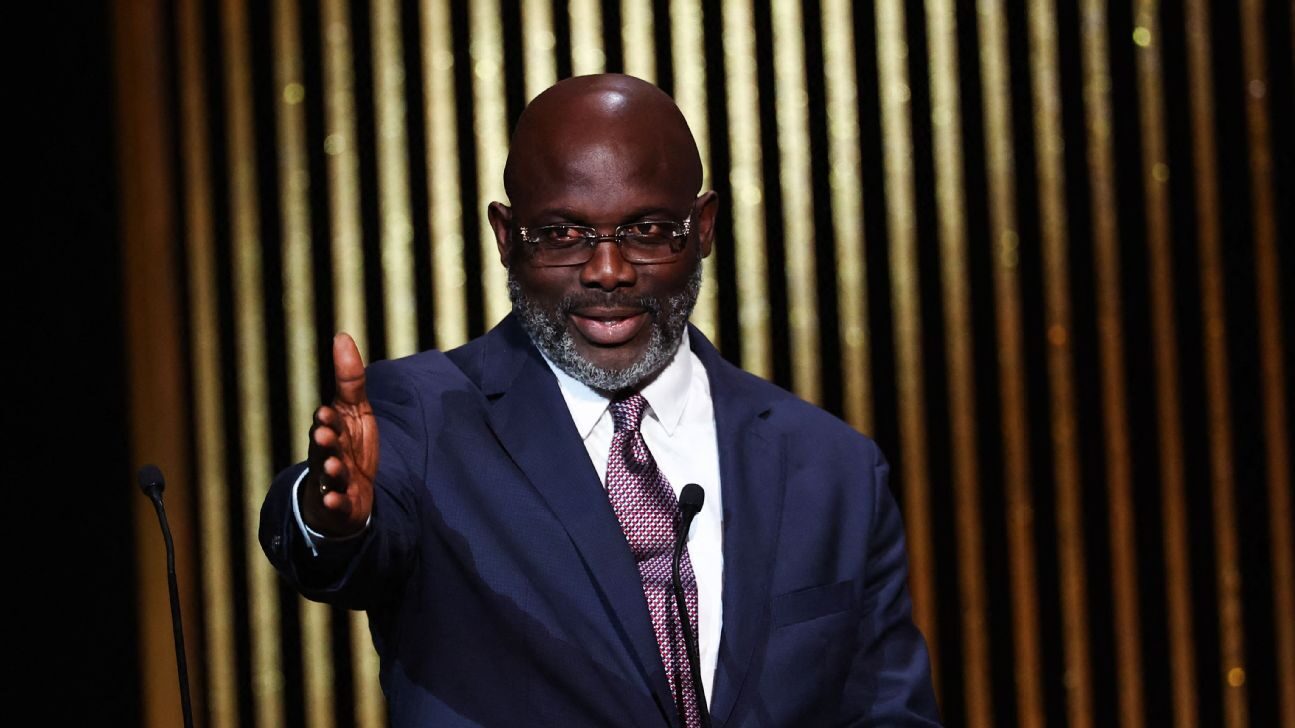
George Weah, the former African and World Footballer of the Year, has condemned the CAF ruling that took away Senegal’s AFCON title and awarded it to Morocco.
George Weah, the former African and World Footballer of the Year, has expressed strong disapproval of the Confederation of African Football’s (CAF) decision to revoke the 2025 Africa Cup of Nations title from the Senegal national football team and grant it to the Morocco national football team. He cautioned that this ruling has severely undermined the credibility of African football.
In a forceful statement, Weah—recipient of the 1995 Ballon d’Or—contended that CAF’s decision is devoid of both sporting and legal rationale, referencing FIFA’s Laws of the Game.
“This decision has further marred and tarnished African football, eroding trust in the fairness, consistency, and integrity of the sport across the continent,” he stated.
Senegal’s players staged a dramatic protest during the AFCON final held in Rabat on January 18, leading to the controversy. The team momentarily left the pitch after two controversial refereeing calls—a disallowed goal and a penalty given to Morocco—before Captain Sadio Mané guided them back onto the field.
Morocco’s Brahim Díaz failed to convert the subsequent penalty, allowing Senegal to clinch a 1-0 win after extra time. Nonetheless, CAF’s appeal board subsequently overturned the result and granted Morocco a 3-0 victory, referencing Senegal’s behavior during the match.
Weah emphasized that the outcome should be upheld when a referee allows play to continue and concludes the match. He observed that the referee’s report categorized the incident as a temporary stoppage instead of a forfeit, with suggestions for sanctions confined to on-field infractions.
“Once play is permitted to resume and the match concludes, the outcome achieved on the field must be upheld,” Weah stated.
“The outcome of football should be determined on the field, not reconsidered after the final whistle.”
The former Liberian president rejected the circulating claims that he endorsed CAF’s ruling, labeling them as “blatantly false” and urging those disseminating such reports to cease.
Senegal has announced its intention to contest the decision at the Court of Arbitration for Sport (CAS), a move that Weah fully supports.
“I urge the Court of Arbitration for Sport and other pertinent authorities to take swift action to ensure that this injustice is not upheld,” he stated.
Former Nigeria captain William Troost-Ekong has also criticized CAF’s decision, calling the ruling a betrayal of the tournament’s integrity.
“When I initially received the news that the outcome of this year’s AFCON final had been reversed, I assumed it was a prank,” he shared with The Athletic. “Upon coming to the realization that it was indeed real… it left me feeling rather melancholic.”
Troost-Ekong cautioned that the decision signifies a significant setback for a competition that has endeavored to cultivate global respect.
“The CAF appeal board’s surprising decision has compromised this progress.” “We have taken two steps backwards,” he stated, noting that such rulings could lead to uncertainty for upcoming tournaments.
The backing for Senegal has gone beyond just former players, as it now includes support from various government officials and sports organizations advocating for their cause. South Africa’s Sports Minister Gayton McKenzie stated that his country is ready to provide legal assistance in the CAS appeal.
He stated, “Senegal are the African champions because they earned their victories on the pitch.” “We will support Senegal and provide our assistance.”
In the meantime, the controversy has ignited broader discussions and misinformation, including inaccurate reports that the Guinea national football team was attempting to revisit the outcome of the 1976 AFCON. Guinea’s football federation has refuted these claims, describing them as inaccurate and lacking any official foundation.
As the dispute moves toward CAS, both Weah and Troost-Ekong have cautioned that the long-term impact on the reputation of African football could be considerable, highlighting worries about precedent and the increasing belief that outcomes can be influenced outside of the game.