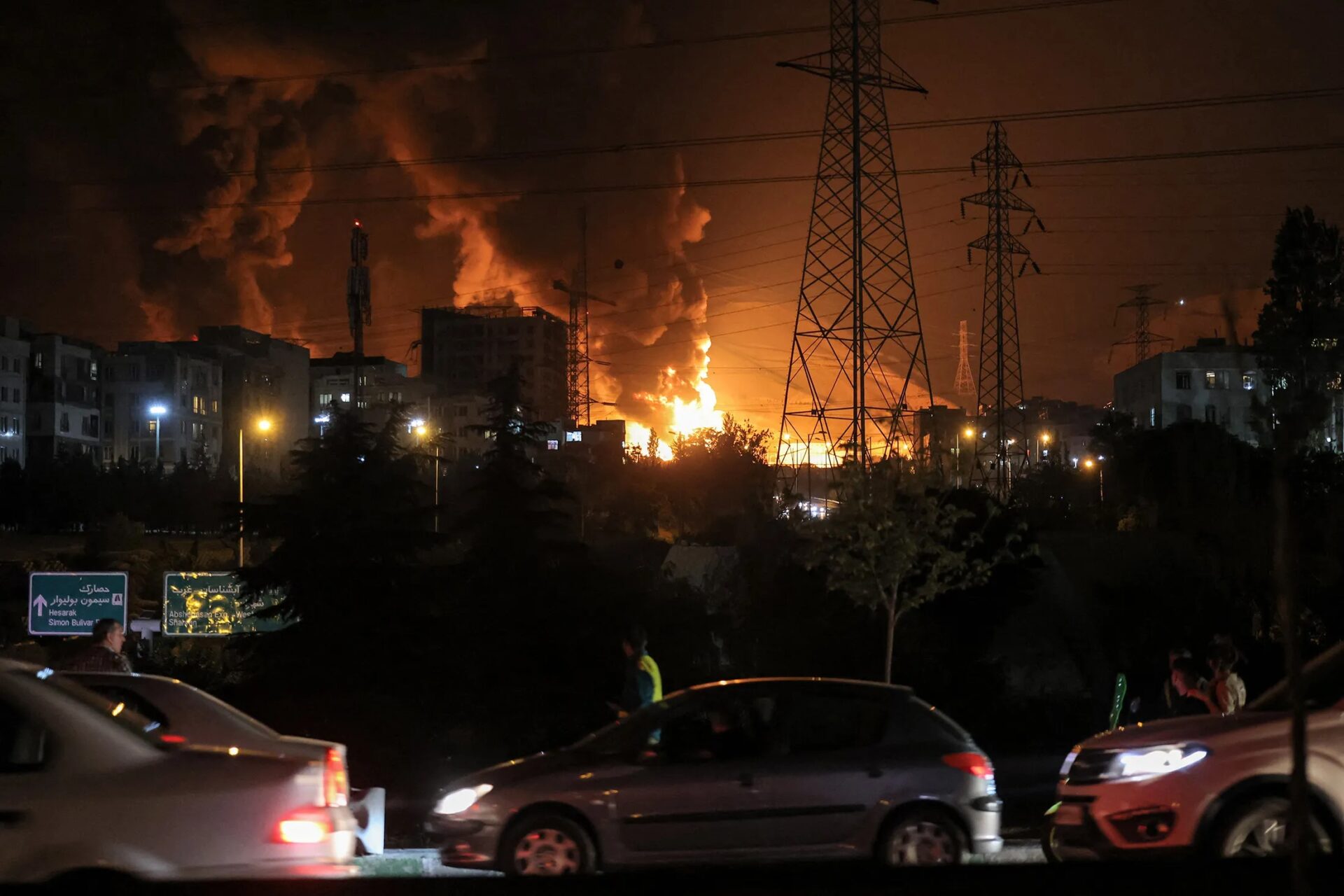
Iranian missile strikes on Dimona and Arad have injured at least 180 individuals, intensifying the conflict surrounding critical nuclear facilities in Israel.
At least 180 individuals have sustained injuries due to Iranian missile strikes on southern Israel, affecting the city of Dimona—where the nation’s primary nuclear facility is located—and the nearby city of Arad, marking one of the most notable escalations since the onset of the United States-Israel conflict with Iran.
Israel’s Ministry of Health reports that 116 individuals sustained injuries in Arad, with seven in serious condition, and significant damage has been noted in the city center. In Dimona, 64 individuals sustained injuries, one of them seriously, with numerous reports of shrapnel wounds following the destruction of several residential buildings. A 10-year-old boy was among those injured.
Iranian state television characterized Saturday’s attack as a “response” to a prior strike on Iran’s Natanz nuclear enrichment complex, indicating a new phase of reciprocal targeting as the conflict approaches its fourth week.
Israeli Prime Minister Benjamin Netanyahu characterized the situation as a “difficult” evening for the nation and pledged to maintain military operations against Iran, where US-Israeli strikes since February 28 have allegedly resulted in over 1,500 fatalities, including at least 200 children, as reported by Iranian state media.
An Israeli military spokesman stated that air defense systems were activated; however, they failed to intercept certain incoming missiles, even though these missiles were considered “not special or unfamiliar.”
Firefighters confirmed the effects of the attack, stating, “In both Dimona and Arad, interceptors were launched that failed to hit the threats, resulting in two direct hits by ballistic missiles with warheads weighing hundreds of kilograms.”
Reporting from Ramallah, Al Jazeera correspondent Nour Odeh noted that three distinct impact sites were identified in Dimona, which included the collapse of a three-story building and several fires erupting throughout the city.
The International Atomic Energy Agency reported that it received no indications of damage to the Shimon Peres Negev Nuclear Research Center and detected no abnormal radiation levels.
Rafael Grossi, the Director General of the agency, called for restraint, emphasizing that “maximum military restraint should be observed, especially near nuclear facilities.”
Israel’s Health Ministry has reported that at least 4,564 individuals have been admitted to hospitals since the onset of the war, with 124 currently hospitalized, including one in critical condition and 13 in serious condition.
Iran previously stated that the US and Israel had aimed at its Natanz enrichment facility, although it noted that there was no radioactive leakage. An unnamed Israeli official, as reported by The Associated Press, has denied Israel’s involvement in the strike, and the Israeli military has not yet provided a comprehensive statement.
The Israeli military reported that it targeted a research and development facility at Malek Ashtar University in Tehran, claiming it was involved in the development of components for nuclear weapons and ballistic missiles.
“The military will prevent the Iranian regime from obtaining nuclear weapons,” it stated.
Experts indicate that the recent escalation demonstrates a calculated approach by Tehran. Abas Aslani, a senior fellow at the Centre for Middle East Strategic Studies in Tehran, informed Al Jazeera that Iran is adopting a calculated response doctrine.
“Tehran aims to bridge the divide between rhetoric and reality,” he stated, noting that Iran’s strategy focuses on strengthening deterrence and creating a new long-term security equilibrium, rather than simply imposing a ceasefire.