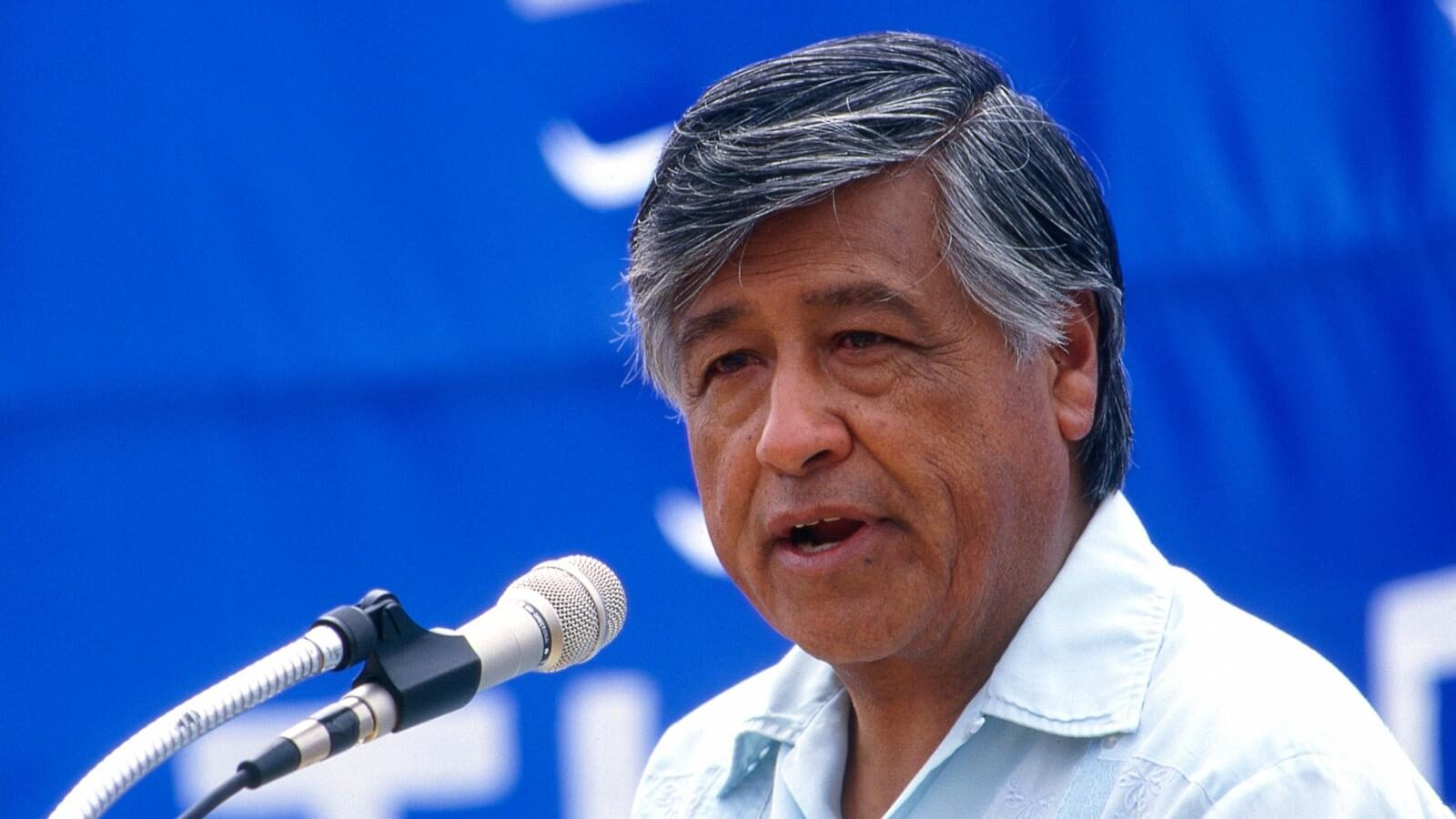
Cesar Chavez, the US civil rights leader known for advocating for farm workers’ rights, has faced allegations of sexual abuse.
Serious allegations of sexual abuse have been made against late American civil rights icon Cesar Chavez, leading to a nationwide reevaluation of his legacy as a champion of farm workers’ rights.
A New York Times investigation provided detailed claims, featuring testimony from Dolores Huerta, Chavez’s longtime collaborator and co-founder of the United Farm Workers. Huerta claimed that in the 1960s, Chavez coerced and pressured her into a sexual relationship and, on another occasion, compelled her into sex. She mentioned that the encounters led to pregnancies that she concealed, with the children brought up by other families.
“I held onto this secret for as long as I did because creating the movement and ensuring farmworker rights was my life’s mission,” Huerta, now 95, stated.
Ana Murguia and Debra Rojas have also come forward with accusations against Chavez, alleging that he groomed and sexually abused them as minors from 1972 to 1977, during a time when he was in his 40s. Their accounts have heightened examination of Chavez’s behavior during the peak of the labor movement he played a significant role in leading.
Chavez, who passed away in 1993 at the age of 66, was highly respected for his efforts in organizing California farmworkers starting in the 1950s. He led strikes, boycotts, and marches that garnered national attention to the challenging working conditions in the agricultural industry.
Chavez’s family expressed that they were “devastated” by the allegations and commended the “courage” of the women who stepped forward. The United Farm Workers indicated that it had not obtained direct reports or firsthand knowledge of the allegations but declared it would withdraw from upcoming commemorative events.
The revelations have ignited a rapid response from both the public and political spheres throughout the United States. In Los Angeles, Mayor Karen Bass and city council members have taken steps to rename “Cesar Chavez Day” to “Farm Workers Day,” emphasizing the importance of highlighting the wider labor movement instead of focusing on one individual.
“The disturbing truth is that the experiences of Dolores, Ana, and Debra are not unique, nor are they confined to history,” Bass stated.
In other locations, symbols commemorating Chavez have been taken down or modified. In Washington, DC, the US Department of Labor has removed his portrait, and a memorial in Stockton has been vandalized with the phrase “believe women and children.” Events commemorating Cesar Chavez Day on March 31 have been either cancelled or renamed.
California Governor Gavin Newsom stated that the farmworkers’ movement “is much bigger than one man” and voiced his support for the women who made the allegations, indicating that he was open to the idea of renaming the holiday. Republican lawmaker Alexandra Macedo has proposed a bill to officially rename the day to “Farmworker Day.”
The League of United Latin American Citizens, a civil rights organization, has condemned the allegations, emphasizing that accountability applies to everyone. The Cesar Chavez Foundation recognized the “disturbing” claims and indicated that it was collaborating with labor leaders to tackle the situation and assist any victims.
As the controversy unfolds, communities across the United States are navigating the challenge of reconciling Chavez’s historic contributions with the serious allegations that have emerged, prompting broader discussions about legacy, accountability, and justice within social movements.