Israel Launches Strikes on Hezbollah Positions in Lebanon Following Militia’s Retaliatory Assaults
Israel conducted air strikes on Hezbollah positions in Lebanon following the group’s missile and drone attacks on Israeli territory.
On Monday, Israel initiated new air strikes on Tehran and expanded its military operations to target Iran-backed Hezbollah positions in Lebanon, while US President Donald Trump indicated that the coordinated offensive against Iranian targets might persist for several weeks.
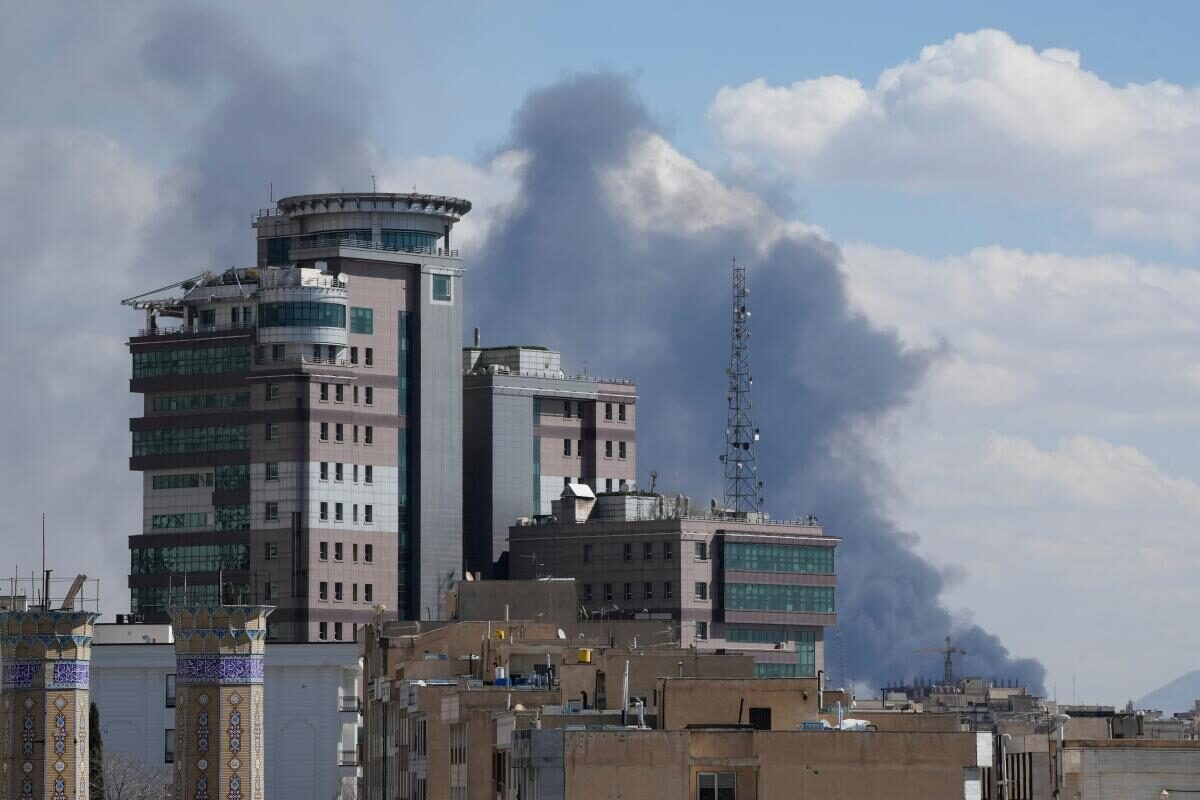
Israeli forces reported that they targeted intelligence, security, and military command centers in Tehran, asserting that they have achieved aerial superiority over the Iranian capital. Reports of explosions emerged from various locations in Tehran, with residents in certain areas of the Gulf region, such as Dubai and Doha, also hearing loud blasts.
Israel has confirmed that it conducted air raids on Hezbollah-controlled southern suburbs of Beirut, resulting in more than a dozen explosions that shook the Lebanese capital. The strikes came after Hezbollah confirmed that it had fired missiles and drones at Israel in response to the alleged assassination of Iran’s Supreme Leader, Ayatollah Ali Khamenei.
The Israeli military has attributed the rise in tensions to Hezbollah and has advised residents in numerous villages across southern and eastern Lebanon to evacuate. The recent exchanges occur despite a ceasefire brokered by the US in 2024 and signify a notable escalation of hostilities throughout the Middle East.
Air raid sirens echoed throughout Israel early Monday, reaching cities like Tel Aviv and Jerusalem, as Iran’s state media reported a fresh barrage of missiles fired from central Iran targeting “enemy locations.” Kuwait reported that its air defenses successfully intercepted hostile drones for the third consecutive day, while Britain confirmed that a suspected drone strike targeted its Royal Air Force base in Akrotiri, Cyprus, resulting in limited damage and no casualties.
Iran’s President Masoud Pezeshkian announced that a temporary leadership council has taken on the responsibilities of Supreme Leader following Khamenei’s death, amidst uncertainty regarding Iran’s political future.
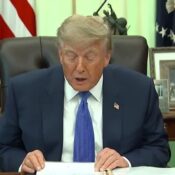
A senior White House official stated that “Operation Epic Fury” would proceed without interruption, despite Trump suggesting he might eventually interact with potential new Iranian leadership. President Trump stated that new potential leadership in Iran has expressed a desire to engage in dialogue, and he will eventually have that conversation. “At this time, Operation Epic Fury proceeds without interruption,” the official stated. In a video message, Trump asserted that military strikes would continue until “all our objectives are achieved,” stating that US forces had eliminated significant Iranian military infrastructure, including naval assets.
The US military reported that American aircraft and warships have targeted over 1,000 Iranian sites since the onset of combat operations. Nevertheless, the campaign has already experienced its initial US casualties, with three service members losing their lives at a base in Kuwait.
Trump urged Iran’s military and security forces, including the influential Islamic Revolutionary Guards Corps, to surrender, offering immunity to those who disarm while cautioning against severe repercussions for ongoing defiance. He encouraged Iranians to stand up against their government.
The intensifying conflict has unsettled global markets. Oil prices rose sharply as traders braced for potential supply disruptions following claims by Iran’s Revolutionary Guards regarding attacks on oil tankers in the Gulf and the Strait of Hormuz. Numerous vessels are said to have anchored in the adjacent waters.
Air travel has faced significant disruptions, as major Middle Eastern airports, including Dubai — the busiest international hub globally — have been temporarily closed. Airline shares in Asia experienced a significant decline due to worries about ongoing instability.
As the confrontation escalates, analysts caution that Khamenei’s death and increasing military pressure present a critical challenge to Iran’s leadership. The longer-term prospects for Iran to rebuild its leadership and replace 86-year-old Khamenei, who has been in power since the death of the Islamic Republic’s founder, Ayatollah Ruhollah Khomeini, in 1989, remain uncertain. Experts warn that the nation’s deep-rooted clerical establishment and the power of the Revolutionary Guards may persist, even in the face of considerable turmoil.