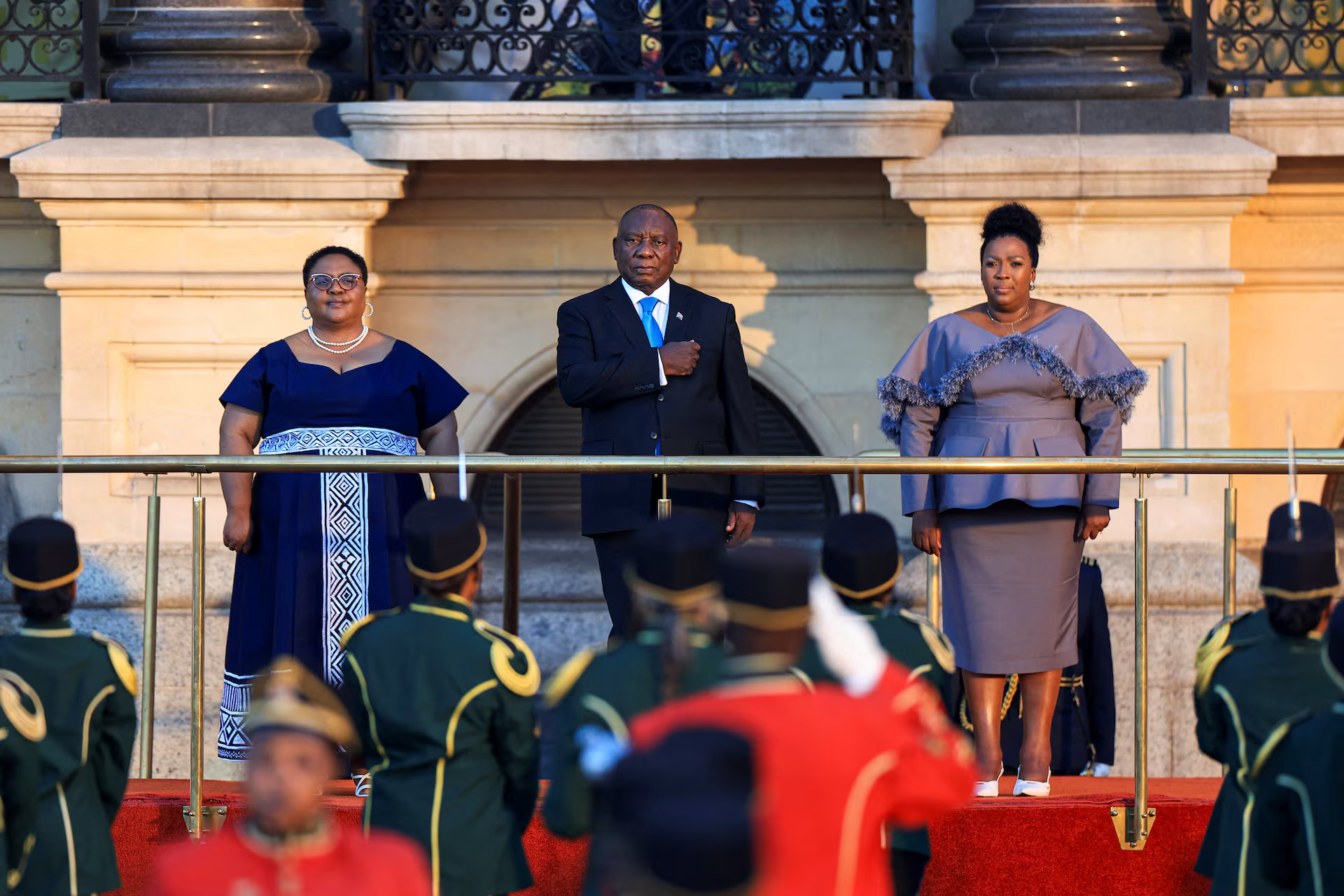
President Cyril Ramaphosa told parliament on Thursday that South Africa would use the army to combat organized crime and prosecute local officials who do not provide water to communities.
Voters are particularly irate over endemic crime and water shortages as South Africa gets closer to municipal elections later this year, where the ruling African National Congress (ANC) is predicted to lose more votes.
South Africa, a nation of over 63 million people, with an average of over 20,000 murders annually, making it one of the most hazardous countries in the world for peacetime due to violent crime.
CRIME IN THE SPOTLIGHT Ramaphosa told lawmakers in his State of the Nation Address that “organised crime is now the most immediate threat to our democracy, our society, and our economic development.” “This year, our primary focus is on stepping up the fight against organised crime and criminal syndicates.”
Part of the reason crime has gained attention is due of attacks by U.S. President Donald Trump, who falsely accused Ramaphosa of committing genocide against white people in South Africa during a White House visit last year.
Crime victims are primarily Black.
Ramaphosa stated that he had instructed the minister of police and army to finalize additional details within a few days and that soldiers would be first stationed in the Western Cape and Gauteng, two areas severely impacted by gang violence.
REPORTS FROM WATER SHORTAGES
He stated, “Water outages are a symptom of a local government system that is not working,” referring to the deteriorating water problem brought on by a drier climate and persistent water line maintenance failures.
“We will hold to account those who neglect their responsibility to supply water to our people”.
The largest city, Johannesburg, saw sporadic protests this week after some neighborhoods’ taps went dry for almost 20 days.
Since the ANC lost its parliamentary majority for the first time since apartheid ended thirty years ago in June 2024, Ramaphosa, who took office as president of state in 2018, has been in charge of South Africa’s first coalition administration.
The Democratic Alliance, which supports industry, is part of the coalition that has contributed to the recovery of trust in Africa’s biggest economy.
Last year, the financial markets recovered and the ongoing power outages have decreased. However, there has been no improvement in widespread, ongoing unemployment, and the government is being pressured to demonstrate that it can enhance service delivery.