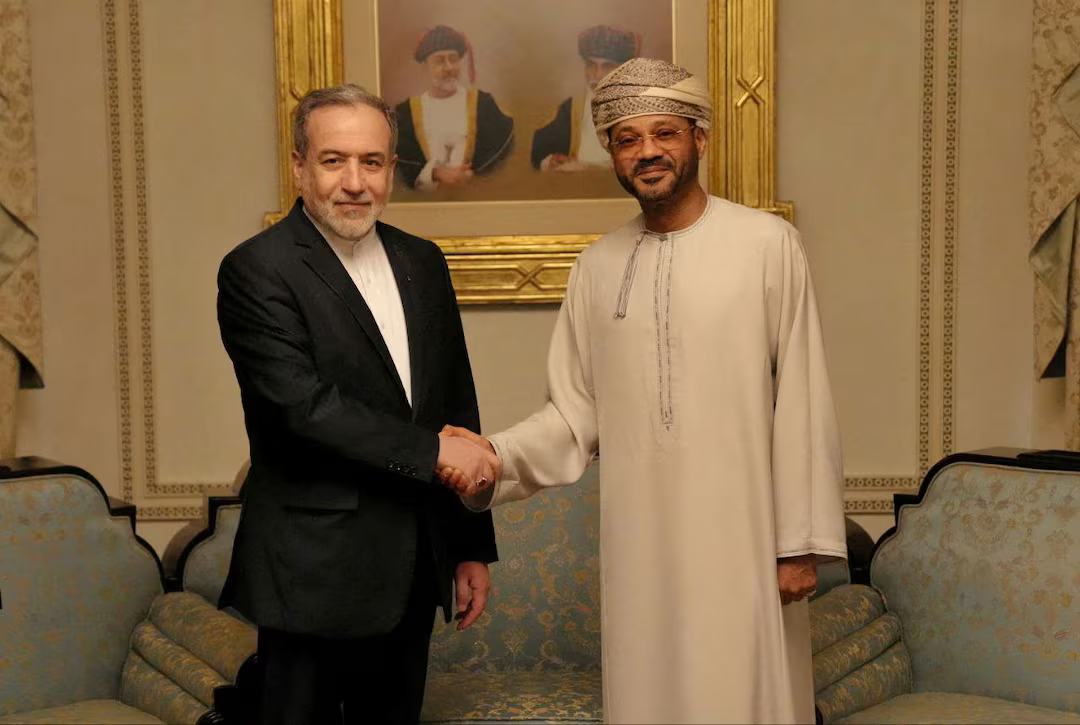
Iran and the US Start Talks About Oman As the Nuclear Conflict Increases the Chance of a Wider Middle East War
Iran and the US have commenced negotiations in Oman regarding the nuclear dispute, amid escalating tensions and the potential for broader conflict in the Middle East if talks do not succeed.
On Friday, Iran and the United States initiated delicate diplomatic discussions in Oman, seeking to address significant rifts concerning Tehran’s nuclear program, as concerns grow that unsuccessful negotiations might lead to another conflict in the Middle East.
The discussions are being mediated by Oman via indirect shuttle diplomacy, highlighting the ongoing mistrust between Washington and Tehran, even as both sides indicate a willingness to re-engage.
The United States expresses its willingness to re-engage in diplomatic talks regarding Iran’s nuclear activities, but it seeks to expand the discussions to encompass issues beyond uranium enrichment. On Wednesday, US Secretary of State Marco Rubio stated that the discussions should encompass Iran’s ballistic missile program, its backing of armed groups throughout the region, and the “treatment of their own people.”
Iran has decisively dismissed any broadening of the agenda. Tehran emphasizes that the talks in Muscat should concentrate solely on the nuclear matter involving Foreign Minister Abbas Araqchi and US Middle East envoy Steve Witkoff. Jared Kushner, the son-in-law of US President Donald Trump, who has previously assisted in mediating ceasefire discussions in Gaza, is also anticipated to take part.
“Iran approaches diplomacy with awareness and a clear recollection of the past year.” We act with integrity and remain resolute in asserting our rights. Araqchi stated on X on Friday, “Commitments need to be honored.”
A Reuters report indicated that an Iranian official stated the talks had not officially commenced, although Iran’s positions had already been communicated to the United States via Oman. The official indicated that indirect negotiations might commence after a meeting between Witkoff and Oman’s foreign minister, employing a similar shuttle diplomacy strategy as seen in previous interactions.
Tensions continue to escalate as Iran’s clerical leadership is apprehensive that Trump may still follow through on threats of military action in light of a notable US Navy buildup close to Iranian waters.
In June, the United States targeted Iranian nuclear sites, participating in the concluding phases of a 12-day Israeli bombing operation. Tehran subsequently announced that it had ceased its uranium enrichment activities.
The US naval buildup, characterized by Trump as a substantial “armada,” came in the wake of a brutal government crackdown on widespread protests in Iran last month, exacerbating tensions between the two nations.
Trump has cautioned that “bad things” are likely to occur if negotiations do not succeed, heightening the tension in a standoff that has already featured reciprocal threats of air strikes.
“As these negotiations unfold, I want to remind the Iranian regime that the president possesses numerous options beyond diplomacy, as the commander in chief of the most formidable military in history,” White House Press Secretary Karoline Leavitt stated to reporters on Thursday.
Iran asserts that its entitlement to enrich uranium is not open to negotiation and persists in its call for the removal of sanctions reinstated in 2018 following Trump’s exit from the 2015 nuclear agreement established with six global powers.
The United States, along with its European allies and Israel, claims that Iran is utilizing its nuclear program as a facade to develop weapons capability. Tehran has repeatedly rejected the accusation, asserting that its programme is intended exclusively for peaceful purposes.
Israel has consistently associated Iran’s missile program with its nuclear aspirations. In January, Prime Minister Benjamin Netanyahu described Iran’s efforts to develop atomic weapons and its possession of 20,000 ballistic missiles as akin to “two lumps of cancer.”
Iran’s regional influence has diminished considerably, with its allies, referred to as the Axis of Resistance, either dismantled or greatly harmed since the onset of the Hamas-Israel conflict in Gaza and the decline of Bashar al Assad in Syria.