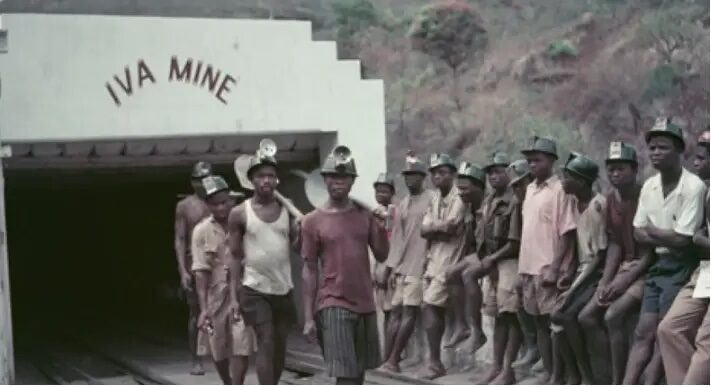
A court in Enugu has mandated the British Government to provide compensation to the families and issue a public apology for the killing of 21 coal miners during the colonial era.
A High Court in Enugu State has mandated the British Government to compensate the families of 21 coal miners who lost their lives in the 1949 Iva Valley massacre, with a sum of £420 million.
Justice A.O. Onovo, in his judgment delivered on Thursday, ordered that £20 million be awarded to each victim’s family for what he characterized as an unlawful and extrajudicial killing by British colonial authorities.
The case, Suit No E 909 2024, was initiated by human rights activist Mazi Greg N. Onoh, who is pursuing accountability, a formal apology, and reparations for the tragic killings that occurred at the Iva Valley coal mines on November 18, 1949.
The miners protested against severe working conditions, racial wage inequalities, and unpaid wages when colonial police fired upon them, resulting in the deaths of 21 workers and injuries to 51 more.
Justice Onovo stated, “These defenseless coal miners were seeking better working conditions; they were not engaging in any violent actions against the authorities, yet they were shot and killed.”
He determined that “the 1st, 2nd, 5th and 6th respondents are to pay £20 million for each victim, amounting to a total of £420 million, to be paid by the British Government as an effective remedy and compensation for the violations of the right to life.”
The judge stated that the compensation would accrue post-judgment interest at a rate of 10 percent per annum until it is fully paid, while claims for pre-judgment interest and exemplary damages were denied.
Justice Onovo also directed the British Government to provide “unreserved written apologies to the families through their counsel” to be published in Nigeria’s Daily Sun, Daily Independent, and The Punch, along with three prominent national newspapers in the United Kingdom within 60 days.
He additionally instructed that the compensation is to be completely paid within 90 days of the judgment.
The parties involved in the lawsuit comprised the Secretary of State for Foreign, Commonwealth and Development Affairs, the British Government, the Federal Government of Nigeria, the Attorney General of the Federation, and the Government of the United Kingdom. No legal representation was present for the British respondents.
Justice Onovo rejected the objections related to sovereign immunity, asserting that serious historical injustices are subject to legal examination under Nigeria’s Constitution.
“The assertion made by the representative of the Federal Government that Nigeria remained under colonial rule at the time of the killing is hereby dismissed,” he stated.
The Nigerian Government was also criticized for its failure to seek redress over the years, with the ruling stating that this inaction constituted a neglect of constitutional duty. The Federal Government was instructed to commence diplomatic discussions with the British authorities within a 60-day timeframe.
In response to the ruling, the applicant’s counsel, Prof Yemi Akinseye George SAN, characterized the judgment as historic.
“This ruling marks a crucial step in the quest for historical accountability and justice regarding colonial era violations, reinforcing that the right to life surpasses time, borders, and shifts in sovereignty,” he stated.
The court cited international precedents, such as the United Kingdom’s Mau Mau settlement, in upholding the duty to offer redress for significant human rights violations.