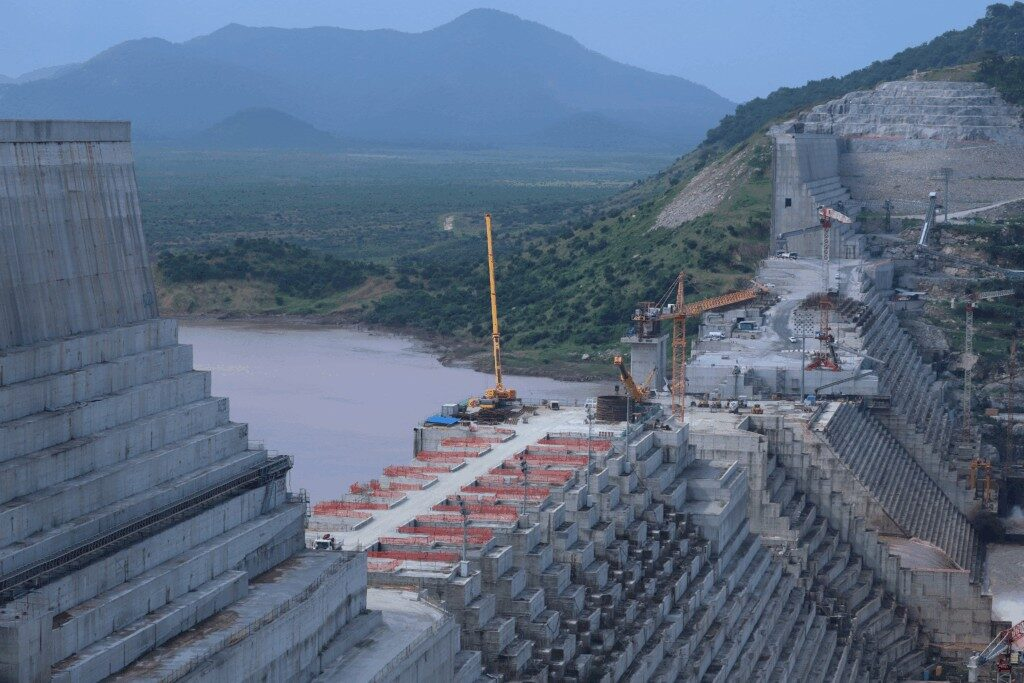
Ethiopia asserts that the $4 billion Grand Ethiopian Renaissance Dam was entirely financed by its citizens, countering Trump’s allegations of US funding.
Ethiopian Prime Minister Abiy Ahmed has categorically rejected assertions made by United States President Donald Trump regarding the financing of the Grand Ethiopian Renaissance Dam (GERD), emphasizing that the significant project was solely funded by Ethiopians both domestically and internationally.
During his address to parliamentarians on Tuesday, Abiy stated that Ethiopia has not received “a single birr” in foreign loans or financial assistance for the construction of the $4 billion mega-dam, which is poised to become Africa’s largest hydroelectric power plant by capacity.
“We accomplished this due to the unwavering dedication of Ethiopians both within the country and abroad,” the prime minister stated, responding to Trump’s comments made last month at the World Economic Forum in Davos.
During the Davos meeting, Trump characterized the GERD as a project “financed by the United States” that “essentially obstructs the Nile,” reflecting enduring worries expressed by Egypt, a key US ally. Egypt depends on the River Nile for approximately 97 percent of its water supply and has consistently characterized the dam as a “existential threat” to its national security.
The GERD, initiated in 2011, is constructed on a tributary of the Nile and is anticipated to produce 5,150 megawatts of electricity, a development that Ethiopia claims is essential for energizing its economy and enhancing regional energy access. Ethiopian authorities have consistently asserted that the dam does not pose any threat to downstream countries.
The project’s main contractor, Webuild, has reinforced that position. Pietro Salini, the chief executive officer, stated that the dam does not utilize water and thus does not pose a risk to the Nile’s flow to Egypt or Sudan.
“These are not irrigation schemes that consume water,” Salini stated to AFP during the dam’s inauguration in September. “The dam discharges water to generate energy.”
Salini also rejected the notion of international financial support, stating that no global lender was prepared to finance the project. “No international lender was prepared to invest in this project,” he stated, emphasizing that the funding was solely provided by Ethiopia.
Even with Ethiopia’s reassurances, the GERD continues to be a point of diplomatic strain in the Nile Basin. Trump, an outspoken advocate for Egypt, has committed to renewing discussions between Cairo and Addis Ababa. Egypt has indicated its readiness to resume mediation efforts, while Ethiopian authorities have not yet provided a public response.
The disagreement highlights the wider geopolitical concerns related to water security in the area, as Ethiopia moves forward with a project it considers a representation of national pride and independence, while nations downstream persist in their demand for binding assurances regarding Nile water flows.