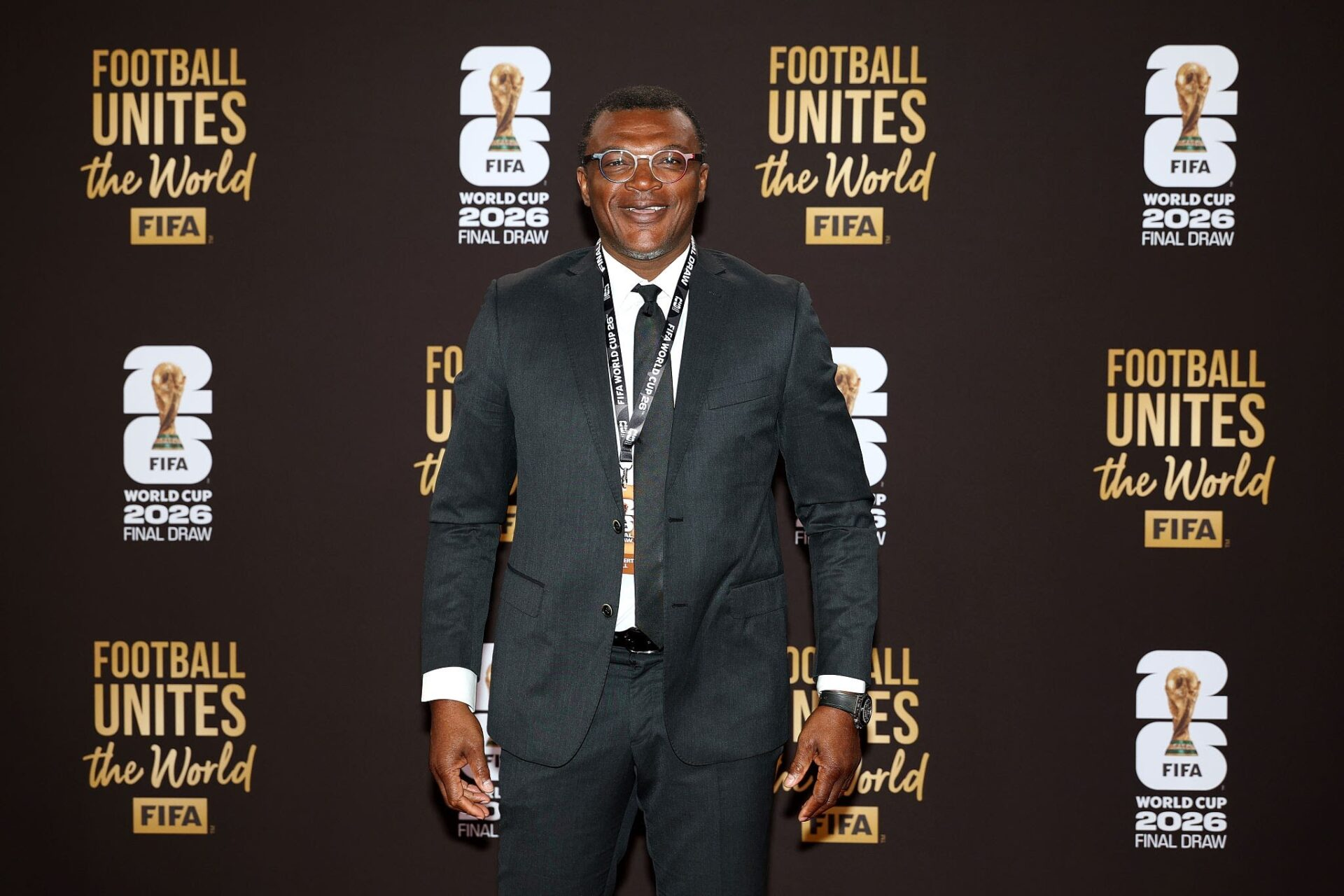
Marcel Desailly, a former France international and World Cup winner, has voiced his firm belief in the potential of African nations to significantly influence the 2026 FIFA World Cup, highlighting the increasing representation of African players in leading European leagues.
The ex-defender observed that numerous African national teams are increasingly composed of players who consistently start in Europe’s top competitions. Desailly notes that this exposure has greatly enhanced the technical and tactical capabilities of teams throughout the continent.
“When observing the majority of teams in Africa today, it is evident that many feature a significant number of first-choice players from Europe.” “The potential exists,” Desailly remarked.
He noted that in addition to individual talent, African teams are cultivating the mental strength and confidence necessary to compete at the highest level. Desailly highlighted Morocco’s remarkable journey to the semi-finals at the 2022 World Cup in Qatar as a clear demonstration of what African nations can accomplish with proper structure and self-assurance.
“The quality exists, and the confidence is present.” Just as Morocco reached the semi-final, Senegal has the potential to achieve the same feat. “Ivory Coast can also,” he stated.
Morocco made history as the first African nation to advance to the semifinals of a World Cup, triumphing over formidable opponents such as Belgium, Spain, and Portugal in an unforgettable journey. Their accomplishment has since become a source of motivation for other teams throughout the continent.
The 2026 World Cup, to be held in the United States, Canada, and Mexico, will feature an expanded format of 48 teams, allowing for greater representation from Africa in the tournament. This expansion is anticipated to provide additional nations from the continent with the chance to display their talent on the global stage.
Desailly asserts that with enhanced organization, upgraded infrastructure, and ongoing development of young talent, African teams are poised to compete against established powerhouses.
With qualification campaigns heating up across the continent, his remarks have sparked increased optimism among fans and stakeholders that Africa may be poised for another historic breakthrough on football’s grandest stage.