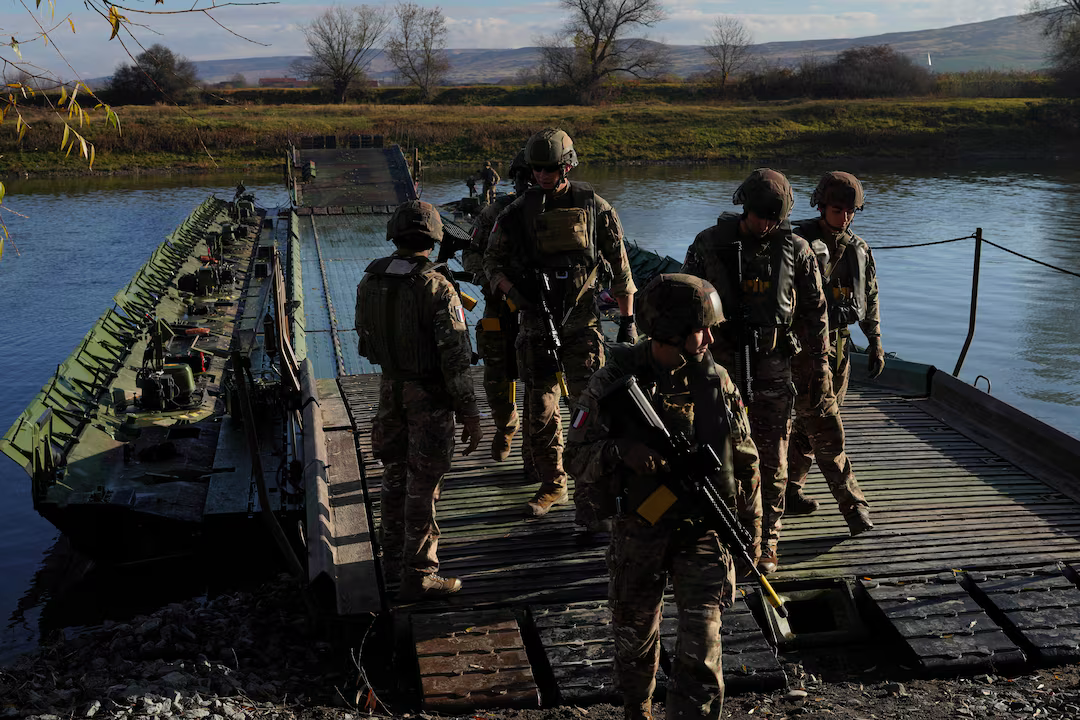
Spain argues that collective defense is more effective than 27 national forces and claims that a combined European army would discourage coercion.
Spain has urged the EU to work toward building a single European army, claiming that this would be a more potent deterrence than the bloc’s current patchwork of national armies.
Ahead of a series of talks at the World Economic Forum in Davos, Spain’s Foreign Minister José Manuel Albares made the statement in remarks to Reuters on Wednesday, stating that Europe must demonstrate its ability to defend itself against economic and military pressure.
Before pursuing what he called a “coalition of the willing” among member states, Albares stated that the EU should first concentrate on integrating its defense sector by combining its material military assets.
Albares acknowledged the delicate nature of the matter while arguing that collective action at the EU level provided a better basis in response to worries about whether European population would be ready to mobilize militarily.
“There is a legitimate debate about whether or not European citizens would be willing to assemble militarily,” he stated. However, as a bloc, the likelihood of reaching a critical mass is greater than at the national level. It would be more effective to work together than to have 27 different national militaries.
The remarks are made before of an urgent gathering of EU leaders that is set for Thursday in Brussels. The purpose of the meeting is to prepare a coordinated reaction to threats made by U.S. President Donald Trump to purchase or annex Greenland. Despite Trump’s social media announcement that he and NATO Secretary General Mark Rutte had “formed the framework of a deal,” a European Council official confirmed late on Wednesday that the meeting will still take place.
After meeting with India’s Foreign Minister, Subrahmanyam Jaishankar, in New Delhi, Albares remarked about the possibility of further defense cooperation between Spain and India.
Reiterating Spain’s commitment to the transatlantic alliance, he took care to emphasize that the idea of a combined European army was not meant to weaken or replace NATO.
Albares stated, “But we need to show that Europe will not allow itself to be coerced militarily or economically.”
A senior foreign official claims that even if Trump eventually loosened his attitude on Greenland after speaking with NATO Secretary General Mark Rutte, Spain’s stance stayed the same.
“If that pathway is confirmed, Spain is happy that a dialogue pathway has been opened within the NATO framework,” the official stated.
Integrating state military forces into a supranational European army is not a novel concept. In an attempt to oppose the Soviet Union and make sure that German rearmament would not endanger nearby states, it was originally put forth in 1951. But in the end, the concept was turned down by the French parliament in 1954.
Albares remarked that the current generation of European leaders had an obligation to finish the project in light of that history.
“The European Union was founded on the concept of European defense,” he stated. “My generation is responsible for completing this task.”