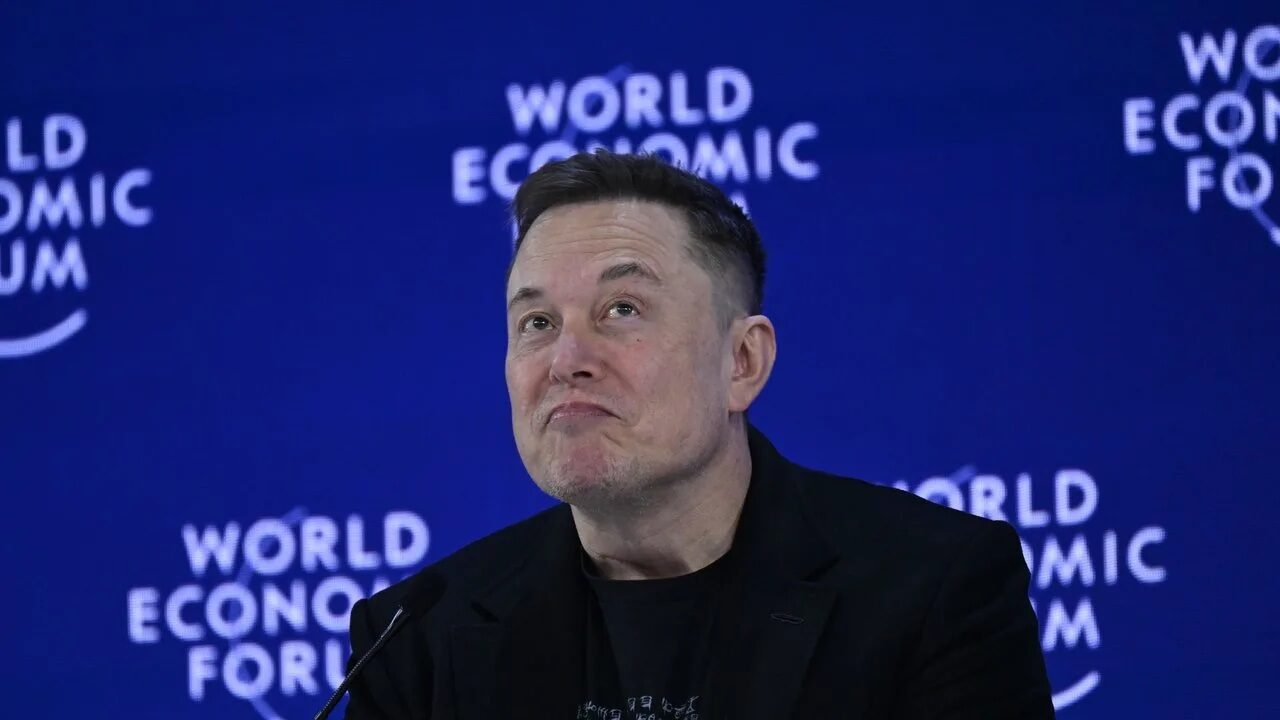
Elon Musk made a notable appearance at Davos on Thursday, where he expressed his views on U.S. solar tariffs and outlined ambitious goals for Tesla. This includes plans for humanoid robot sales in the coming year and the anticipation of European approval for self-driving technology in the near future.
Following years of characterizing the World Economic Forum’s annual gathering as elitist, unaccountable, and out of touch with everyday individuals, the wealthiest person on the planet was interviewed by Larry Fink, the interim co-chair of the World Economic Forum.
The CEO of BlackRock conveyed his respect for Musk at the beginning of the extensive conversation, which explored topics such as the future of robots and AI, the economic advantages of reusable rockets, and Musk’s early interest in science fiction.
Musk has gained increased prominence in recent years, influenced by his closeness to U.S. President Donald Trump and his leadership of companies such as SpaceX, which owns Starlink, the social media platform X, and the artificial intelligence startup xAI.
Musk diverged from Trump on the topic of renewable energy, asserting that the United States has the potential to generate sufficient solar power to satisfy all its electricity requirements, even with the increasing energy demands from the expanding data centers of Big Tech. He remarked, “A small corner of Utah, Nevada, or New Mexico – just a tiny fraction of the U.S. land – could produce all the electricity that the U.S. consumes.”
“Regrettably, the tariff barriers for solar are exceedingly high, which artificially inflates the economics of deploying solar,” Musk stated.
Trump has expressed criticism of clean energy sources while promoting increased drilling for oil and gas by major oil companies.
The 56th annual meeting of the World Economic Forum (WEF) is taking place in Davos.
The halt on approvals for significant onshore wind and solar projects has resulted in thousands of megawatts of capacity being left in uncertainty at a crucial moment for the U.S., as it strives to secure sufficient power to meet increasing AI-driven demands.
WE PREFER NOT TO END UP IN A TERMINATOR SCENARIO
The interview overlooked other significant geopolitical and economic issues that have been prominent at the forum this week, such as Trump’s aspirations for Greenland and Russia’s conflict in Ukraine, instead concentrating on technology and robotics.
The duo shared lighthearted banter about extraterrestrials, the possibility of life on Mars, and the “Terminator” movie franchise.
It is essential that we exercise caution when it comes to robotics. We prefer to avoid ending up in a James Cameron film. Musk expressed admiration for his films, stating, “We don’t want to find ourselves in a situation like in Terminator,” alluding to the fictional AI from the “Terminator” series that gains self-awareness and turns against humanity.
At the Swiss mountain resort this week, Musk, one of the most prominent executives, predicted that robots will eventually surpass humans in number, resulting in a significant economic boom. He also made a lighthearted comment about traveling to Mars. “People ask me if I want to die on Mars, and I’m like: ‘yes, but not on impact,'” he remarked towards the end of the 30-minute session, eliciting laughter from the audience.
His appearance at Davos coincides with governments and regulators across Europe and Asia intensifying their efforts against sexually explicit content produced by his xAI chatbot Grok on X. This has led to investigations, bans, and demands for safeguards, reflecting a rising global initiative to combat illegal material.