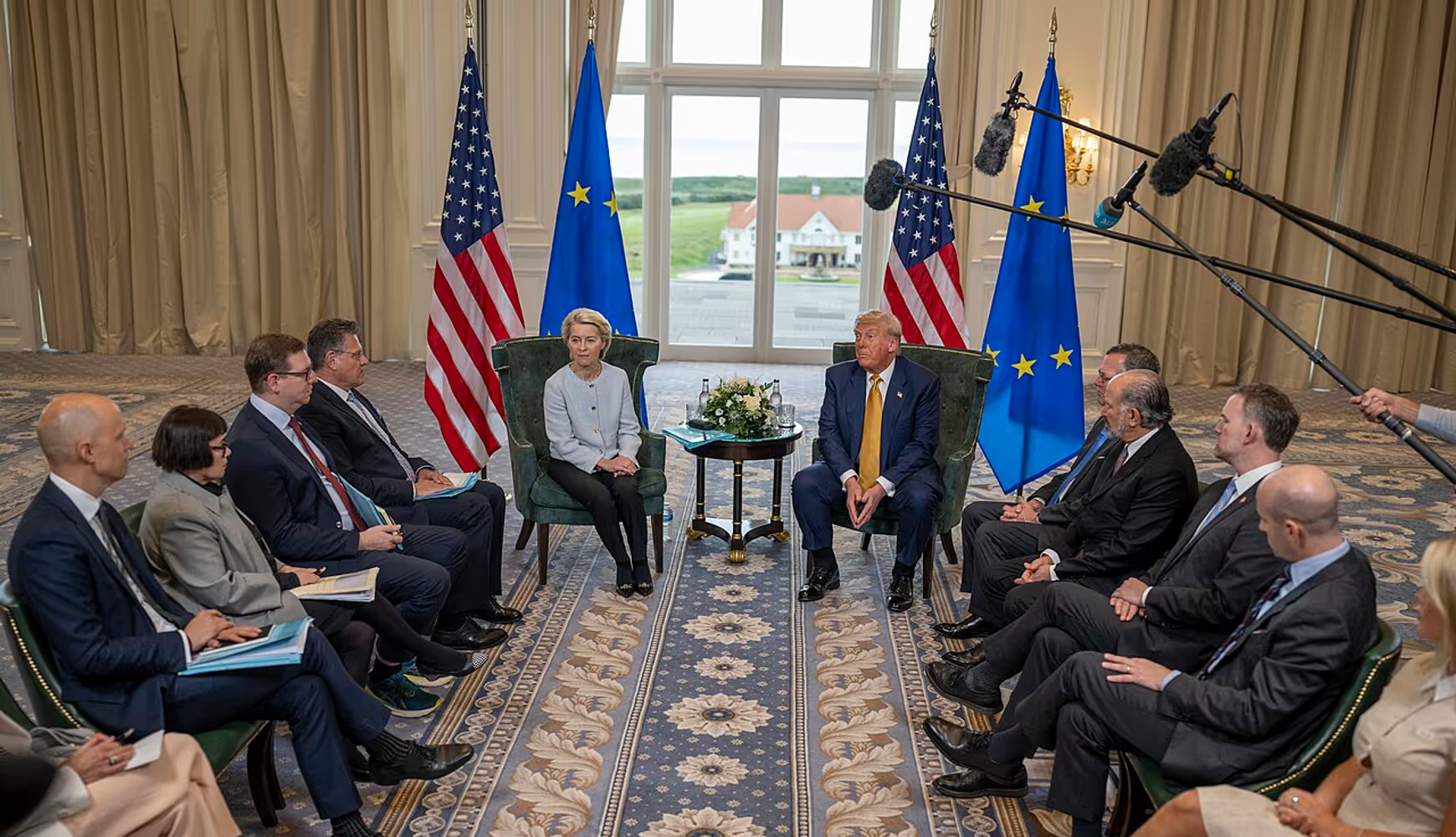
EU leaders express concerns about the shaken trust with the US as they discuss a long-term strategy following Trump’s withdrawal of tariff and force threats.
Leaders of the European Union are preparing to reevaluate their relationship with the United States during an emergency summit on Thursday. This comes in light of President Donald Trump’s retreat from threats regarding Greenland, which had significantly undermined confidence in transatlantic relations, according to diplomats.
On Wednesday, Trump unexpectedly reversed his decision to impose tariffs on eight European countries, dismissed the idea of using military force to acquire Greenland, a semi-autonomous territory of NATO ally Denmark, and indicated that a resolution to the dispute might be possible through negotiation.
German Chancellor Friedrich Merz expressed his approval of Trump’s change in stance and encouraged European leaders to refrain from hastily forsaking the transatlantic partnership.
Nonetheless, EU governments continue to exercise caution, apprehensive about potential setbacks from a president they increasingly perceive as erratic and combative. Diplomats indicated that leaders are currently concentrating on formulating a long-term strategy for handling relations with the United States, considering both the present administration and possible future ones.
“Trump has taken a decisive step.” There is a possibility he could repeat the action. There is no returning to how things once were. “And leaders will discuss it,” one EU diplomat remarked, emphasizing that the bloc must lessen its significant reliance on the United States in various critical sectors.
“We should aim to maintain his proximity while striving for greater independence from the U.S. “It is a process, likely a lengthy one,” the diplomat remarked.
Despite decades of dependence on the United States for defense via NATO, the EU remains deficient in intelligence, transport, missile defense, and production capabilities necessary to protect itself from a potential Russian assault, thereby granting Washington considerable influence.
The United States stands as Europe’s largest trading partner, making the bloc vulnerable to Trump’s tariff policies designed to decrease the US trade deficit in goods and, as illustrated by the Greenland episode, to promote wider political goals.
“It is essential for us to address the boundaries we must establish, how we confront this aggressor across the Atlantic, and identify our areas of strength,” remarked a second EU diplomat.
“Trump states there will be no tariffs today, but does that imply there will be no tariffs tomorrow, or will he once again swiftly alter his stance?” “We need to discuss our next steps,” the diplomat remarked.
Prior to Trump’s reversal, the EU was contemplating retaliatory tariffs amounting to 93 billion euros on US imports or the implementation of anti-coercive measures, recognizing that these actions would harm both European and American economies.