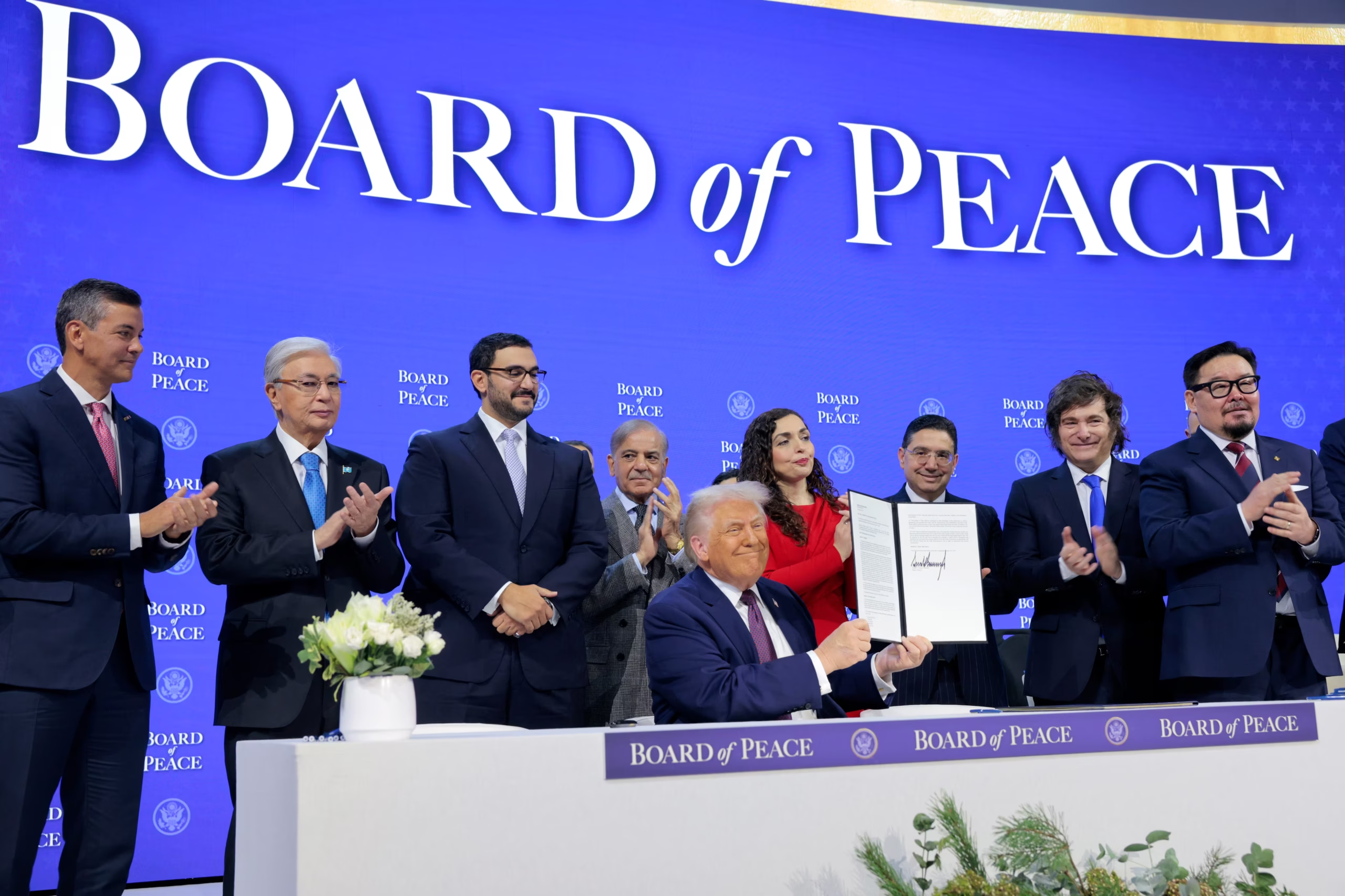
Egypt, Saudi Arabia, and important Gulf nations consent to join a board headed by Trump that will supervise peace initiatives in Gaza.
In an effort to advance a peace framework for Gaza, US President Donald Trump has won support from Egypt as well as a number of Gulf and Muslim majority states for a new US-led “Board of Peace.”
On Wednesday, Trump met Egyptian President Abdel Fattah el Sisi in Davos, Switzerland, while attending the World Economic Forum. The leaders reportedly talked about regional concerns, such as the proposed Board of Peace supervising a peace agreement in Gaza and attempts to reconcile Egypt and Ethiopia over the protracted conflict over Ethiopia’s Grand Ethiopian Renaissance Dam.
Sisi’s acceptance of Trump’s offer to join the group was confirmed by Egypt’s foreign ministry later on Wednesday.
In a statement, the ministry praised Trump’s Middle East policies and stated, “Egypt announces its acceptance of the invitation and its commitment to fulfilling the relevant legal and constitutional procedures.”
It further stated, “Egypt expresses its support for the Board of Peace’s mission for the second phase of the comprehensive plan to end the conflict in Gaza.”
The plan has also received support from Saudi Arabia and a number of other nations with a majority of Muslims. Riyadh and seven other countries have agreed to join Trump’s Board of Peace, according to Saudi Arabia’s foreign ministry.
The foreign ministers of Saudi Arabia, Qatar, Turkey, Egypt, Jordan, Indonesia, Pakistan, and the United Arab Emirates “shared decision” to join the body, which Trump will head, according to a joint statement from Saudi Arabia. The ministers declared their support for his “peace efforts” about the war in Gaza.
Numerous world leaders apparently received invitations asking for $1 billion for a permanent position on the board, but the Saudi statement made no mention of any financial contribution.
Although the board’s charter does not seem to restrict its authority to the region, it was originally proposed as a way to supervise Gaza’s restoration. Instead, it is presented as a more comprehensive peace organization that might compete with the UN, a notion that has angered some US allies, such as France.
The development coincides with increased regional tensions, such as those between Saudi Arabia and the United Arab Emirates, both of which have sought stronger connections with the Trump administration through business agreements and investment commitments.
France has stated that it will not take part in the project. But according to his office, Israeli Prime Minister Benjamin Netanyahu has accepted an invitation to participate.
However, Netanyahu has objected to the appointment of Qatari diplomat Ali Al Thawadi and Turkish Foreign Minister Hakan Fidan to a proposed “Gaza Executive Board” that would function under the larger Board of Peace.